Abbvie Inc. announced its agreement to focus on improving access and lowering the cost of medicines, becoming the latest pharma to fall in line with the Trump administration’s most-favored nation (MFN) pricing deal. Regeneron Pharmaceuticals Inc. now remains the only firm originally included in President Donald Trump’s July 31 MFN ultimatum that has yet to finalize terms.
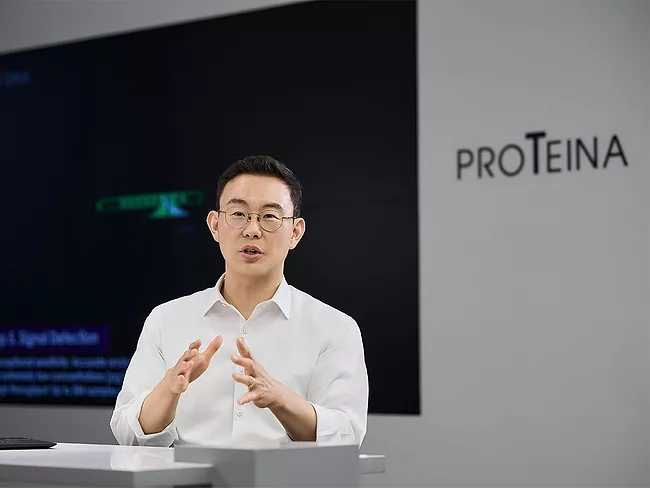
“Our mission is to apply our protein-protein interaction (PPI) big data-generation platform to create novel antibody therapeutics,” Proteina Co. Ltd. CEO Yoon Tae-young recently told BioWorld. “We have been working to build a proprietary technology platform for more than 15 years,” Yoon said, “and we take pride in the fact that we made our own technology platform, instead of running a company based on licensed-in technology.”
Once again, U.S. legislative reforms to rein in pharmacy benefit manager (PBM) business practices missed a ride to finally becoming law. This time, they were kicked out of the Trump administration’s budget reconciliation bill that was signed into law July 4. House Resolution 1, as first passed in the lower chamber, included a few PBM reforms, but they were deleted from the Senate version that ultimately became law because the parliamentarian ruled they didn’t meet the restrictions placed on reconciliation measures.
It’s taken nearly a decade for the U.S. FDA to go from zero to 60 in approving biosimilars. Currently, 63 biosimilars have been approved in the U.S., thanks to 18 new approvals in 2024 that stretched the number of biologics referenced by biosimilars from 14 to 17. That’s an all-time record, CDER Director Patrizia Cavazzoni said, as she released the drug center’s annual approval report for 2024.
If the maximum fair prices the U.S. CMS announced after the first round of drug price negotiations are any indication, advocates of the government price setting may be settling for short-term wins at the cost of long-term, more sustainable price reductions driven by competition.
A growing foray of pharmacy benefit managers’ (PBMs) private labels into the U.S. biosimilar space is intensifying concerns about the antitrust aspects of PBMs’ vertical integration that has them serving as price negotiator, formulary setter, payer, group purchasing organization, pharmacy, provider and now drug "manufacturer."
Although last year’s massive U.S. launch of Humira biosimilars captured headlines, the market adoption of those competitors has been nothing to write home about, even with discounts as low as 85% off the innovator price.
Although last year’s massive U.S. launch of Humira biosimilars captured headlines, the market adoption of those competitors has been nothing to write home about, even with discounts as low as 85% off the innovator price.
A bipartisan bill aimed at limiting patent thickets on biologics moved a step closer to law July 11 when the Senate passed it with unanimous consent in an unexpected vote that came more than one-and-a-half years after the Judiciary Committee reported it favorably to the Senate floor. The Affordable Prescriptions for Patients Act, S. 150, which would limit the type and number of patents that can be litigated under the Biologics Price Competition and Innovation Act (BPCIA), now awaits House action.