The story of how pigmentation affects the accuracy of pulse oximetry is still in play in the U.S. even though the FDA issued guidance on the subject in 2013, but the latest advisory hearing on the subject has added a new confounder to the story.
The U.S. FDA’s advisory hearing on multi-cancer detection (MCD) tests suggests that the premarket requirements for these tests will be rigorous, if only because the agency stated at the outset of the hearing that it sees these tests as class III devices. However, the advisory committee also suggested that a registry be established to track outcomes for these tests, a requirement that is likely to prove expensive and time-consuming to fulfill.
The U.S. FDA recently convened an advisory hearing to discuss whether three in vitro diagnostics should be reclassified from class III to class II, including tests for the pathogens responsible for Hepatitis B and tuberculosis. The panel agreed that all three of the test types should be reshuffled to the lower-risk class II category, suggesting that test developers now have an opportunity to jump into a market with lower-cost tests that won’t need expensive and drawn-out clinical studies to obtain the FDA’s seal of approval.
Dublin-based Medtronic plc. has invested considerable resources into its renal denervation program, but the company has not completed its regulatory journey for the U.S. market just yet. Medtronic failed to persuade an FDA advisory committee of the virtues of its Symplicity Spyral device due to inconsistent results from the two major studies presented at the hearing but vowed to keep working on the application despite the sustained headwinds.
The regulatory record for successful replacements of the human meniscus is thin, but the latest attempt came up short as a U.S. FDA advisory committee voted 6-2 that the benefits of the Nusurface device by Active Implants LLC did not present an acceptable benefit-risk ratio. The device is commercially available in both the European Union and in Israel, however, suggesting that Memphis, Tenn.-based Active will not give up on the massive U.S. market, which offers a patient population that will undergo a tsunami of total knee replacements in the decades ahead unless a solution for the epidemic of cartilage degeneration can be found.
The U.S. FDA has proposed to down-classify optical diagnostic devices and electrical impedance spectrometers from class III to class II, but there was little support for such a change in the first day of a two-day advisory hearing. The panelists saw the risk of a false negative for melanoma as too high to allow such devices to go through the 510(k) program, and thus manufacturers of these devices may continue to be required to file PMAs, replete with costly studies and long timelines to approval.
The FDA’s proposal to harmonize the Quality System Regulation (QSR) with ISO 13485 has finally become more than just a hot topic among device makers, and the agency held a March 2 advisory hearing on the matter. One of the critical concerns for industry is the proposal of a one-year term of implementation upon publication of a final harmonization rule, a timeline that some argue should be doubled or tripled in order to serve as a practicable implementation timeline.
Despite that the device has been available for more than a decade under the 510(k) program, an FDA advisory committee voted narrowly that the benefits of the Surgimend device for breast reconstruction do not outweigh the risks. Another interesting feature of the application is that the pivotal study was based on real-world evidence (RWE), but while the FDA had direct access to the data, Integra Lifesciences Holdings Corp. did not, thus raising questions about whether RWE is necessarily useful for class III device premarket applications.
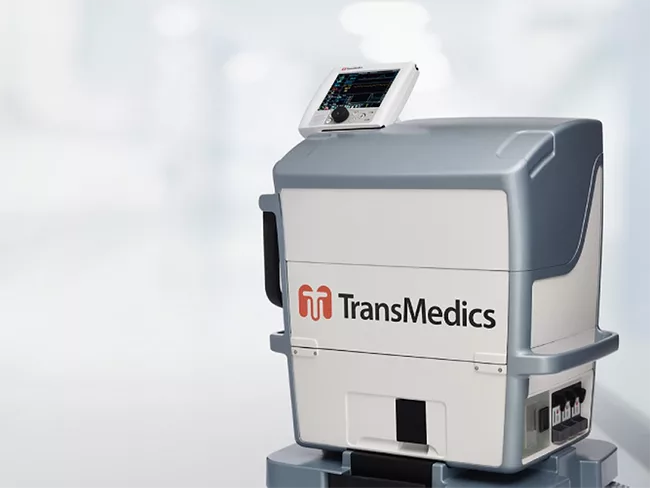
The FDA advisory hearing for the Transmedics Organ Care System (OCS) resulted in a unanimous vote in favor of the OCS’s safety and efficacy numbers, although there will be a considerable post-approval study requirement. The company was able to overcome a number of problems with the pivotal study that might otherwise have tanked the application, such as the lack of blinding of transplant surgeons, which the FDA said could have biased the determination of whether a liver was acceptable for transplant.
The FDA’s two-day advisory hearing yielded recommendations for risk designation for a number of product types, such as plunger-like joint manipulators, which received a unanimous endorsement for a class III designation. The advisory panel was split on the risks associated with electro-acupuncture stimulators, which the FDA must now decide whether to classify as a class III device, a move that would force a number of existing devices into clinical trials for an expensive and time-consuming PMA application.