The European Commission recently published the results of a study of the impact of the EU regulatory environment, which confirmed the worst fears of some observers about the situation in the EU. The report said that the associated challenges are prompting small and medium companies to pull at least one product out of inventory for the EU market, with some companies abandoning the EU altogether.
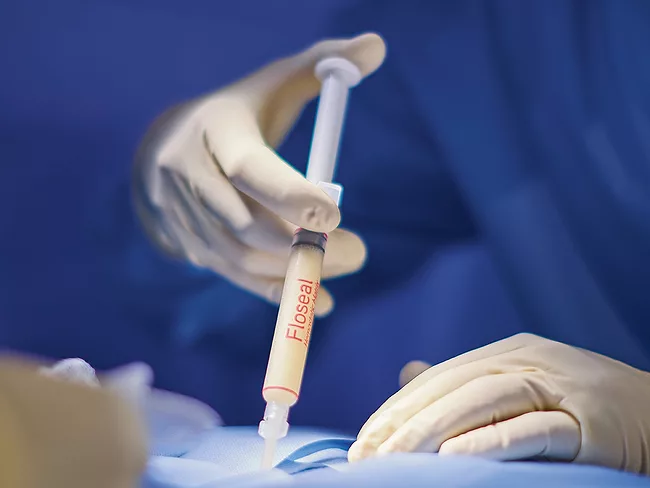
Baxter International Inc. recently received clearance under the Medical Device Regulation for its Floseal Hemostatic Matrix device, a proven adjunct hemostatic agent effective in a wide range of bleeding scenarios. With bleeding control still a critical concern, the device offers health care professionals a reliable solution to enhance patient safety and improve surgical outcomes.
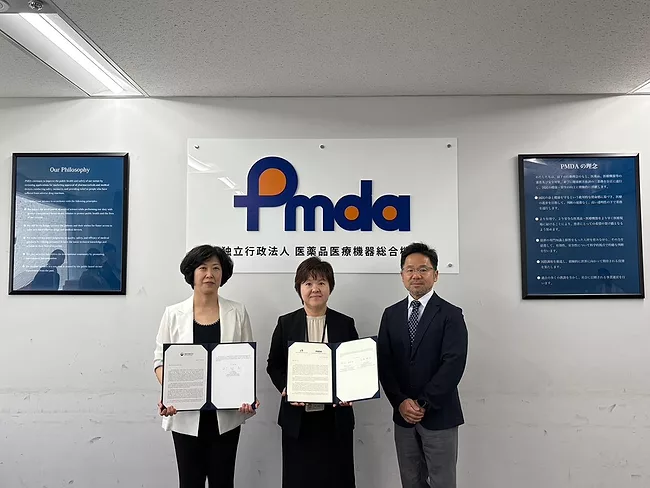
South Korea’s Ministry of Food and Drug Safety signed a confidentiality agreement with Japan’s Ministry of Health, Labour and Welfare and Pharmaceuticals and Medical Devices Agency to boost bilateral regulatory cooperation in the field of medical devices.
Neo Medical SA received certification under the EU Medical Device Regulation for its entire portfolio of spine surgical technologies. The approval means that the company can continue selling its products, which helps with the surgical treatment of back pain, across markets in Europe as they are in compliance with the high-quality control standards required for medical devices.
The saga of the EU's Medical Device Regulation (MDR) is far from over, but stakeholders were treated to another related dose of reality in a session at this year's Med Tech Conference here in Toronto. Several panelists pointed to a lack of harmonization regarding notified bodies' interpretation of the regulation, but Stryker Inc.'s Michel Marboeuf said this problem flows to some extent from a lack of harmonization among the member states' competent authorities, a condition that is likely to resist treatment in the near term.
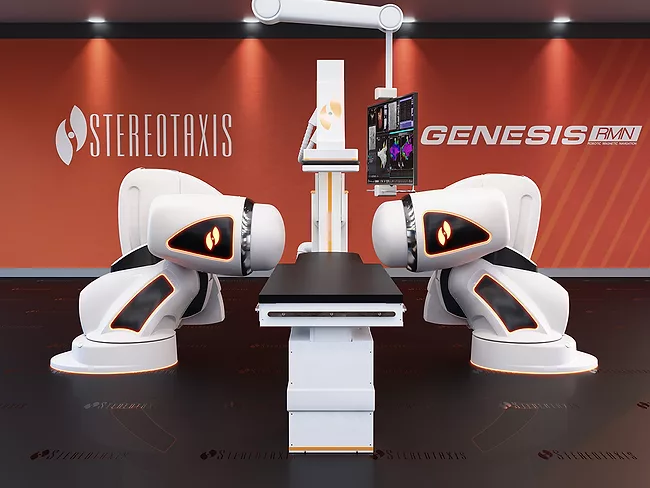
Stereotaxis Inc. recently received CE mark recertification for all its devices currently available in Europe under the new Medical Device Regulation (MDR) regulatory framework. The MDR has replaced the European Medical Device Directive and includes more stringent standards but meeting the new requirements comes with frustrations and costs for many companies.
Reliance may be the regulatory buzzword of the moment, but mutual recognition agreements between regulators are much more near and dear to the hearts of device makers. Richard Phillips, director of strategy for Association of British Health Tech Industries Ltd., told an audience of device makers that the U.K. is considering recognition of devices approved and cleared by the FDA, although Phillips said such recognition for 510(k) devices might be less than a simple exercise.
The European Parliament (EP) has passed the Artificial Intelligence Act (AI Act), bringing the legislation one step closer to full passage into law, with passage by the European Council the only remaining hurdle.
Concerns over the EU’s agonizingly clunky roll-out of the Medical Device Regulation (MDR) has largely focused on the capacity of notified bodies to manage the task of recertifying CE marks for legacy devices, but a new problem has emerged that promises to add yet more drag to the process. Amie Smirthwaite, senior vice president for innovation at RQM+, said EU member states’ competent authorities seem bent on pressing notified bodies (NBs) to treat guidance by the Medical Device Coordination Group (MDCG) as regulation, with the net result that “you almost need guidance for the guidance” in order to successfully navigate the EU market.