Vectorious Medical Technologies Ltd. is seeking patent protection for a method for predicting the occurrence of a heart condition by receiving a multiple measurements of blood pressure acquired in a patient’s heart.
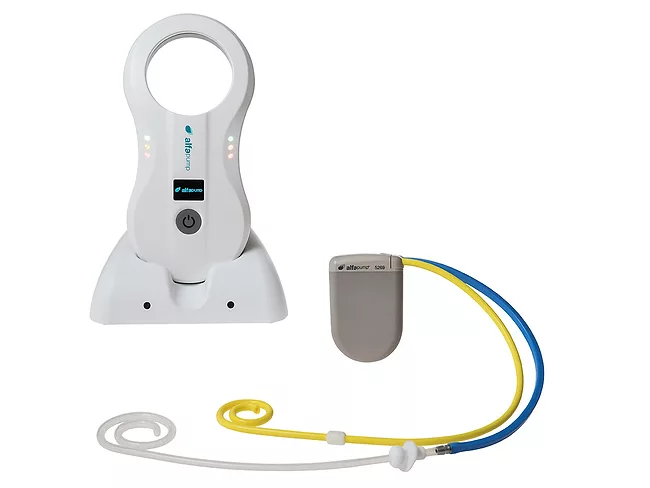
Sequana Medical NV is considering listing in the U.S. as it builds towards the commercialization of its Alfapump, CEO Ian Crosbie told BioWorld in an interview. The company has received a U.S. FDA breakthrough device designation for Alfapump, which treats recurrent or refractory ascites due to liver cirrhosis, and it completed a pivotal study in 2022. The company intends to file the data with the FDA by the end of this year, with the hope of getting premarket approval before the end of 2024.
Sequana Medical NV has completed GLP animal studies, demonstrating the safety of its second-generation DSR (direct sodium removal) product (DSR 2.0) for congestive heart failure, following chronic exposure.
Heartpoint Global Inc. has reached a milestone in the ongoing preclinical trials of its Heartpoint Global Implant System (HPGS), focused on treating left heart diseases, congestive heart failure, and structural pulmonary hypertension. In large animal studies, the system appeared to significantly improve the structure of the heart and the function of the heart-lung system.
Ceros Capital Markets and Peregrine Ventures evidently liked what they heard about Cordio Medical Ltd.’s Hearo voice app that can detect deterioration in patients with congestive heart failure (CHF), leading them to invest $18 million in the company’s latest venture funding round.
Restore Medical Ltd. is implanting the first patients with its Contraband technology for congestive heart failure (CHF). The minimally invasive, catheter-delivered implant is being assessed in patients with chronic left ventricular failure. The Or Yehuda, Israel-based startup is carrying out the trial at the ZNA medical center in Antwerp, Belgium, followed by the Kaplan medical center in Israel. The goal of the implant is to enable the right ventricle to strengthen the left ventricle and improve ejection fraction, reduce mitral regurgitation and restore a favorable ventricular geometry.
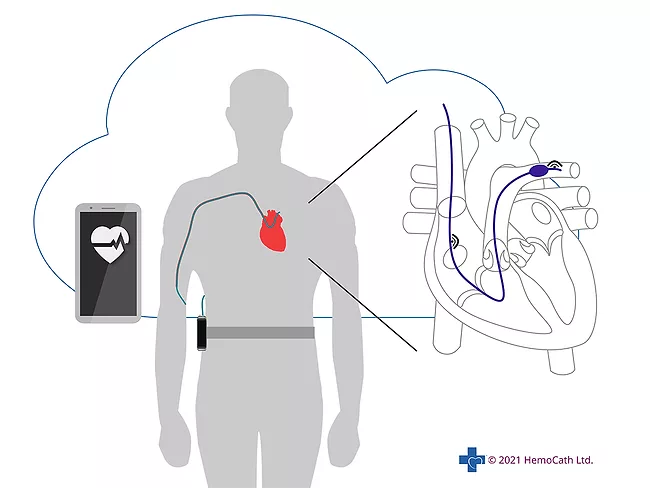
TORONTO – Hemocath Ltd. is gearing up for a first-in-human trial of a device that addresses two critical metrics for the treatment of heart failure: pulmonary artery and central venous pressure. Hemocath’s pulmonary artery catheter (PAC) is part of a larger heart failure monitoring platform and is intended to assess fluid status in patients with severe or worsening congestive heart failure. The hope is to replace larger, more invasive catheters inserted into a patient’s neck.
The U.S. Centers for Medicare & Medicaid Services (CMS) recently proposed some changes to national coverage policies for left ventricular assist devices (LVADs) and artificial hearts, the latter of which would no longer be covered under a national coverage determination. The proposal to allow Medicare administrative contractors (MAC) to make coverage decisions for artificial hearts on a case-by-case basis clanged across both industry and medical societies, which cited data collection problems and inequalities in access as reasons the existing coverage policy should remain in place.