Roche AG’s Genentech unit landed another clinical victory with giredestrant that provided a major stock boost for competitor Olema Pharmaceuticals Inc. Made public were positive phase III data from the Lidera study testing selective estrogen receptor degrader and complete estrogen receptor antagonist (CERAN) as an adjuvant endocrine treatment for people with ER-positive, HER2-negative, early stage breast cancer (BC).
Despite a recent stock surge, Olema Oncology Inc. shares (NASDAQ:OLMA) slipped 17% on Oct. 20 to close at $7.77 each in the wake of updated and positive phase Ib/II results for palazestrant, the company’s metastatic breast cancer drug.
Eli Lilly and Co.’s oral selective estrogen receptor degrader (SERD) imlunestrant has been approved by the U.S. FDA for treating late-stage breast cancer patients. Branded Inluriyo, the second-line treatment is for treating adults with estrogen receptor-positive, human epidermal growth factor receptor-2-negative estrogen receptor 1-mutant advanced or metastatic breast cancer.
Astrazeneca plc’s good news with its oral selective estrogen receptor degrader (SERD) and estrogen receptor antagonist, camizestrant, when used as part of a combo in breast cancer raised optimism for the approach, which has caught on in various biopharma quarters.
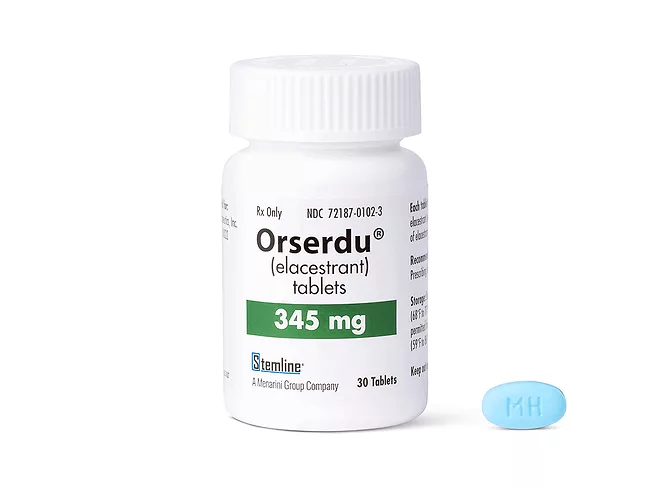
Winning the race to market with the first oral selective estrogen receptor degrader (SERD) for breast cancer is Menarini Group’s elacestrant, which gained U.S. FDA approval for use as second- and third-line therapy in patients with ER-positive/HER2-negative advanced or metastatic disease with the ESR1 mutation. It marks the first therapy approved specifically targeting ESR1, found in up to 40% of patients with ER-positive/HER2-negative disease.
Sanofi SA has terminated development of amcenestrant, an oral selective estrogen receptor degrader (SERD), following an interim analysis of data from a phase III trial in estrogen-receptor-positive advanced breast cancer patients. The company has also halted all other studies of the drug, including a phase III study in patients with early stage breast cancer.
Sanofi SA has suffered a setback in its bid to find a successor to Astrazeneca plc’s breast cancer drug Faslodex (fulvestrant) as amcenestrant failed to improve progression-free survival in advanced breast cancer in a mid-stage trial.
The Menarini Group and Radius Health Inc.’s phase III Emerald study of oral elacestrant as a monotherapy vs. standard of care in treating estrogen receptor-positive/HER2-negative advanced or metastatic breast cancer hit its two primary endpoints. The study’s top-line data, according to the companies, showed statistically significant progression-free survival in both the overall population and in patients with tumors harboring estrogen receptor 1 mutations.
Sanofi SA is hoping an oral successor to Astrazeneca plc’s Faslodex (fulvestrant) could be a significant moneyspinner as it seeks to re-establish itself as a major player in oncology – and is pushing ahead with clinical trials to get it to market ahead of rivals. The Paris-based pharma has announced it is to start a new phase III trial of its second-generation oral selective estrogen receptor degrader (SERD) drug, amcenestrant, targeting high-risk patients with early breast cancer who need adjuvant drugs to suppress formation of secondary tumors after surgery.
Astrazeneca plc officials, during the firm’s Feb. 11 conference call on fourth-quarter earnings, highlighted the oral selective estrogen receptor degrader (SERD) camizestrant in breast cancer (BC), which Cristian Massacesi, head of late-stage oncology development, said bears “best-in-class potential, in terms of providing superior clinical benefit at a well-tolerated dose” of 75 mg once per day.