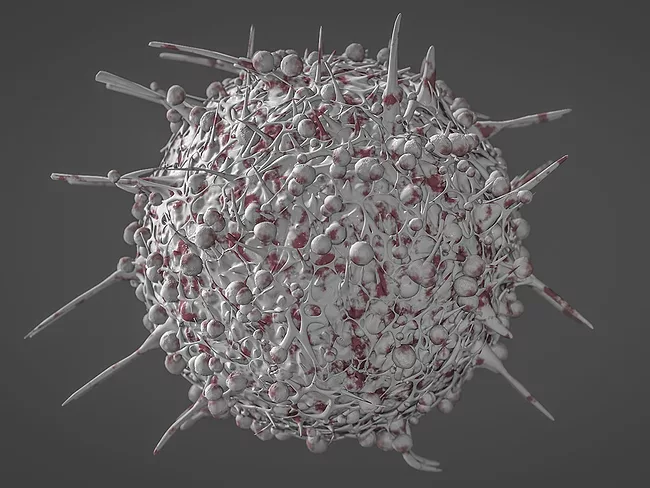
Circular RNA (circRNA) is not a new concept, but it is a novel strategy in the field of gene and cell therapy. While mRNA vaccines have revolutionized medicine, this RNA fragment without free ends surpasses their performance in both efficacy and durability, bringing it to the attention of several pioneering companies. The latest advances in circRNA presented at the 29th Annual Meeting of the American Society of Gene and Cell Therapy (ASGCT) clearly surpass the performance achieved with linear mRNA.
A new mRNA and lipid nanoparticle (mRNA-LNP) platform could selectively reprogram in vivo cytotoxic effector T cells (Teff), the cells responsible for eliminating infected or tumor cells. To achieve this, scientists at the University of Pennsylvania conjugated LNPs with fractalkine, a molecule that binds to the CX3CR1 receptor, which is a marker of Teff cells. Using this strategy, the researchers delivered an mRNA encoding new proteins such as IL‑2 or human CD62 L‑selectin, opening the door to temporarily reprogramming these cells within the body, both in the blood and in lymphoid tissue, where they reside and become activated.
A new mRNA and lipid nanoparticle (mRNA-LNP) platform could selectively reprogram in vivo cytotoxic effector T cells (Teff), the cells responsible for eliminating infected or tumor cells. To achieve this, scientists at the University of Pennsylvania conjugated LNPs with fractalkine, a molecule that binds to the CX3CR1 receptor, which is a marker of Teff cells. Using this strategy, the researchers delivered an mRNA encoding new proteins such as IL‑2 or human CD62 L‑selectin, opening the door to temporarily reprogramming these cells within the body, both in the blood and in lymphoid tissue, where they reside and become activated.
Academia Sinica and National Cheng Kung University have divulged peptides and their lipid nanoparticles formed on encapsulation by 1,2-dioleoyl-sn-glycero-3-phosphocholine (DOPC), cholesterol and DSPE-PEG2K liposomes reported to be useful for the treatment of cancer.
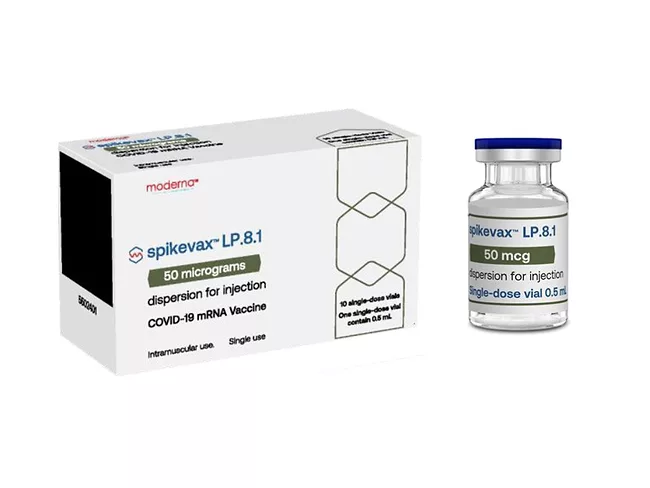
In what it says could be the largest disclosed patent settlement in the pharmaceutical industry, Roivant Sciences Ltd. has reached a potential $2.25 billion settlement with Moderna Inc. over the use of its lipid nanoparticle delivery technology in the Spikevax COVID-19 vaccine.
A week after catching Moderna Inc. and its investors off guard with a refuse-to-file letter, the U.S. FDA has reversed course on the company’s BLA submission seeking approval of seasonal influenza vaccine mRNA-1010, now agreeing to review the application and setting an assigned PDUFA date of Aug. 5, 2026.
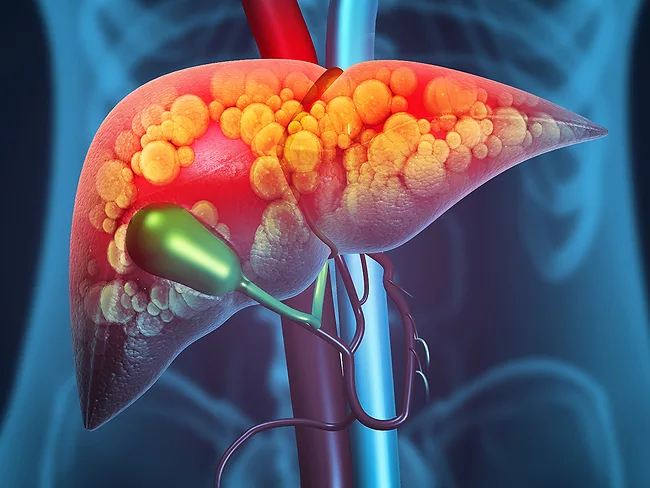
Liver fibrosis in the course of metabolic dysfunction-associated steatohepatitis could be significantly reduced using CAR T-cells generated in vivo. Scientists at the Icahn School of Medicine at Mount Sinai have developed an experimental cell therapy that eliminates only one type of liver cell, the stellate cells that express fibroblast activation protein alpha. This strategy not only reduced fibrosis but also reversed liver damage.
Liver fibrosis in the course of metabolic dysfunction-associated steatohepatitis (MASH) could be significantly reduced using CAR T-cells generated in vivo. Scientists at the Icahn School of Medicine at Mount Sinai have developed an experimental cell therapy that eliminates only one type of liver cell, the stellate cells that express fibroblast activation protein alpha (FAP). This strategy not only reduced fibrosis but also reversed liver damage.
Addition Therapeutics came out of stealth mode to highlight its Precise RNA-Mediated Insertion of Transgenes (PRINT) gene therapy platform. The system is based on research of retrotransposons by Kathleen Collins’ laboratory at University of California, Berkeley, that was spun out into Addition in 2021.
In a deal that could bring more than $2.1 billion in payments to Arbor Biotechnologies Inc., 90-year-old Chiesi Group gained exclusive and global rights to develop and commercialize ABO-101 for primary hyperoxaluria type 1, an ultra-rare disease caused by a mutation in the AGXT gene, as well as an option to go after a limited number of additional targets.