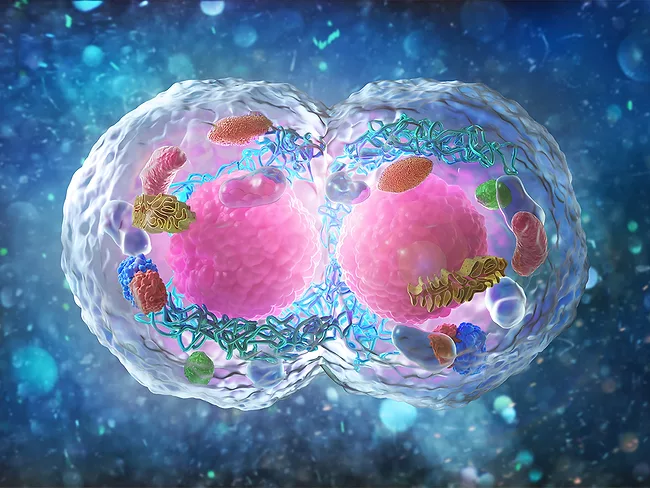
Washington University in St. Louis has disclosed new autophagy inducers reported to be useful for the treatment of alpha-1 antitrypsin deficiency, amyotrophic lateral sclerosis, Alzheimer’s, Huntington’s and Parkinson’s disease.
Oregon Health & Science University and Washington University have jointly developed new tetrahydrobenzothiophene and tetrahydropyridothiophene derivatives reported to be useful for the treatment of flavivirus and alphavirus infections.
Age-related macular degeneration (AMD) is a leading cause of vision loss in older adults. Current treatments mainly address advanced AMD, while early or intermediate stages rely only on micronutrient supplements. This highlights a critical gap in understanding the molecular drivers of early dry AMD and the need for strategies to prevent progression to geographic atrophy or choroidal neovascularization and vision loss.
Researchers at Washington University reported the preclinical validation of [18F]FQ-NeuroROS, a redox-sensitive reporter probe for imaging neuroinflammation in preclinical models of multiple sclerosis (MS). MS is a chronic autoimmune disorder of the central nervous system (CNS), characterized by inflammatory cell infiltration, demyelination and axonal damage.
A large-scale study has revealed the impact of germline variants on proteins in 10 cancer types. Scientists from the National Cancer Institute’s Clinical Proteomic Tumor Analysis Consortium (CPTAC) conducted a precision proteogenomic analysis in a pan-cancer study with data from 1,064 patients, identifying tumor heterogeneity and tumorigenesis associated with heritable genetic alterations.
A large-scale study has revealed the impact of germline variants on proteins in 10 cancer types. Scientists from the National Cancer Institute’s Clinical Proteomic Tumor Analysis Consortium (CPTAC) conducted a precision proteogenomic analysis in a pan-cancer study with data from 1,064 patients, identifying tumor heterogeneity and tumorigenesis associated with heritable genetic alterations. The results provide a broad view of cancer risk that could be useful for patient stratification and the design of prevention strategies.
Cannabinoid CB1 receptors have been a potential target for nonopioid-based pain treatment, but actually targeting the pathway has been hindered by issues with tolerance and unwanted CNS side effects. Peripherally selective CB1 agonists developed to overcome these problems have not fully resolved these issues, meaning the peripheral selectivity has to be substantially enhanced.
The largest analysis to date of patients taking GLP-1 receptor agonists (GLP-1RAs) has investigated their effects on nearly 175 diseases, and found that compared to three other classes of diabetes medications, individuals with a prescription for GLP-1RAs had a reduced risk of 42 diseases, and an increased risk of 19.
The largest analysis to date of patients taking GLP-1 receptor agonists (GLP-1RAs) has investigated their effects on nearly 175 diseases, and found that compared to three other classes of diabetes medications, individuals with a prescription for GLP-1RAs had a reduced risk of 42 diseases, and an increased risk of 19. The findings, which were published Jan. 20, 2025, in Nature Medicine, provide a comprehensive overview of GLP-1RAs’ effects.
The National Institutes of Health (NIH) has established a pandemic preparedness research network to conduct research on high-priority pathogens most likely to threaten human health with the goal of developing effective vaccines and monoclonal antibodies.