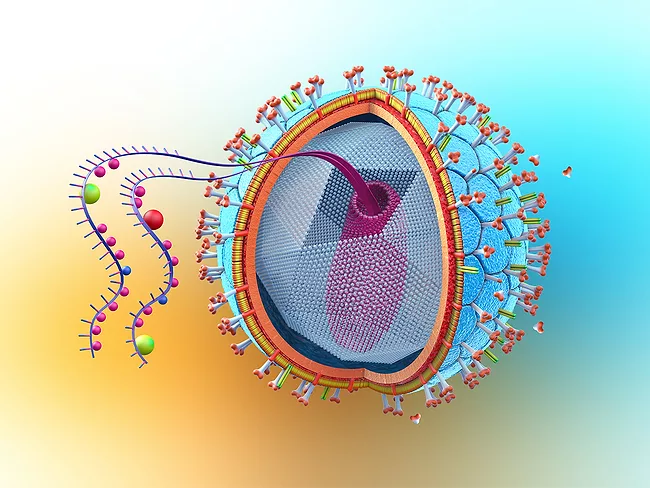
In vaccine development, one might think that targeting multiple epitopes increases the likelihood of improving outcomes. However, when several immunogens are administered together, the immune system does not always generate antibodies against all of them. Two parallel studies have overcome this challenge by using multiple simultaneous immunogens against HIV, effectively triggering various types of broadly neutralizing antibody (bnAb) precursors in two different preclinical animal models.
The Scripps Research Institute has disclosed peptides and their drug conjugates acting as dual gastric inhibitory polypeptide receptor (GIPR) and glucagon-like peptide 1 receptor (GLP-1R) agonists reported to be useful for the treatment of diabetes, metabolic dysfunction-associated steatotic liver disease and obesity.
Researchers from Cyclone Therapeutics Inc. and the Scripps Research Institute have disclosed tetracycline derivatives reported to be useful for the treatment of fragile X syndrome, rheumatoid arthritis and Alzheimer’s disease.
The Scripps Research Institute has disclosed κ-opioid receptor antagonists reported to be useful for the treatment of depression, anxiety, schizophrenia, obesity, migraine, substance abuse and dependence, epilepsy and eating disorders, among others.
Investigators at The Scripps Research Institute and Rensselaer Polytechnic Institute have designed novel covalent inhibitors of SARS-CoV-2 papain-like protease (PLpro) and assessed their drug properties in preclinical models.
Although it does not generally infect humans, a single mutation of the H5N1 virus in the highly pathogenic avian and bovine clade 2.3.4.4b could overcome this barrier and possibly trigger a pandemic.
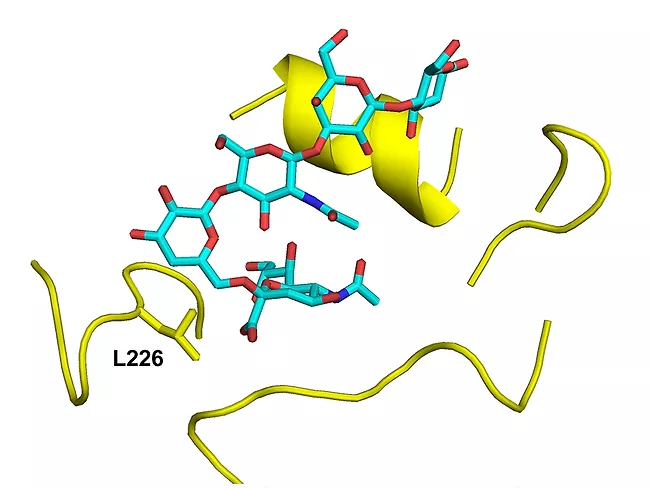
Although it does not generally infect humans, a single mutation of the H5N1 virus in the highly pathogenic avian and bovine clade 2.3.4.4b could overcome this barrier and possibly trigger a pandemic. Scientists at The Scripps Research Institute have warned of this possibility after studying the three-dimensional structure of the viral hemagglutinin and seeing how a change in one amino acid would make it more suitable for the human cell receptor. The researchers stress the need to monitor new mutations of this virus in order to act quickly in case the global jump to our species occurs.
Researchers from Phoenixlab, The Scripps Research Institute and affiliated organizations presented the discovery of a novel bivalent protease-activated receptor PAR1- and PAR3-derived peptide, named biparetide, being developed for the treatment of inflammatory bowel disease (IBD).
People with the rare inherited metabolic disorder Gaucher disease have a deficiency in the lipid-digesting glucocerebrosidase enzyme, which causes the accumulation of harmful levels of glucolipids in various organs. The enzyme has a very short half-life, which rules out enzyme replacement as an effective therapy, and as things stand, there are few treatments for this and other lysosomal storage diseases (LSDs). Now, researchers have discovered two small molecules that enhance the activity of glucocerebrosidase in cellular models of LSD, pointing to a potential new approach to treating these diseases.
Researchers at The Scripps Research Institute and the IAVI Neutralizing Antibody Center are developing a novel experimental vaccine targeting the germline to stimulate precursor B cells and produce broadly neutralizing antibodies (bnAbs) against the membrane-proximal external region (MPER) of the gp41 protein found in the HIV-1 envelope.