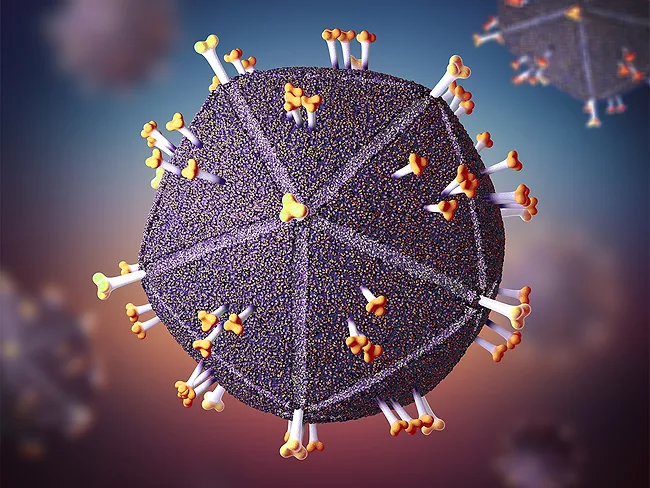
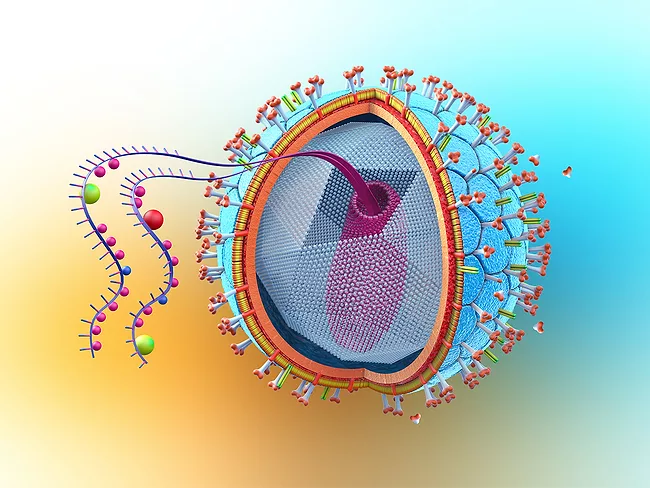
A new vaccination strategy designed to induce antibodies that recognize the apex of the HIV Env protein uses Env trimers displayed on liposomes to increase their density and orient them correctly. This presentation enhanced apex-focused antibody responses in macaques, and the monoclonal antibodies isolated after immunization showed binding modes and structural features resembling human broadly neutralizing antibodies (bNAbs), indicating that the vaccine can steer the antibody response toward this vulnerable site.
The Scripps Research Institute has identified new baloxavir analogues and their prodrugs acting as new influenza cap-dependent endonuclease (CEN) inhibitors potentially useful for the treatment of influenza viral infections.
The Scripps Research Institute has discovered new bicyclo[1.1.1]pentane-based DNA topoisomerase inhibitors and antibody-drug conjugates comprising a monoclonal antibody covalently linked to a DNA topoisomerase inhibitor. They are described as potentially useful for the treatment of cancer.
The use of DNA scaffolds could mark a turning point in HIV vaccine design. Scientists at Scripps Research and the Massachusetts Institute of Technology (MIT) have created a new vaccine platform based on DNA origami, a material that the immune system does not recognize as a threat, avoiding unwanted responses.
In vaccine development, one might think that targeting multiple epitopes increases the likelihood of improving outcomes. However, when several immunogens are administered together, the immune system does not always generate antibodies against all of them. Two parallel studies have overcome this challenge by using multiple simultaneous immunogens against HIV, effectively triggering various types of broadly neutralizing antibody (bnAb) precursors in two different preclinical animal models.
The Scripps Research Institute has disclosed peptides and their drug conjugates acting as dual gastric inhibitory polypeptide receptor (GIPR) and glucagon-like peptide 1 receptor (GLP-1R) agonists reported to be useful for the treatment of diabetes, metabolic dysfunction-associated steatotic liver disease and obesity.
Researchers from Cyclone Therapeutics Inc. and the Scripps Research Institute have disclosed tetracycline derivatives reported to be useful for the treatment of fragile X syndrome, rheumatoid arthritis and Alzheimer’s disease.
The Scripps Research Institute has disclosed κ-opioid receptor antagonists reported to be useful for the treatment of depression, anxiety, schizophrenia, obesity, migraine, substance abuse and dependence, epilepsy and eating disorders, among others.
Investigators at The Scripps Research Institute and Rensselaer Polytechnic Institute have designed novel covalent inhibitors of SARS-CoV-2 papain-like protease (PLpro) and assessed their drug properties in preclinical models.
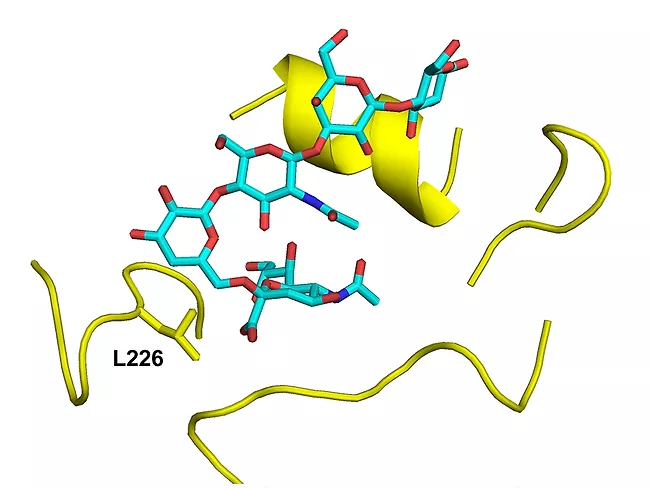
Although it does not generally infect humans, a single mutation of the H5N1 virus in the highly pathogenic avian and bovine clade 2.3.4.4b could overcome this barrier and possibly trigger a pandemic.