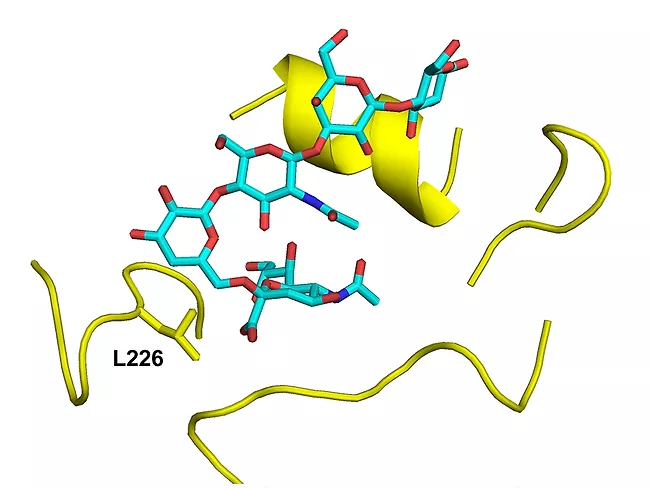
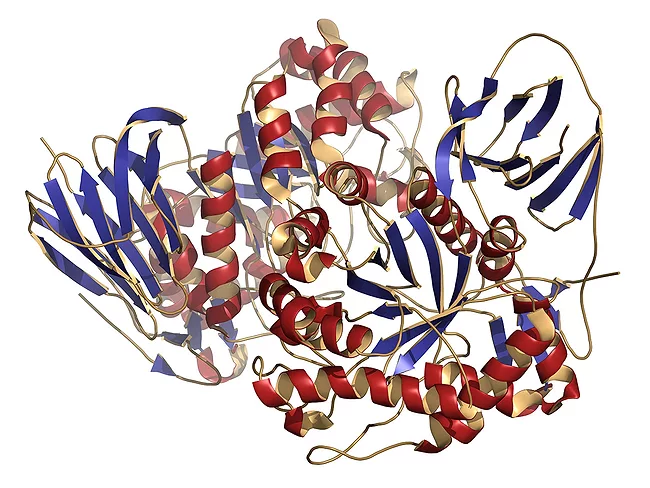
Although it does not generally infect humans, a single mutation of the H5N1 virus in the highly pathogenic avian and bovine clade 2.3.4.4b could overcome this barrier and possibly trigger a pandemic. Scientists at The Scripps Research Institute have warned of this possibility after studying the three-dimensional structure of the viral hemagglutinin and seeing how a change in one amino acid would make it more suitable for the human cell receptor. The researchers stress the need to monitor new mutations of this virus in order to act quickly in case the global jump to our species occurs.
Researchers from Phoenixlab, The Scripps Research Institute and affiliated organizations presented the discovery of a novel bivalent protease-activated receptor PAR1- and PAR3-derived peptide, named biparetide, being developed for the treatment of inflammatory bowel disease (IBD).
People with the rare inherited metabolic disorder Gaucher disease have a deficiency in the lipid-digesting glucocerebrosidase enzyme, which causes the accumulation of harmful levels of glucolipids in various organs. The enzyme has a very short half-life, which rules out enzyme replacement as an effective therapy, and as things stand, there are few treatments for this and other lysosomal storage diseases (LSDs). Now, researchers have discovered two small molecules that enhance the activity of glucocerebrosidase in cellular models of LSD, pointing to a potential new approach to treating these diseases.
Researchers at The Scripps Research Institute and the IAVI Neutralizing Antibody Center are developing a novel experimental vaccine targeting the germline to stimulate precursor B cells and produce broadly neutralizing antibodies (bnAbs) against the membrane-proximal external region (MPER) of the gp41 protein found in the HIV-1 envelope.
The Scripps Research Institute has disclosed Ras-related protein Rab-27A/synaptotagmin-like protein 1 (SYTL1; JFC1) interaction inhibitors reported to be useful for the treatment of endotoxemia, sepsis, systemic inflammatory response syndrome and cryopyrin-associated periodic syndromes (CAPS).
The current standard treatment for tuberculosis (TB) consists of a combination of four antibiotics administered for 6 to 12 months. There is hence a clear need for new strategies both for shorter treatment periods and that may address the emergence of multi- and extensive drug-resistant TB. Researchers from Scripps Research Institute have reported on the synthesis and preclinical characterization of a series of novel aryl fluorosulfate derivatives designed to be used for the treatment of TB.
The cyclic imine toxins represent a growing family of neurotoxic lipophilic compounds made by a variety of benthic marine dinoflagellate species. These cause many shellfish food poisonings worldwide. Their cyclic nature confers exceptional chemical stability with bioaccumulation, but the inability to synthesize adequate amounts of these molecules has precluded basic research of their mechanisms of action.