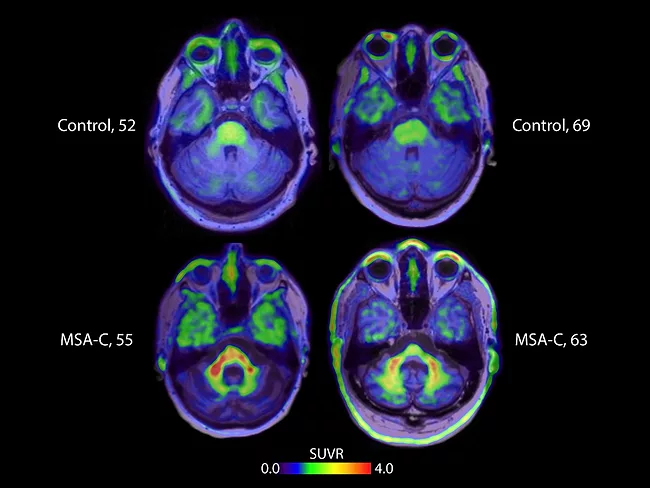
Mabwell (Shanghai) Bioscience Co. Ltd. has announced that SST-001 (18F-FD4), an α-synuclein-targeted PET tracer developed by Mabwell’s incubated company Synusight Biotech, has received clinical trial clearance from China’s National Medical Products Administration (NMPA). The planned phase I trial will enroll healthy volunteers, patients with multiple system atrophy (MSA), and patients with Parkinson’s disease.
Rheumatoid arthritis (RA) is a chronic autoimmune disease characterized by inflammation and damage of the joints. PET/CT imaging is a useful tool for early disease assessment and monitoring treatment efficacy.
Fibroblast activation protein (FAP) is a serine protease that is highly overexpressed in the stroma of most epithelial-derived tumors – including pancreatic, breast and colorectal cancers – in the context of cancer-associated fibroblasts (CAFs).
Researchers from Huazhong University of Science and Technology presented the discovery and preclinical evaluation of a novel peptide PET tracer targeting LAG-3, [68Ga]NOTA-XH05, being developed as a candidate for evaluating the efficacy of cancer immunotherapy.
Researchers at Merck & Co. Inc. have presented the discovery of novel selective metabotropic glutamate receptor 2 (mGluR2) negative allosteric modulators (NAMs) as potential PET imaging agents. Synthesis and optimization of a series of analogues of a potent and selective mGluR2 NAM resulted in the identification of compound MK-8056 as a high-affinity mGluR2 NAM (Ki=0.19 nM) with desirable lipophilicity (logD7.0=2.46) and low P-gp susceptibility.
Dopamine D3 receptors play a relevant role in the CNS modulating neurological activity, and its dysfunction is linked to disorders such as schizophrenia, drug abuse or Parkinson’s disease. There is a need for blood-brain barrier (BBB)-penetrant D3 receptor radiotracers with high brain uptake to be used for neurological and neuropsychiatric disease diagnosis.
The fibroblast activation protein (FAP) is a known biomarker expressed on the surface of cancer-associated fibroblasts (CAF), as well as an important target that distinguishes normal fibroblasts from CAF. Researchers from National Yang-Ming University recently reported the discovery and preclinical evaluation of a novel PET tracer, [18F]FEQGP, being developed for the detection of FAB expression in CAF imaging.
At the AD/PD 2022 international conference on Alzheimer’s and Parkinson’s Diseases, AC Immune SA presented images showing its positron emission tomography (PET) tracer detecting pathological alpha-synuclein (a-syn) in human subjects’ brains. The abnormal accumulation of a-syn, a natively unfolded and soluble presynaptic protein, is a neuropathological feature of neurodegenerative disorders.