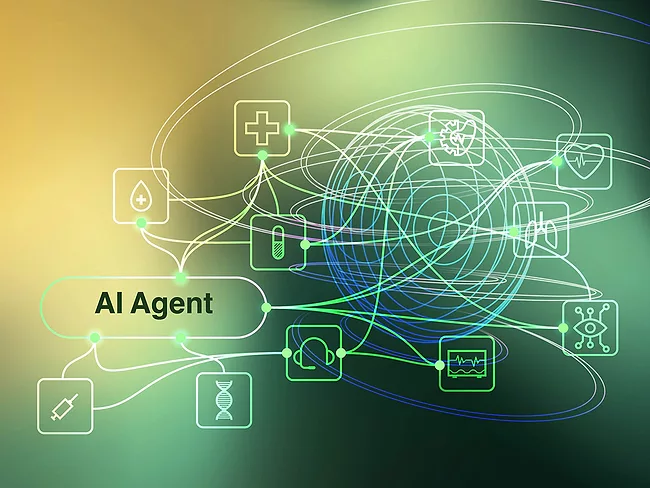
There are real world demonstrations of how autonomous artificial intelligence agents are poised to disrupt biomedical research, according to two papers published May 19 in Nature. Each describes an AI system that assists across the piece, from generating hypotheses to designing experiments, analyzing the data and refining hypotheses in the light of new data.
There are real world demonstrations of how autonomous artificial intelligence agents are poised to disrupt biomedical research, according to two papers published May 19 in Nature. Each describes an AI system that assists across the piece, from generating hypotheses to designing experiments, analyzing the data and refining hypotheses in the light of new data.
Google Deepmind is shedding light on the dark genome with its latest AI model, which is trained to decipher the 98% of DNA that does not code for proteins. Alphagenome is designed to predict how variants in the regulatory genome exert their effects on the expression of the genes they control.
Google Deepmind is shedding light on the dark genome with its latest AI model, which is trained to decipher the 98% of DNA that does not code for proteins. Alphagenome is designed to predict how variants in the regulatory genome exert their effects on the expression of the genes they control.
Google Deepmind is shedding light on the dark genome with its latest AI model, which is trained to decipher the 98% of DNA that does not code for proteins. Alphagenome is designed to predict how variants in the regulatory genome exert their effects on the expression of the genes they control.
David Baker, Demis Hassabis and John Jumper share the 2024 Nobel Prize in Chemistry for their contributions to the science of protein structure. David Baker was awarded half the prize “for computational protein design,” according to the Royal Swedish Academy of Sciences. Hassabis and Jumper shared the other half “for protein structure prediction.”
David Baker, Demis Hassabis and John Jumper share the 2024 Nobel Prize in Chemistry for their contributions to the science of protein structure. David Baker was awarded half the prize “for computational protein design,” according to the Royal Swedish Academy of Sciences. Hassabis and Jumper shared the other half “for protein structure prediction.”
David Baker, Demis Hassabis and John Jumper share the 2024 Nobel Prize in Chemistry for their contributions to the science of protein structure. David Baker was awarded half the prize “for computational protein design,” according to the Royal Swedish Academy of Sciences. Hassabis and Jumper shared the other half “for protein structure prediction.”
As the average cost of new drug R&D continues to skyrocket, the perception around using artificial intelligence (AI) as a tool to boost drug discovery is changing. “Developing new AI-based drugs is a difficult task, not only for Korea but also for countries with leading AI technology,” Hyeyun Jung, principal researcher of Korea Health Industry Development Institute’s Center for Health Industry Policy, told the audience at the Bio Korea meeting on May 9. “But there is a change in perception; [namely that] applying AI to new drug development is not an option but a necessity.”
As the average cost of new drug R&D continues to skyrocket, the perception around using artificial intelligence (AI) as a tool to boost drug discovery is changing. “Developing new AI-based drugs is a difficult task, not only for Korea but also for countries with leading AI technology,” Hyeyun Jung, principal researcher of Korea Health Industry Development Institute’s Center for Health Industry Policy, told the audience at the Bio Korea meeting on May 9. “But there is a change in perception; [namely that] applying AI to new drug development is not an option but a necessity.”