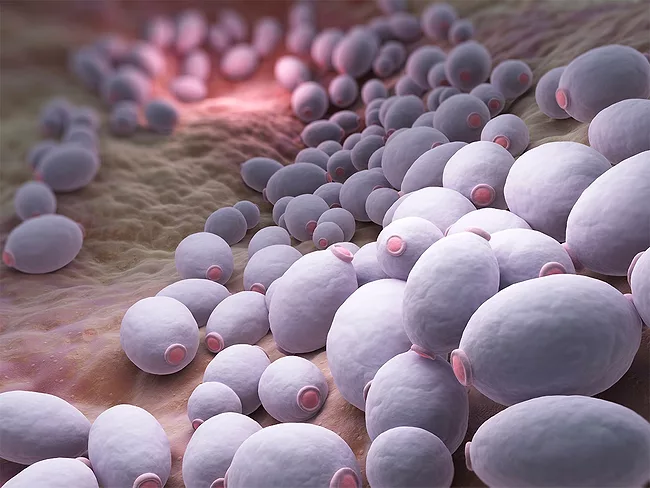
In previous work, researchers from the University of Georgia developed liposomes loaded with antifungal drugs and coated with the carbohydrate recognition domains of mouse dectin-1 and/or dectin-2, called Dectisomes. The murine Dectisomes efficiently bound and killed pathogenic fungi in vitro and in mouse disease models. In a new study, the team aimed to explore how to potentially move Dectisomes into the clinic with human dectin orthologues.
Appili Therapeutics Inc. and its partner Vitalex Biosciences LLC have announced that the National Institute of Allergy and Infectious Diseases (NIAID), part of the National Institutes of Health, has awarded up to $40 million in funding to support the development of VXV-01, a vaccine aimed at protecting against invasive fungal infections.
Invasive fungal infections pose a significant global health challenge due to their severity and the scarcity of effective and safe treatment options. Unlike antibacterial drug development, creating new antifungals is especially challenging because fungal and human cells share a eukaryotic structure, highlighting the need for innovative treatment strategies.
Scientists at the Weizmann Institute of Science in Israel announced the discovery of the new intestinal microbiota species Kazachstania weizmannii in mice, which competed with and limited the growth of Candida albicans, thus preventing candidiasis. Both microorganisms belong to the Saccharomycetaceae family and reside in humans, maintaining a complex interaction with therapeutic value.
The topical combination therapy miconazole plus domiphen bromide (MCZ-DB) resolved signs and symptoms of acute vulvovaginal candidiasis (VVC) and eradicated the yeast Candida albicans from vaginal swabs to a greater extent than miconazole (MCZ) alone in a phase II study, according to Hyloris Pharmaceuticals SA and Purna Female Healthcare.
The co-founders of Zero Candida Ltd. described, in the company’s first PCT filing, their development of a drug-free solution for treating vaginal fungal infections using an intravaginal light-based treatment device (ILTD) that projects light at predefined intervals and intensities to treat infection.