Drug developers big and small are pursuing a solution for the curse of psychosis that occurs along with the already tragic diagnosis of Alzheimer’s disease, an affliction known as ADP.
Maplight Therapeutics Inc.’s pricing of a $258.9 million financing this week revived the debate over whether targeting the M1 as well as the M4 muscarinic receptor – as Bristol Myers Squibb Co. does with U.S. FDA-approved Cobenfy (xanomeline and trospium chloride) for schizophrenia – is a better strategy than going after M4 alone.
The acquisition of Karuna Therapeutics Inc. by Bristol Myers Squibb Co. (BMS) was announced in December 2023, and closed as the BioEurope Spring meeting was convening in March. Along with the acquisition of Cerevel Therapeutics Inc. by Abbvie Inc., the deal signaled that big pharma companies were ready to get back into the brain diseases space.
Abbvie Inc.’s much-hyped emraclidine, the centerpiece of its $8.7 billion buyout of Cerevel Therapeutics Inc., failed to hit its endpoints in two phase II trials in schizophrenia, sending company shares (NYSE:ABBV) down more than 12.6%, to close at 174.43, catching industry watchers by surprise and removing a potentially near-term competitor for Bristol Myers Squibb Co.’s recently approved antipsychotic, Cobenfy (xanomeline-trospium).
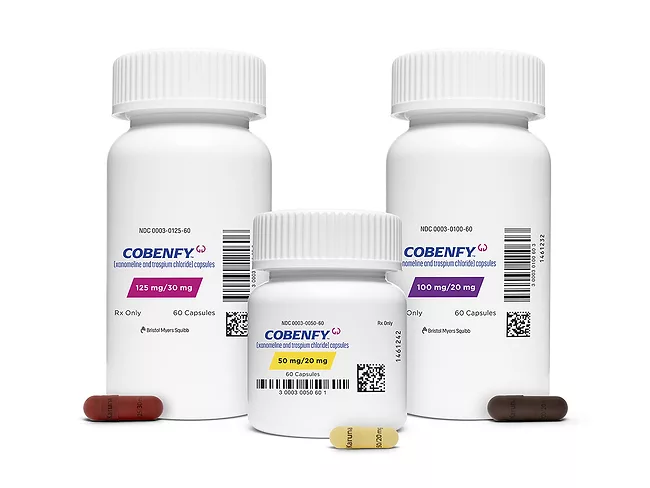
The FDA has approved Cobenfy, a dual M1/M4 muscarinic agonist that offers a fundamentally different approach to treating schizophrenia. The fixed dose combination of xanomeline-trospium is the first to act via a novel mechanism for the serious psychiatric disorder in over 50 years, finally expanding the treatment options beyond dopamine-targeted therapies. Bristol Myers Squibb Co., which acquired Cobenfy developer Karuna Therapeutics Inc. for $14 billion in a deal that closed in March 2024, said the drug will be available in the U.S. from late October.