
Sponsored content
Novellia brings the power of AI to end the problem of fragmented health data
Fragmented health records are one of the biggest barriers to progress in medical innovation and personalized care. Novellia solves this with an award winning, AI-enabled platform that gives biopharma companies access to structured, real-world data that fuels smarter, faster research while putting patients in control of their records.
Real world data hold the keys to streamlining clinical development, boosting R&D productivity, delivering better drugs and improving outcomes. But to realize these benefits, companies must pull together fragmented patient records and deidentify, structure and interrogate this complicated data to uncover the insights within.
As one example of the high level of fragmentation of medical records and clinical data, a cancer patient is likely to amass over 100 terabytes of data in separate medical records that are distributed across primary care, hospital and laboratory systems.

Shashi Shankar, co-founder and CEO, Novellia
“The first order problem is how do you build access to all of those different systems and fuel autonomous data collection from all these different sources?” said Shashi Shankar, co-founder and CEO of Novellia.
The traditional approach has been for health data and analytics companies to make bilateral agreements with health systems or data warehouses. “They strike one or two partnerships and bring in data that’s high quantity but low quality from one or two sources,” Shankar said. “Our belief at Novellia is that in order to really solve this, you first have to fully harness interoperability to get access to as many different data sources as possible, and quickly and efficiently clean the data to make it useful.”
By using machine learning and AI tools to automatically knit health records from disparate sources into longitudinal medical histories, Novellia gives biopharma companies access to clean, longitudinal data – powering precision research at scale. At the same time, patients gain control over their health records through a seamless, AI-driven experience.
Patient-powered access initiation
While patients already were owners of their data, by mandating that access to medical records be more streamlined and readily available through patient portals and other digital means, the 21st Century Cures Act has underpinned Novellia’s objectives.
That mandate was a necessary step, but to spur them to use this right, patients need to appreciate how they will benefit from being in control of their own health information. “We began by launching a patient-facing product that is available for free on our website,” said Shankar.
In 90 seconds, it is possible for an individual to agree to the terms and conditions and authorize Novellia to pull in multiple records from health systems, hospitals and labs.
This positions patients to use the data in a meaningful way, to manage their healthcare. The Novellia app also encourages engagement by enabling individuals to add new data, track symptoms, or provide feedback on adherence to treatment. “We’ve built a best in class product that gives patients something they’ve never had before: instant access, complete control, and the power to turn their health data into action,” said Shankar.
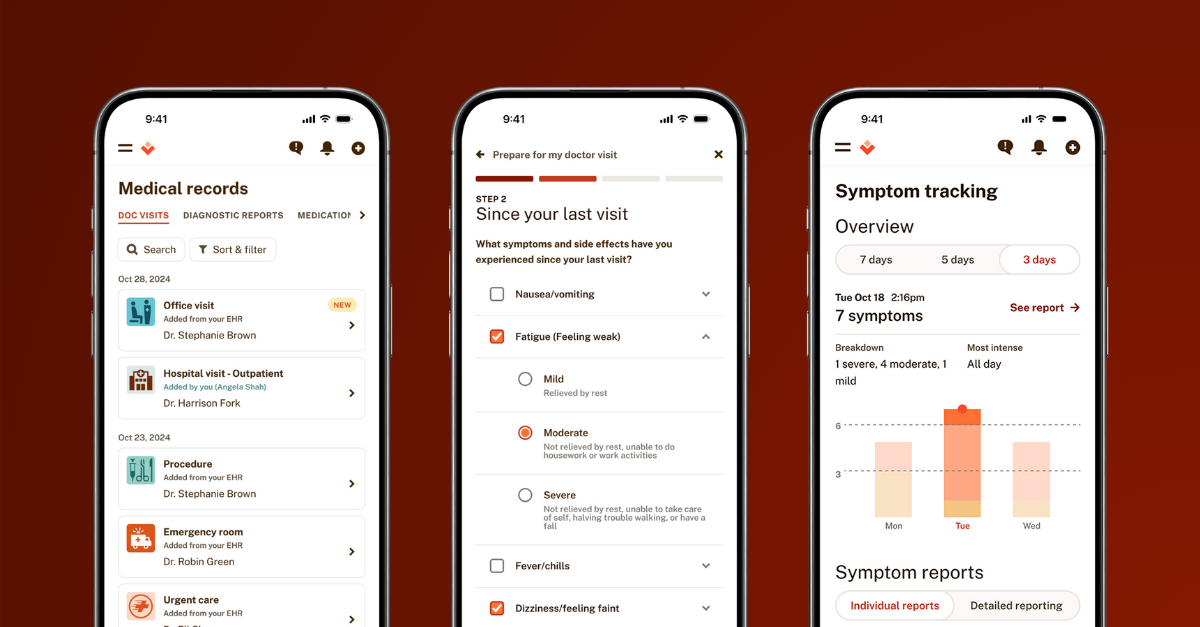
The ability to access fragmented data stores – and make sense of the unstructured complexity – rests on the intensive investment Novellia has made in both integrations and AI. By connecting to tens of thousands of different data repositories and applying machine learning to clean, unify, and structure incoming records automatically, Novellia turns messy inputs into a clear, patient-centered view.
As a result of this effort, “Novellia now has integrations into virtually all clinics, health systems, electronic medical records systems and laboratories in the country,” said Shankar.
One of the imponderables that Novellia faced when drawing up its patient-centered strategy was the level of awareness patients have of where any of their records might be held. As Shankar puts it, “Even if you give people a menu, they’ve got to know what they want to order.”
As it turned out, the ill wind of COVID had one positive effect in that it spurred people to use online patient portals to self-serve test results and interact with healthcare providers during lockdowns.As a result, around 80% of American adults are now signed up to at least one patient portal.
“The overwhelming majority of folks know where some of their health data sits, and more than 50% have multiple patient portals,” Shankar said. “There is no longer a concern about whether patients know where their data is, and the dramatic growth we’ve seen across our platform proves it.”
People are importing as many as 4,000 to 5,000 records when they sign up to Novellia’s website.
Novellia’s initial focus has been on late-stage and observational studies, where patients are highly motivated to unify their health records and sponsors have an urgent need for comprehensive, real-world data. “It’s a high-impact starting point with strong alignment between patients, researchers, and data needs,” Shankar said. But this is just the beginning. “By building this foundation, we’re able to support broader use cases across the entire biopharma value chain and throughout the entire therapeutic lifecycle – from early-phase R&D to label expansion and beyond.”
From a standing start, Novellia now has millions of records on its platform, with the first quarter of 2025 marking the fastest growth to date – and the second quarter already on track to surpass it.
Firing up the AI engine
Acquiring the data is one thing. But once gathered, it must be shaped into a usable form that generates actionable outputs.
To do this, Novellia has built a self-trained AI engine which automatically cleans, aggregates and de-duplicates the data as soon as it is downloaded.
Following on from this, the data is normalized. A good example of what is involved is dosage: 0.25 milligrams could be written as a word, as a number, or as a fraction. The Novellia engine automatically puts this type of information into a standardized format and makes inferences that enrich the content. The final piece is consolidating the cleaned-up data, so that each patient goes from having data from five to six sources, to having an integrated whole.
Layered on this, Novellia provides tools to manipulate and enrich the data. “For example, for any medication, we can automatically show any side effects and patients can add information about the side effects they experience day to day,” Shankar said. Additional features – like personalized medication reminders, AI-generated health summaries, and predictive trend alerts—are currently in development to support even more proactive, AI-guided care.
Delivering insight and improving outcomes
Having put the patient at the center and applied AI tools to create a personal health management app that adds value, Novellia is positioned to work directly with biopharma clients to provide additional insights that come from de-identified real world data, informing them about what happens to their products and how they are used.
Across first-in-human studies, clinical development, market launch and post-marketing, pharma companies require data on up to 100,000 patients over 10 to 12 years to meet regulatory, reimbursement, pharmacovigilance and other statutory requirements, and to gather in data supporting label extensions.
“There’s a ton of data that pharma companies need to understand how their therapies impact patients in the real world, and that need for access to patient data is multiplied across all candidate drugs in clinical development,” Shankar noted.
The added value for biopharma clients is that Novellia can provide health data from sources other than the principal investigator, that they cannot access.
“It’s fine if a patient only goes to Stanford for clinical care, but a woman with breast cancer, on average, has four to five physicians. They’re seeing an oncologist, a nurse specialist, a general practitioner and an OB/GYN,” said Shankar. In that case, Novellia can gather in all the medical records, typically increasing the volume of data 10- to 20-fold.
More sensitive and insightful outputs
The comprehensive longitudinal data from patient records that feed Novellia’s scenario modeling makes for more sensitive and insightful outputs than is the case for models based on time-limited data from patients during clinical trials.
Although only involving a small number of patients, the breadth of data sources to which Novellia has access have provided fresh insights into adverse events in HER2+ breast cancer patients treated with antibody drug conjugates.
Interstitial lung disease (ILD) is an adverse drug reaction associated with targeted antibody drug conjugate therapies for treating HER2+ breast cancer. Based on reports in the medical literature it occurs in 10% to 14% of patients. While the mechanism is not fully understood, it is thought to involve an immune response that drives inflammation in the lungs.
While potentially severe, low-grade cases can be treated with steroids, meaning it is important that patients are aware of, and promptly report, symptoms of ILD. At the same time, clinicians need to be aware of the risk factors.
In Project EVOLVE, Novellia aimed to better understand the incidence and warning signs of ILD in a real-world setting. From the analysis of a half million unique health records, it was shown that only 4.17% of respiratory adverse events were identified as ILD, significantly fewer than reported in the literature, with asthma, colds and COVID-19 accounting for most respiratory problems.
Patient educational materials were tailored based on this insight, leading to improved adherence and greater confidence in self-management of symptoms. At the same time, this knowledge gave healthcare providers greater confidence in their treatment selection and in managing adverse events.
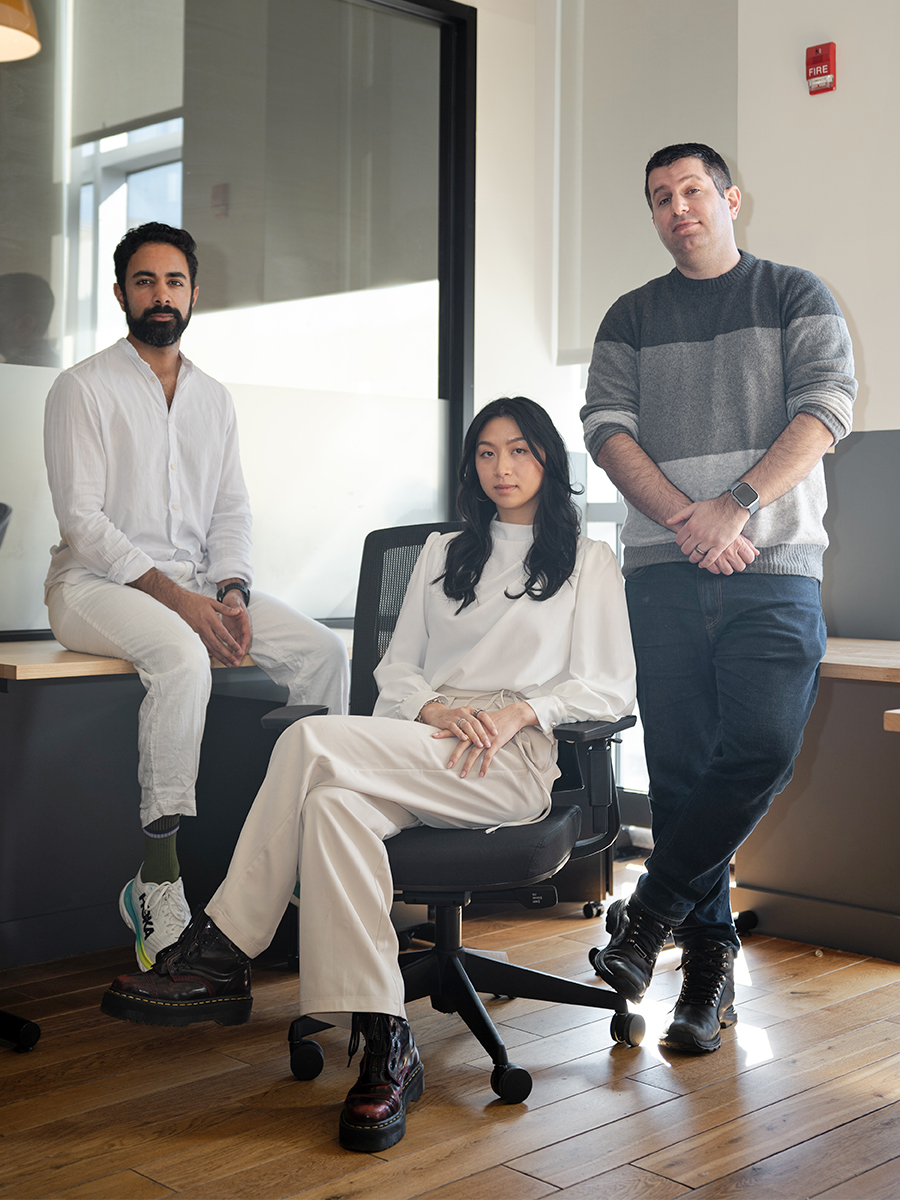
Shashi Shankar (CEO), Angeline Chen (Head of UX and Growth), Elliot Katz (CTO). Credit: Novellia.
“These findings show that even within a small patient sample size, there are variations – true variations – from what you might see in more homogenous clinical trials data,” said Shankar. “I think that is where our partners find the data valuable, because in conversations with their customers – health systems, insurance companies and so on – it enables them to say that within this very controlled study, we found some interesting things. For example, we found some variations from the published literature that we’d like to discuss with you.”
Novellia’s technology also supports precision medicine, improving access to targeted therapies. In one project, the company brought together datasets from specialist oncologists, community oncologists and testing labs, to investigate the relationship between companion diagnostic tests and the subsequent selection of therapy.
“If you use the old bilateral partnering approach that a lot of legacy data vendors still use today, you’re going to miss two of these data sources and only see snapshots of care. Our platform continuously pulls data from multiple sources,” Shankar said, “allowing us to reconstruct the entire real-life, longitudinal story.”
That shows community oncologists and academic oncologists have the same rate of biomarker test ordering, and any given patient would get the test at the same time. However, there were marked differences in overall survival and progression free survival between patients treated in the community and those treated by academic specialists.
Looking into this, Novellia found that community oncologists prescribe a test, but then go on to prescribe drugs in advance of getting the results because of a three- to four-week turnaround time.
Academic oncologists have a testing lab on site, get much faster feedback and are able to prescribe the correct targeted therapy sooner. “That’s what’s driving the disparity in outcomes, and for us, it’s all about being able to link all of these pieces of data to say, this is what’s going on here: it’s not that community oncologists aren’t ordering biomarker tests, it is that they are not being applied appropriately,” said Shankar.
Novellia is poised to add greater value and to scale
Novellia’s initial focus, or “sweet spot” in terms of its business development, is about a year before the commercial launch of a product, when it is significantly de-risked, the PDUFA date is on the cards and biopharmas need data to negotiate access and promote uptake.
From this foundation, Novellia plans to expand into providing insights from the earliest stages of clinical development. “Once we have enough data, we can actually do a lot of predictive and causal inference and run a synthetic scenario, to say – before a company hits the lifecycle investment point of a therapeutic candidate – if it’s going to be worth it,” Shankar said.
A ground breaking feature currently in development leverages generative AI to create real-time, personalized health summaries – a first-of-its-kind capability in the patient data space. “You will see a small paragraph that says, I’m X years old, I was diagnosed with rheumatoid arthritis in 2018, I currently take Y milligrams of methotrexate, I’ve had difficulty adhering to it and over the past three weeks, I’ve had stiff joints at a very severe level,” Shankar explained. “In response, the system will say, you have an upcoming appointment with your immunologist in two weeks, these are the three questions you should ask, based on your unique history, and here are two educational resources you should explore.”
This AI-powered assistant marks a new standard in how patients make sense of their health data – bridging the gap between fragmented records and real-time, informed decision-making, while helping to minimize disruptions in a patient’s care plan. “If a therapy isn’t going well, instead of you having a serious adverse event, we aim to prevent that using automated technologies,” said Shankar.
He is confident this will be possible. “If you overlay our proprietary datasets with published datasets, you can see through trend analysis, that if a patient has these four symptoms over and over again within a three-week period, they are highly likely to present for this adverse event, and then they are highly likely to drop therapy.”
Conversely, researchers can gain insights into which patients, with which background, are likely to drop therapy the soonest. “You can see when people are trending towards dropping off a treatment and take steps to prevent that from happening, or provide them with support,” Shankar said.
Next, Novellia plans to pull in other classes of data – including health insurance and genomics data – and apply advanced AI to draw precise inferences about patient outcomes by analyzing correlations between genomic profiles, clinical histories and insurance data.
After investing time and resources to build the platform, Shankar said Novellia is now poised to scale. “We took two years to build a best-in-class product, we saw that it worked in beta testing, now we have evidence of real-world impact – and the demand from biopharma has followed,” he said. With several top biopharma companies already on board and more collaborations taking shape, Novellia is redefining the future of evidence generation.
|
New York-based Novellia was founded by Shashi Shankar and chief technology officer Elliot Katz – two leaders uniquely positioned to bridge the worlds of healthcare, data, and AI. As former Global Digital Health Lead at Roche and Marketing Lead at Genentech, Shankar has experienced firsthand how fragmented data stalls innovation across the biopharma value chain. Katz, a seasoned engineer with experience leading engineering teams at Zocdoc, Thirty Madison, and the AI company Wonder.com, brings the technical firepower to crack the integration issue and architect the AI systems at the heart of Novellia’s platform. Together, they’re building an AI-enabled platform that’s redefining how health data drives discovery and accelerates better outcomes. |
To learn more about how Novellia helps leading biopharma companies close the gap between data and decisions, visit novellia.com.