
Spevigo so-so, innovator takes another Turn at IL-36 in eczema
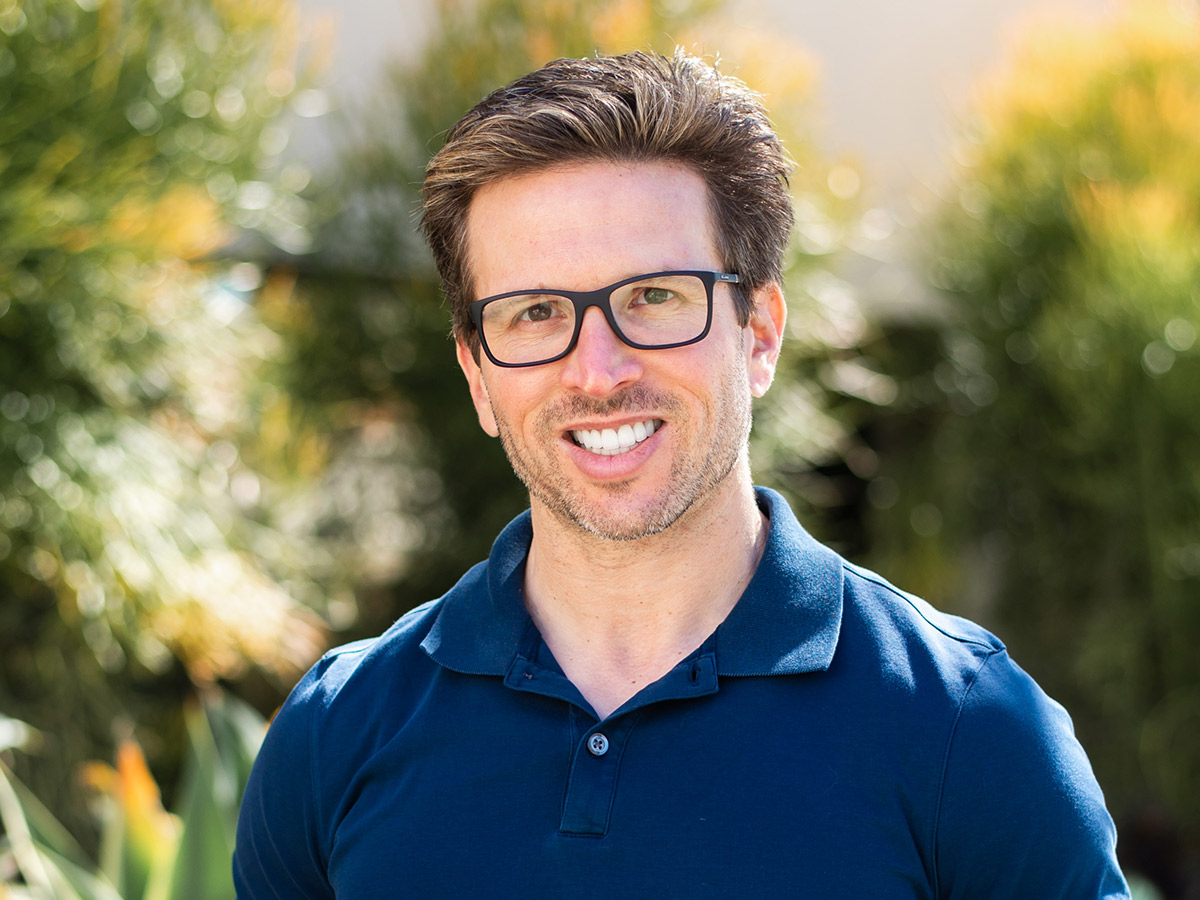 Bradley Burnam, CEO, Turn Therapeutics
By Randy Osborne, Staff Writer
Originally published April 11, 2025, in BioWorld
With a promising IL-36 inhibitor for atopic dermatitis (AD, or eczema) at the phase II stage, Turn Therapeutics Inc. has gained $75 million in post-public commitments and meanwhile is pursuing a grassroots strategy to keep the coffers in balance.
Key opinion leaders regard IL-36 as “the golden goose” in eczema, CEO Bradley Burnam told BioWorld, and his Los Angeles-based company has launched a crowdfunded investment round in tandem with the start of an upcoming midstage test of the flagship nonsteroidal topical platform in patients with moderate to severe AD. At the same time, the busy company has engaged Clear Street to explore pathways to the public markets.
“One of the reasons why people crowdfund is because when you go public, you need at least 500 investors,” Burnam said. The move “was a bit of a political-social statement, I will admit out loud. I didn’t like the fact that when I was dead broke and hadn’t heard about venture capital [VC], nobody was coming to me with cool things [in which to invest] 100 bucks or 200 bucks,” he said. “We all know that the people who make really good money are selling when you go public, not buying in.”
The SEC process to allow money from non-accredited investors was “really hard,” Burnam said. More than enough shareholders have climbed aboard for the company to go public per Nasdaq rules, “and everybody can get some of the upside,” he said. The move “was almost my Bernie Sanders moment, I guess you could say,” though he tends to steer clear of politics. Biotech “shouldn’t just be [driven by] the VCs and the rich guys. Why can’t everybody enjoy [investing] and feel like they’re part of this fun journey, too? That’s really why I did it.” The crowdfunding push will continue until Turn lists publicly. The financing pledges have been secured through a facility with the private equity and alternative investment group called GEM.
Part one yesterday in BioWorld’s two-part series on AD examined new approaches in the disease that include targeting IL-2. This second part details the efforts by Turn to put IL-36 as well as IL-31 in the crosshairs. “It’s the first punch in the entire eczema cascade,” Burnam said of IL-36. “We can stop [the disease] before it starts, in theory.”
Boehringer Ingelheim GmbH had an IL-36 theory, too, and investigated its idea with Spevigo (spesolimab), the receptor antagonist first approved by the U.S. FDA in September 2022 for generalized pustular psoriasis. The Ingelheim, Germany-based outfit’s phase II trial in AD missed statistical significance, though numerical improvements were turned up in the primary endpoint of change from baseline in the Eczema Area and Severity Index score. Spevigo showed an acceptable safety profile, with no unexpected safety concerns.
Burnam’s entrepreneurial odyssey began when, having studied behavioral neuroscience in grad school, he became a device sales rep specializing in pacemakers. “You’re getting a ton of patient contact, so you’re exposed to all the same organisms as everybody else is,” he said, which is how he contracted a “nasty gram-negative organism” in the carbapenem-resistant Enterobacterales family. The bug’s effects manifested in his soft tissue, as about 24% do. Five years of chronic wound care followed, including 21 surgeries and an episode of sepsis. Open abscesses were packed six days a week for six months at a time, Burnam said – an agonizing process. “You become intimately familiar with everything they’re using.” Mainly what they were using: Neosporin (neomycin, polymyxin B, bacitracin; Johnson & Johnson [J&J]). “That was when I learned the sad fact that Neosporin was never formally FDA-approved,” he said. “I have yet to meet a doctor [who] knew that. They’re using stuff that’s 75 years old and doesn’t probably work anymore.” In any case, Burnam developed an allergy to Neosporin, so that drug was off the table.
A ’one-man show’
He began to scrutinize the wound-dressing space overall, which mainly consisted of Neosporin and Bactroban (mupirocin, GSK plc). After these, the options involved such non-remedies as ionic silver and honey. But in Europe, he found, the cationic polymer polyhexamethylene biguanide, or PHMB, is widely used as a broad-spectrum disinfectant and antiseptic. “It’s never been an active drug ingredient,” Burnam said, though PHMB is non-cytotoxic, non-sensitizing and so benign that it would be harmless if ingested. “I decided to literally order it,” he said. “I probably broke customs laws in the process. I don’t even know how people were shipping this stuff. It turns out you can get anything on Ali Baba.”
The PHMB came from Lonza Group AG, and Burnam bought a 55-pound barrel of petrolatum unloaded from a truck at his house. He started experimenting in his garage. “My neighbors probably thought I was working in a meth lab,” he said, and a few of them nicknamed him “Breaking Brad.” He worked with the PHMB and petroleum for years. “A few chemical burns and a hundred trials or so later, I finally figured out how to permanently fuse this liquid [and] the petrolatum without any other ingredient in between” for the first time ever, thereby creating a wound solution in the form of “a sticky thing that would actually kill the bugs.” An attorney friend said, “You just mixed oil and water. We should probably throw some patents” at it. They did.
Burnam consulted with labs and doctors on the product, which proved “as gentle as Chapstick” but potent. All the research he carried out was paid for by way of his credit card and withdrawals from his 401k. “I didn’t have any money,” he said. “I’d never heard of a VC fund and barely knew what quarterly taxes are.” His mother signed for a credit line and Burnam, with his invention, went the 510(k) route, with help from the FDA, where officials guided him through the vast paperwork. “I have pictures of my workstation at Kinko’s,” he said. “The whole thing cost me $24,000.”
Then, marketing. Burnam made 20,000 samples, quit his job and flew around the country handing them out. “The 800 number on the back of the tube [for customer service] went to my cell phone,” he said. Hexagen, now sold by McKesson Corp., was cleared at the end of 2016. The treatment’s success was completely a “one-man show.”
Doctors, Burnam observed, are clever, and soon began trying the product for other indications. “Botox was [originally] for crossed eyes, Viagra was a heart drug,” he pointed out – would his formula work for eczema?
A paper published in 2017 by Lloyd Miller and others at Johns Hopkins, provided backing for Burnam’s thesis. Miller “was a professor there – he’s now at J&J running the derm division, which is no surprise,” Burnam said. “[Miller] said, ‘I think eczema is much more connected to Staphylococcus aureus [staph] than people realize.’” Some patients develop eczema and can’t get rid of it, and these were found to have more staph on their skin. Because of a defect in the filaggrin gene, their skin is thinner than normal: a good host for staph.
“The Johns Hopkins paper study said staph directly triggers IL-36,” Burnam said. Miller “proved that by knocking out the IL-36 receptor, we could stop eczema, even if we paint these people and animals with staph.” Burnam’s formula ultimately was found to block “IL-36 alpha, which is eczema, and IL-36 gamma, which is psoriasis, as well as IL-31, which is the itch one. Everybody really wants [to knock out] IL-31,” he said. IL-4 is in the mix as well. Turn’s phase II trial will begin recruiting end of this month, lasting eight weeks in moderate to severe AD.
Research over a span of 50 years that has included about 200,000 people has been done using the active ingredient in the Turn therapy without safety signals. The active ingredient hasn’t been made into a drug in the U.S., Burnam said, because “apparently the Atlantic is too much of a barrier for knowledge-sharing.” His product is backed by 16 patents. “I use the stuff [like] Chapstick. My wife does, too, and so do half of my investors,” he said. “It became a really wonderful discovery that I can’t say I would have thought of, because that’s not where I started.”
For sales inquiries, visit clarivate.com/cortellis/solutions/bioworld or call U.S.: +1 215-386-0100; Europe: +44 207-433-4000; China: +86 105-760-1200. For customer service inquiries: clarivate.com/cortellis/contact-us