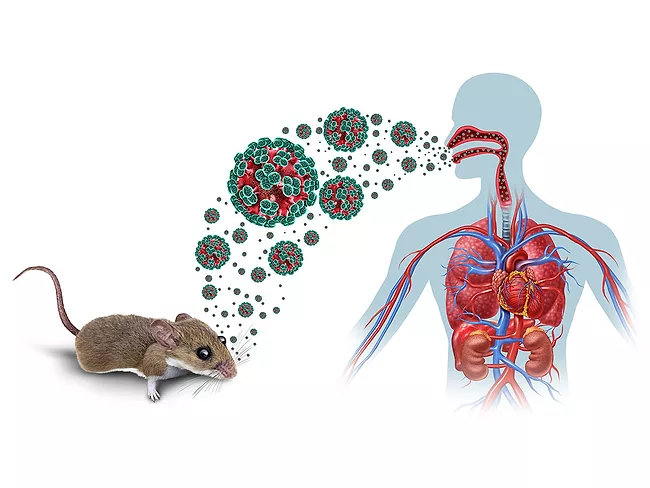
The initial appraisal of the first complete genome sequence of a hantavirus isolated from a patient in Switzerland who was a passenger on the cruise ship MV Hondius is consistent with a spillover from its natural reservoir, rather than the emergence of a markedly altered virus.
News of eight infections and three deaths so far due to an emerging zoonotic virus has brought back unhappy memories of the early days of SARS-CoV-2. At a press conference on Thursday, officials from the WHO did their best to calm the public’s fears that the MV Hondius, the ship currently heading to the Canary Islands with its remaining passengers plus assorted medical, WHO and European Center for Disease Prevention and Control staff, is the 2026 version of the Diamond Princess.
News of eight infections and three deaths so far due to an emerging zoonotic virus has brought back unhappy memories of the early days of SARS-CoV-2. At a press conference on Thursday, officials from the WHO did their best to calm the public’s fears that the MV Hondius, the ship currently heading to the Canary Islands with its remaining passengers plus assorted medical, WHO and European Center for Disease Prevention and Control staff, is the 2026 version of the Diamond Princess.
Twelve years on from the World Health Organization formally raising the alarm, antimicrobial resistance continues to grow, and despite numerous public and private incentives and initiatives, the pipeline of antibiotics in development is thinner than ever.
It’s official. A year after President Donald Trump issued an order requiring the U.S. to withdraw from the World Health Organization (WHO), that withdrawal has been completed.
After more than three years of discussion, the World Health Organization’s Intergovernmental Negotiating Body (INB) has agreed on a proposal to prevent, prepare and respond to a pandemic. The plan is born, the INB proposal said, out of inequities around the world that slowed timely and equitable access to health products to respond to the COVID-19 pandemic.
After more than three years of discussion, the World Health Organization’s Intergovernmental Negotiating Body (INB) has agreed on a proposal to prevent, prepare and respond to a pandemic. The plan is born, the INB proposal said, out of inequities around the world that slowed timely and equitable access to health products to respond to the COVID-19 pandemic.
After more than three years of discussion, the World Health Organization’s Intergovernmental Negotiating Body (INB) has agreed on a proposal to prevent, prepare and respond to a pandemic. The plan is born, the INB proposal said, out of inequities around the world that slowed timely and equitable access to health products to respond to the COVID-19 pandemic.
Compared to other forms of prevention, a unique issue for pandemic preparedness is that it is forever unclear what pathogen, exactly, the world needs to be prepared for. There are an estimated 300,000 viruses that infect mammals; add in birds, and the estimate grows to more than half a million. Some of those viruses are much greater threats than others.
Compared to other forms of prevention, a unique issue for pandemic preparedness is that it is forever unclear what pathogen, exactly, the world needs to be prepared for. There are an estimated 300,000 viruses that infect mammals; add in birds, and the estimate grows to more than half a million. Some of those viruses are much greater threats than others.