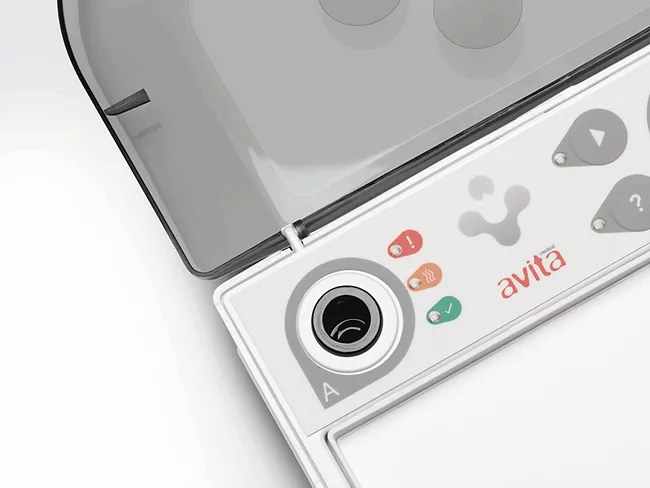
Avita Medical Ltd.’s Recell system won FDA breakthrough device designations in soft tissue repair and vitiligo. Melbourne-headquartered Avita, a regenerative medicine company developed the Recell system, a technology platform that enables point-of-care autologous skin restoration.
Teleflex Inc. issued a recall of its Iso-Gard S filters for respiratory equipment due to reports of separation, a problem that could impede the delivery of oxygen to patients. The class I recall was driven by 36 complaints and four injuries reported to the U.S. FDA, and affects more than 60,000 units shipped between Sept. 1, 2020, and July 5, 2022.
The U.S. FDA held a two-day advisory hearing in the last week of October 2022 to address some lingering regulatory questions, including the question of whether therapeutic nail prostheses should be a class I device. The potentially more dramatic shift, however, would be the application of a class III risk designation to tissue expanders used in breast surgery.
Just as the U.S. FDA gathered industry leaders to address the issues posed by pulse oximeters that provide inaccurate measurements for individuals with darker skin, Biointellisense Inc. released its own FDA-cleared technology that provides accurate readings regardless of skin tone. The challenge of inaccurate readings for people with darker skin came to the fore with the COVID-19 pandemic as fingertip pulse oximeters emerged as a convenient method of monitoring for hypoxia at home and in clinics, but frequently overreported oxygen levels in the blood of people of color, leading to delayed treatment.
Shortages of medical devices were not particularly topical before the COVID-19 pandemic, but they have dotted the landscape in the past three years despite the U.S. FDA’s best efforts to manage such issues. The agency recently announced that tracheostomy tubes are now among the device types that are in a state of shortage, a problem created by a paucity of the raw materials used to manufacture these items.
The U.S. FDA declined to approve Gilead Sciences Inc.’s Hepcludex (bulevirtide), issuing a complete response letter (CRL) citing manufacturing and delivery concerns for the antiviral aimed at treating confirmed chronic hepatitis delta virus (HDV) infection in adults with compensated liver disease. Acquired in Gilead’s 2021 buyout of Myr GmbH, Hepcludex received conditional approval from the European Commission in 2020 and would have been the first drug cleared for HDV in the U.S. Its delay, however, could give a boost to Eiger Biopharmaceuticals Inc., which is expected to report phase III data for lonafarnib by the end of 2022.
Skeptical briefing documents pertaining to the U.S. FDA’s adcom meeting on Y-mabs Therapeutics Inc.’s Omblastys (131I-omburtamab) turned out predictive of the less-than-happy outcome, as the regulator’s Oncologic Drugs Advisory Committee (ODAC) turned thumbs down on the prospective drug for pediatric central nervous system/leptomeningeal metastasis from neuroblastoma.
A U.S. FDA advisory panel saw a number of problems in the clinical trial for the Avertd test for opioid use disorder (OUD), including the fact that the study failed to enroll a sufficiently ethnically diverse body of subjects. Perhaps more damning was that the advisory panel was uncertain as to whether the 15 single nucleotide polymorphisms (SNPs) evaluated in the test were helpful in sorting out which patients were truly at high risk of OUD, leading to an 11-2 vote that the probable benefits of the test do not outweigh the risks.
Innovative medical devices are the norm for reviewers at the U.S. FDA’s Center for Devices and Radiological Health (CDRH), but regulatory innovation is a tougher climb. In response, CDRH director Jeff Shuren said at this year’s Medtech Conference in Boston that the agency is eyeing a voluntary alternative pathway (VAP) for novel digital technologies, although this concept is unlikely to see the regulatory light of day other than as a pilot program at any point in the next year or two, given the need for statutory authorization.
The new EU Medical Devices Regulation (MDR) is not going down well with Swiss medical technology manufacturers. At a conference held on Oct. 19 in Bern, Switzerland on introducing the new EU MDR, the Swiss medical technology association, Swiss Medtech, which represents more than 700 firms, put out a harsh and definitive statement.