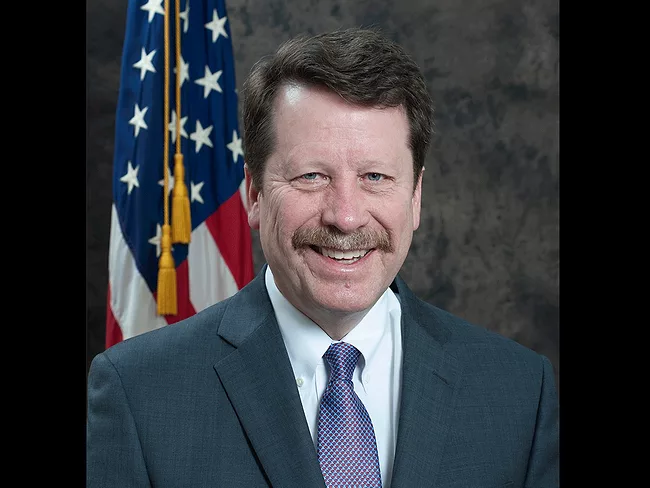
In his second stint as U.S. FDA commissioner, Robert Califf discussed the challenges in leading a massive agency that has seen seven commissioners come and go over the past 10 years.
For the second time in four years, the FDA has issued a draft guidance for cybersecurity in premarket applications, just one of several actions undertaken recently by the U.S. federal government in connection with cybersecurity.
As part of an investigation into the international provisions of the U.S. 2017 tax law, Sen. Ron Wyden (D-Ore.) is zeroing in on how Merck & Co. Inc. was able to report 14% of its pre-tax income in the U.S. when nearly half of its global sales were in the country.
Even as many in the U.S. are looking for the end of the COVID-19 public health emergency, Health and Human Services (HHS) Secretary Xavier Becerra reinforced expectations April 5 that he will continue the emergency declaration into the summer, if not beyond. When asked during a Senate Finance Committee budget hearing if he saw the emergency ending this summer, Becerra declined to give a date, but reiterated his commitment to give stakeholders at least 60 days’ notice.
When it comes to lowering U.S. drug prices, Congress has a lot of options among the several bills that have been introduced in both the House and Senate over the years. But a deadlock between bipartisan measures and partisan proposals has reduced legislative action to mere talk. The deadlock, and the at times hyperbolic debate, continued in yet another congressional hearing March 16 on “the urgent need to lower drug prices in Medicare,” as the Senate Finance Committee billed it.
The U.S. House of Representatives passed the COMPETES Act of 2022 in a narrow Feb. 4 vote that may help restore U.S. manufacturing of pharmaceuticals and the semiconductors that are critical for medical devices. However, the House bill also includes unrelated provisions such as a section dealing with health insurance costs, just one of several elements that are not seen in a similar Senate bill and which foreshadow a drag-inducing showdown between the two bills.
More than a year into U.S. President Joe Biden’s four-year term, the FDA commissioner seat remains open. While Robert Califf secured a critical endorsement Jan. 31 in his quest for a second term in the post, his hope for a sequel may still be up in the air.
At least one biopharma company is under the magnifying glass in a U.S. Senate Finance Committee investigation into large multinational corporations that shift profits overseas to avoid U.S. taxes.
Robert Califf moved a step closer to his second stint as head of the U.S. FDA when the Senate Health, Education, Labor and Pensions (HELP) Committee voted 13-8 Jan. 13 to favorably send his nomination to the full Senate for a confirmation vote.
Even though the U.S. already has a National Plan to Address Alzheimer’s Disease, a bipartisan group of U.S. senators is adding its voice to that of nearly 200 national organizations and experts in calling for more. In a recent letter to Health and Human Services (HHS) Secretary Xavier Becerra, the 15 senators requested that he make reducing the prevalence of dementias a departmental priority.