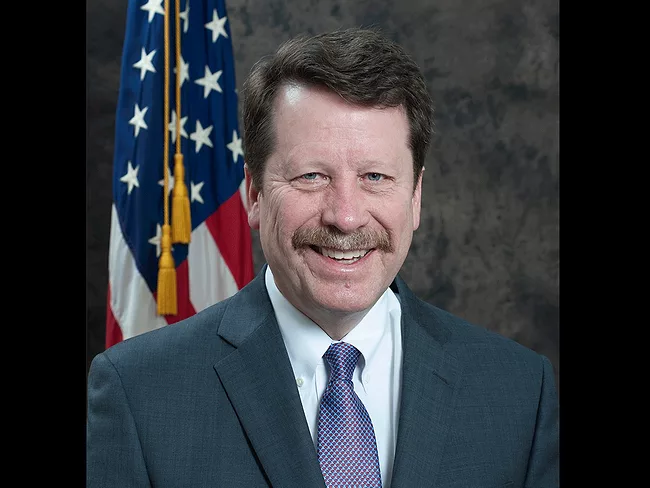
Robert Califf moved a step closer to his second stint as head of the U.S. FDA when the Senate Health, Education, Labor and Pensions (HELP) Committee voted 13-8 Jan. 13 to favorably send his nomination to the full Senate for a confirmation vote.
Even though the U.S. already has a National Plan to Address Alzheimer’s Disease, a bipartisan group of U.S. senators is adding its voice to that of nearly 200 national organizations and experts in calling for more. In a recent letter to Health and Human Services (HHS) Secretary Xavier Becerra, the 15 senators requested that he make reducing the prevalence of dementias a departmental priority.
Even though the U.S. already has a National Plan to Address Alzheimer’s Disease, a bipartisan group of U.S. senators is adding its voice to that of nearly 200 national organizations and experts in calling for more.
The U.S. Senate and the House of Representatives have reintroduced the Verifying Leading-edge IVCT Development (VALID) Act, a bill that would authorize the FDA to regulate lab-developed tests (LDT). The question of the agency’s statutory authority to regulate LDTs is part of a long-running debate, but the immediate question is whether Congress will see fit to deal with the question this year rather than wait until 2022, when the next device user fee will require legislative authorization.
Heralded as a potential turning point for U.S. innovation in the 21st century, the U.S. Innovation and Competition Act, S. 1260, is a big step closer to becoming law. The Senate voted 68-32 June 8 to pass the sweeping $250 billion bipartisan bill intended to give the U.S. an edge over China when it comes to innovation and investment in several critical industries.
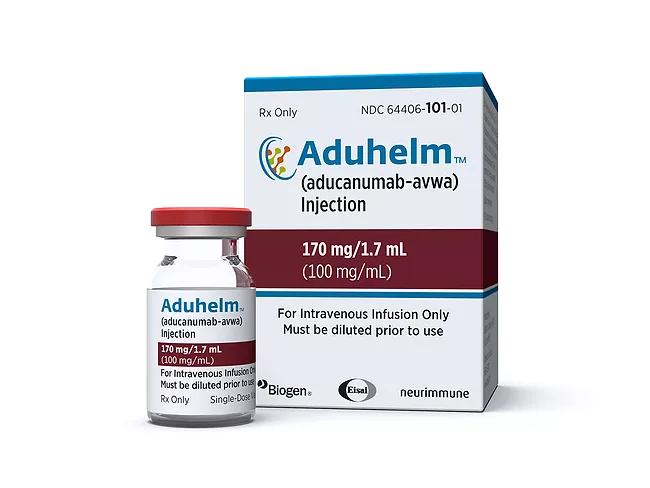
Biogen Inc.’s pricing of its newly approved Alzheimer’s drug, Aduhelm (aducanumab), has made it the latest bull’s eye for lawmakers and advocacy groups targeting U.S. drug prices, especially given the controversy surrounding the drug’s approval, which has resulted in the resignation of three of the 11 members of the FDA’s Peripheral and Central Nervous System Drugs Advisory Committee.
More than 150 U.S. patents could be at stake if the World Trade Organization (WTO) were to adopt an intellectual property waiver as originally proposed by India and South Africa.
A cautious optimism pervaded the March 11 Senate Health, Education, Labor and Pensions (HELP) Committee update on COVID-19, with witnesses and lawmakers alike welcoming the continuing decline of infections, hospitalizations and deaths in the U.S.
The U.S. Senate Finance Committee hearing for the appointment of Xavier Becerra as Secretary of Health and Human Services ended in a tie vote, which not unexpectedly ran along party lines. The nomination of Becerra was controversial on several fronts, but the outcome nonetheless sends the nomination to the Senate floor, where Vice President Kamala Harris may cast the deciding vote in what is likely to be a literal 50-50 deadlock.
The latest global regulatory news, changes and updates affecting medical devices and technologies, including: USPTO finalizes SAS rule, U.S. senators press case for permanent telehealth, CMS no fan of national coverage policy for Allomap, TGA posts guidance for class I tests, Marburg MCMs protected under PREP.