Understanding neurological disease requires several things, including a clear view of the connectome, and the U.S. National Institutes of Health may have a solution in the form of a new MRI system that allows the user to examine neural connections at the mesoscopic and microscopic scales.
Chipiron SA will produce a prototype of its ultra-low portable magnetic resonance imaging (MRI) scanner, after raising $17 million in series A financing, as it looks to make MRI more accessible.
Scientists at the University of Aberdeen developed a new scanner that distinguishes breast tumor material from healthy tissue more accurately than current magnetic resonance imaging (MRI) methods.
Dongkook Life Science Co. Ltd. (DKLS) priced a ₩18 billion (US$12.5 million) IPO on the Korea Exchange as South Korea’s first med-tech listing of the year.
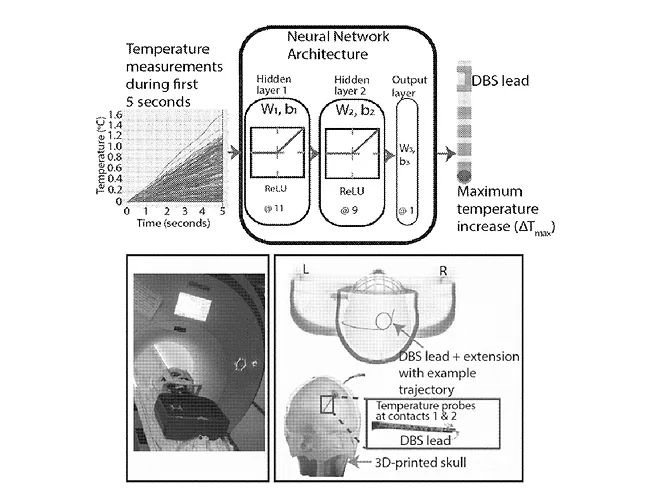
A recent patent application from Laleh Rad, associate professor of Biomedical Engineering and Radiology at Northwestern University, describes the use of machine learning for real-time risk assessment of magnetic resonance imaging in patients with conductive implants for whom tissue heating from radiofrequency excitation fields remains a major concern.
New research confirmed long-term efficacy and safety of a novel minimally invasive procedure with Insightec Inc.’s Exablate transcanial magnetic resonance-guided focused ultrasound system to alleviate symptoms of severe obsessive-compulsive disorder.
The U.S. FDA urged doctors and patients to use CT imaging if possible, when the MRI compatibility of any electronic implanted devices is unknown because problems with CT imaging are "extremely low" in these circumstances.
Researchers from Johns Hopkins University have filed for protection of their Optimal Target Identification via Modelling of Arrhythmogenesis technology – a method that builds a model of a patient’s heart from a cardiac MRI.
Airs Medical Inc., of Seoul, South Korea, raised $20 million in a series C financing round to expand its artificial intelligence-based health care technology, including for better and faster magnetic resonance imaging scans for radiologists and patients.
The U.S. FDA recently released a guidance for non-invasive remote monitoring devices, which were granted tremendous leniency during the COVID-19 pandemic as a means of reducing the demands on hospitals and doctor’s offices. That policy has been extended for the non-COVID era as part of the agency’s strategic plan to improve health equity by ensuring that access to digital health technologies is enjoyed by diverse American populations in a variety of health care access-challenged geographical areas.