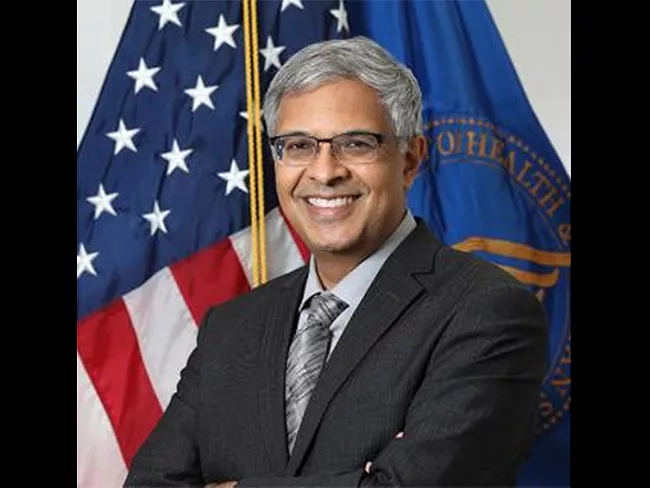
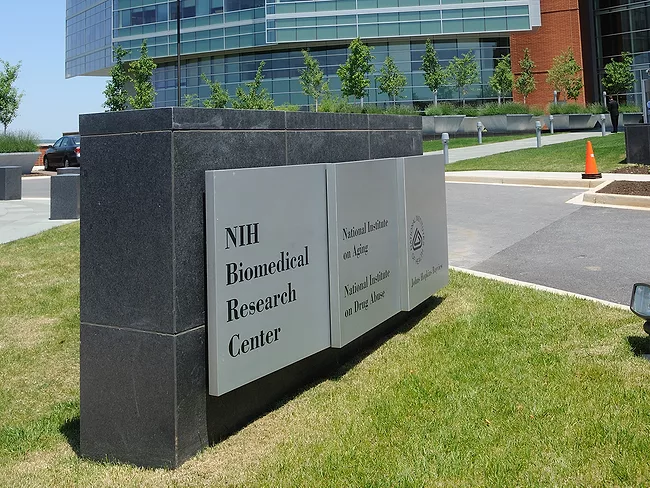
NIH Director Jay Bhattacharya is being fact-checked on his off-the cuff responses at a Senate Health, Education, Labor and Pensions Committee hearing in February. The fact-checkers are nine Democratic lawmakers from Massachusetts, only one of whom (Sen. Ed Markey) is on the committee and attended the hearing. In fact, seven of those signing the March 17 letter that questioned Bhattacharya’s veracity aren’t senators. They serve in the House.
In what the U.S. FDA has dubbed a milestone move toward fewer animal studies in drug development, the agency published a draft guidance to help sponsors validate new approach methodologies that can bring safe, effective drugs to market sooner based on human-centric data rather than starting off with nonclinical animal pharmacology and toxicology data.
In what the U.S. FDA has dubbed a milestone move toward fewer animal studies in drug development, the agency published a draft guidance to help sponsors validate new approach methodologies that can bring safe, effective drugs to market sooner based on human-centric data rather than starting off with nonclinical animal pharmacology and toxicology data.
In keeping with the congressional practice of passing major NIH reform legislation every 10 years, the U.S. Senate Health, Education, Labor and Pensions (HELP) Committee took the first step in looking at what can be for the NIH while unburdening it from what has been over the past few years.
The good news is that the U.S. Congress is on track to pass a slate of fiscal 2026 spending bills before the current continuing resolution expires Jan. 30. So, barring any last-minute disputes or legislative hostage-taking, there should be no repeat of last year’s 43-day shutdown that impacted NIH grants and activities.
Unless the U.S. Supreme Court steps in to reverse the decision, the NIH’s attempt to cap indirect costs at 15% in all its grants is dead. The U.S. Court of Appeals for the First Circuit upheld a permanent injunction Jan. 5 that was issued by a lower court, vacating an NIH supplemental guidance imposing the across-the-board cap both retroactively and prospectively.
Unless the U.S. Supreme Court steps in to reverse the decision, the NIH’s attempt to cap indirect costs at 15% in all its grants is dead. The U.S. Court of Appeals for the First Circuit upheld a permanent injunction Jan. 5 that was issued by a lower court, vacating an NIH supplemental guidance imposing the across-the-board cap both retroactively and prospectively.
Over a span of five-and-a-half months this year, 3.5% of the more than 11,000 clinical trials funded by the U.S. NIH had their grants terminated, according to an article published in the Nov. 17 JAMA Internal Medicine. That’s 383 trials that lost funding.
Owlstone Medical Ltd. has been awarded up to $49.1 million in funding by the Advanced Research Projects Agency for Health (ARPA-H) to develop over-the-counter, at-home, cancer screening tests. These tests will be able to accurately detect more than 30 cancers as early as stage I, when tumors are still small and survival rates are highest, revolutionizing the field of cancer detection and improving patient outcomes.
On Thursday, the Supreme Court handed the Trump administration another significant victory in its attempts to defund NIH-sponsored research. In a 5-4 decision, the justices paused the June 16 order of U.S. District Judge William Young to restore funding for hundreds of canceled NIH research grants focusing on gender and diversity, equity and inclusion (DEI). The funding had first been cut through a series of executive orders shortly after President Donald Trump resumed power in January.