After getting its 510(k) application rejected by the U.S. FDA for its AI-enabled Salix coronary anatomy software (SCA), Australian medical technology company, Artrya Ltd. scored regulatory approvals in the UK and in the EU.
After years of dialogue between the U.S. FDA and industry, the agency’s long-awaited draft guidance for computer software assurance (CSA) for manufacturing facilities signaled a new, less cumbersome approach to validating these systems. However, drug and device manufacturers registered concerns about a lack of clarity in the draft, including 23andMe Holding Co., which said the draft’s references to methods that merely “help to fulfill” validation requirements leave too much gray area to be helpful.
Predictive analytics startup Intus Care Inc. scooped up $14.1 million in a series A round led by Deerfield Management. The funds will be used to advance and scale its software platform for geriatric care.
Endpoint solutions company Clario Inc. has published a roadmap on how artificial intelligence (AI) can be used to improve the experience of patients participating in decentralized clinical trials (DCTs).
Curvebeam AI Ltd. won a U.S. FDA breakthrough device designation for Ossview, its investigational software that detects osteopenia or reduced bone mass in the already fragile bones of women 70 years of age and older. Osteopenia is difficult to diagnose using conventional bone mineral density (BMD) testing because small changes in density mask major changes in bone microstructure.
Rsip Vision Ltd. has debuted a new tool for making 3D reconstructions of the ureter. The vendor-neutral tool, which uses artificial intelligence (AI) and deep-learning algorithms to make 3D reconstructions, is available to third-party medical device companies using three-arm imaging and viewer solutions.
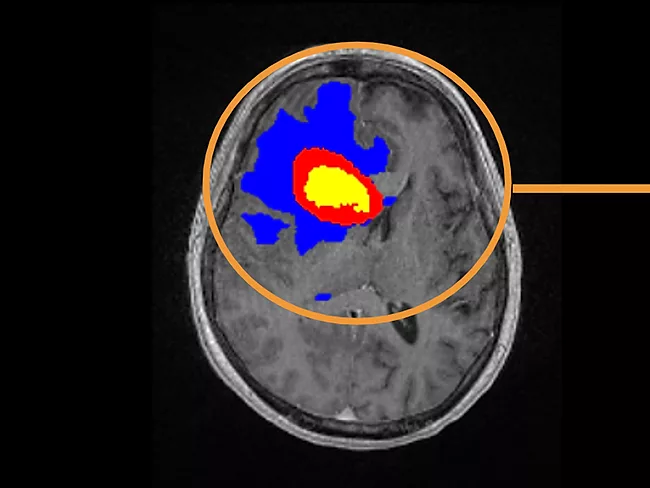
Brain MRIs can reveal a great deal about brain tumors, but tracking response to treatment, clearly delineating edges and identifying other critical information remain problematic. Neosoma Inc.’s recently granted FDA 510(k) clearance may simplify treatment of the most challenging of these tumors, high-grade gliomas. The Neosoma High-Grade Glioma (HGG) neuro-oncology software device uses artificial intelligence to provide detailed measurements and 3D analysis that enable greater precision in procedures and better monitoring.
The U.S. FDA’s finalized guidance for clinical decision support (CDS) software was not an entirely isolated policy change inasmuch as there were several other guidances that were edited and reissued two days after the CDS final was published. One of these is the guidance for device software functions and mobile medical apps, which now encodes a transparency requirement as seen in the CDS guidance, a change that may represent a hazard for the unwary medical software developer.
The saga of U.S. FDA regulation of clinical decision support (CDS) software has spanned six years since the passage of the 21st Century Cures Act, yielding two FDA draft guidances and a final guidance that emerged only Sept. 27, 2022. Regulatory attorney Brad Thompson blasted the final guidance for its addition of “time-critical decision making” to the definition of a regulated medical device, one of several features he argued are extra-statutory and which effectively handcuff both developers of CDS and the physicians who use their products to aid in selecting drug and device treatments.
The U.S. FDA’s final report for the software pre-certification (pre-cert) pilot program for software as a medical device (SaMD) highlighted a number of both positive and negative developments, but the agency reiterated its call for new statutory authorities for review of SaMD. However, the agency also acknowledged that the pilot was itself compromised by the absence of that statutory authority because the absence of such authority means that the results of these mock product reviews cannot be legally walled off from non-pilot applications.