The process used by Patent Trial and Appeal Board (PTAB) at the U.S. Patent and Trademark Office PTO) to review patent disputes has become an issue yet again, thanks to a report by the Government Accountability Office (GAO). According to the GAO report, 75% of respondents to a survey of PTAB judges said that oversight practiced at PTO affected their independence in adjudicating cases, but that view was not universally held by these judges, leaving stakeholders with a vague picture as to the nature of the processes handled by the PTAB.
The process used by Patent Trial and Appeal Board (PTAB) at the U.S. Patent and Trademark Office PTO) to review patent disputes has become an issue yet again, thanks to a report by the Government Accountability Office (GAO). According to the GAO report, 75% of respondents to a survey of PTAB judges said that oversight practiced at PTO affected their independence in adjudicating cases, but that view was not universally held by these judges, leaving stakeholders with a vague picture as to the nature of the processes handled by the PTAB.
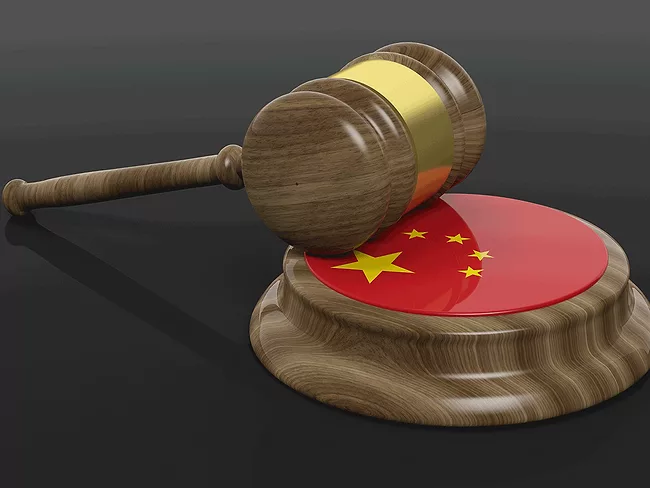
Despite new laws and enforcement efforts, protecting intellectual property (IP) rights in China remains a big challenge for companies based in the U.S. and other countries. A case in point is China’s new patent law that came into effect in June 2021.
Despite new laws and enforcement efforts, protecting intellectual property (IP) rights in China remains a big challenge for companies based in the U.S. and other countries. A case in point is China’s new patent law that came into effect in June 2021. The law provides for patent term extensions and adjustments, an important consideration for the biopharma industry since the launch of drugs in China could be hampered by long regulatory review times.
For companies in the life sciences, patent subject matter eligibility has acquired a bad reputation, but the U.S. Patent and Trademark Office (PTO) has attempted to provide administrative workarounds to the problem. PTO director Kathi Vidal said recently, however, that the agency intends to revisit its guidance, just one of several steps the PTO is taking to eliminate some of the drag on patent applications in the U.S.
For companies in the life sciences, patent subject matter eligibility has acquired a bad reputation, but the U.S. Patent and Trademark Office (PTO) has attempted to provide administrative workarounds to the problem. PTO director Kathi Vidal said recently, however, that the agency intends to revisit its guidance, just one of several steps the PTO is taking to eliminate some of the drag on patent applications in the U.S.
While the U.S. Congress struggles to patch together statutory restraints on prescription drug prices, the U.S. Patent and Trademark Office (USPTO), with the FDA’s help, is taking steps to cut back the patent thickets some drug companies are using to ward off the competition that would bring those prices down.
Patent disputes between developers of medical software might not have kept pace with the rate of disputes over in vitro diagnostic patents, but Alivecor Inc. and Apple Inc. are doing their share to keep software patents in the news. In the latest development, Mountain View, Calif.-based Alivecor reported that it won an initial determination of infringement of one of its patents by Apple Inc., of Cupertino, Calif., which could lead to an exclusion order for Apple watches if the case ultimately goes Alivecor’s way.
Artificial intelligence (AI) and machine learning (ML) present regulators and payers alike with some interesting dilemmas, but that statement can be applied to patent offices and inventors as well. In this fifth installment in a series on AI in radiology, we’ll examine the hazards of acquiring and sustaining intellectual property protection for these algorithms, a much more complicated and complex undertaking than many developers might appreciate.
The U.S. Court of Appeals for the Federal Circuit has ruled again on the appointments clause questions evolving from a patent dispute between Arthrex Inc. and Smith & Nephew Inc., this time in connection with a former acting director of the Patent and Trademark Office (PTO).