In a deal potentially worth $392 million, C4 Therapeutics Inc. signed with Betta Pharmaceuticals Co. Ltd. to develop and market an orally bioavailable BiDAC degrader for non-small-cell lung cancer (NSCLC).
Providing no details, Mirati Therapeutics Inc. failed to meet its overall survival primary endpoint in the phase III Sapphire trial with sitravatinib. The receptor tyrosine kinase inhibitor was tested in combination with anti-PD-1 checkpoint inhibitor Opdivo (nivolumab, Bristol Myers Squibb Co.) vs. docetaxel in patients with second- or third-line advanced nonsquamous non-small-cell lung cancer. According to Mirati, this patient population consists of about 70,000 people in the U.S. and Europe who have derived prior benefit from a PD-(L)1 inhibitor.
Researchers from Kanaph Therapeutics Inc. have reported the discovery and preclinical evaluation of a small-molecule EGFR inhibitor, KNP-501, being developed as an anticancer agent.
Generate Biomedicines Inc. and The University of Texas MD Anderson Cancer Center have established a strategic collaboration to jointly discover and codevelop protein therapeutics for up to five oncology targets in advanced cancers, including small-cell and non-small-cell lung cancer.
Bridge Biotherapeutics Inc. has received FDA clearance to proceed with a first-in-human study of BBT-207, a potential broad-spectrum fourth-generation epidermal growth factor receptor (EGFR) tyrosine kinase inhibitor (TKI) for the treatment of non-small-cell lung cancer (NSCLC).
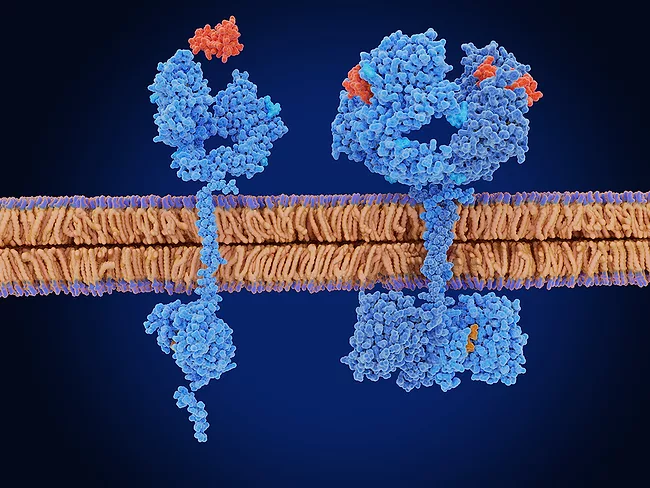
Alterations in hepatocyte growth factor receptor (c-Met) can be oncogenic in non-small-cell lung cancer (NSCLC) as well as other cancer types. Antibody-drug conjugates (ADCs) that target c-Met have been developed to treat c-Met-expressing tumors.
Junshi Biosciences Co. Ltd.’s PARP inhibitor, senaparib (JS-109/IMP4297), met the primary endpoint of progression-free survival in a phase III ovarian cancer study, according to a prespecified interim analysis.