Despite wide availability and coverage for colonoscopy, many patients diagnosed with colorectal cancer (CRC) have never undergone the recommended screening procedure for the malignancy and its precursors. As a result, the cancer has already spread in the majority of cases at the time of diagnosis. CRC remains the third most common cancer diagnosed in the U.S. and the second leading cause of cancer death for both men and women.
Nutromics Pty Ltd. has raised $14 million to build out its wearable diagnostic platform that uses DNA sensors to track multiple targets in the body using a single patch.
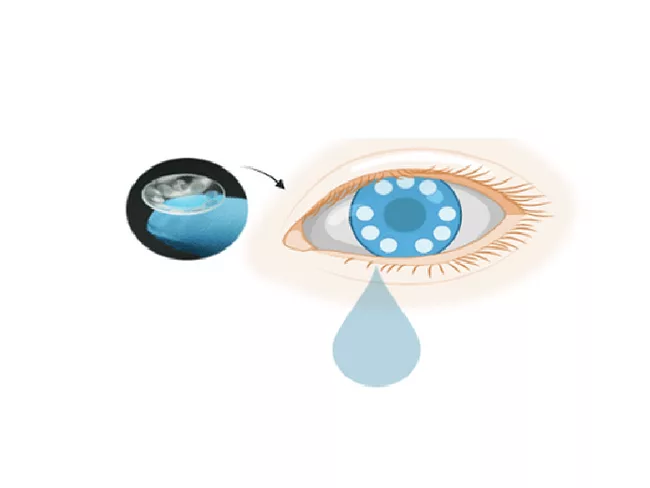
Researchers from the Terasaki Institute for Biomedical Innovation (TIBI) in Los Angeles are developing a contact lens that can capture and detect exosomes. These are nanometer-sized vesicles found in bodily secretions which have the potential to be diagnostic cancer biomarkers. The team published its work and findings in August 2022 in Advanced Functional Materials.
Massachusetts Institute of Technology (MIT) engineers in collaboration with South Korean cosmetic giant Amorepacific Corp. have created a chip-free, wireless electronic “skin” for sensing and transmitting vital medical signs minus larger, clunkier chips or batteries in most smartphones. MIT postdoc Jun Min Suh explained any change to the skin’s conditions, such as an accelerated heart rate, affect the sensor’s mechanical vibrations, generating an electrical signal that automatically transmits medial data to the consumer.
Carbon Medtech (Shenzhen) Co. Ltd. reported that it has raised “tens of millions of yuan” from its pre-A+ round financing. This financing was jointly led by Jinding Capital and Shenzhen Small & Medium Enterprises Credit Financing Guarantee Group Co. Ltd.
Thirteen months after Illumina Inc. and Grail Inc. merged, prior to regulatory approval, the deal has taken a turn for the worse. The prognosis looked better following an administrative law judge’s ruling Sept. 1 against the U.S. Federal Trade Commission’s lawsuit seeking to block the transaction, but the European Commission (EC) issued a decision Sept. 6 prohibiting the deal based on the likelihood that a merger would stifle innovation and limit choices in the early cancer detection liquid biopsy market.
Owkin Inc. has secured CE marking for two first-in-class artificial intelligence (AI)-based diagnostics, marking a move from research use only and towards the mainstream for AI in enabling faster and more efficient analysis of digital pathology slides.
Researchers at Massachusetts General Hospital (MGH) and the Massachusetts Institute of Technology (MIT) have developed a deep learning computer model that expands on the ability to identify discrete data contained in breast imaging to better predict a woman’s chances of developing breast cancer.
Cumulus Neuroscience Ltd. published a study demonstrating its home use electroencephalogram (EEG) can turn in more precise results than supervised laboratory-based assessments.