Robocath SAS is about to embark on a limited market release of its robotic platform, the R-One+, which will not only make performing coronary angioplasties easier and safer but will protect cardiologists from radiation, CEO Lucien Goffart told BioWorld in an interview. However, the launch comes on the heels of a decision by Siemens Healthineers Inc. to discontinue its robotic-assisted endovascular cardiology business as it did not meet the company’s “initial expectations.”
Pulsed field ablation (PFA) seems to have seized the moment in the field of cardiac electrophysiology, given its seemingly superior performance over other ablation modalities as a treatment for atrial fibrillation (AF). New data from three studies were presented at this year’s annual meeting of the Heart Rhythm Society that further confirm the value of PFA as a treatment for both persistent and paroxysmal AF with data sets that seem to confirm that PFA is poised to sweep aside the current standards for ablation, potentially overturning a treatment paradigm that took decades to establish.
GE Healthcare Technologies Inc. launched a 3Dstent imaging tool at the EuroPCR conference in Paris which it said will allow a new perspective on stent visualization, helping doctors do a better job. The company warned however that it is still in the process of validating the technology, which complements existing technologies and provides intraprocedural 3D and multi-slice images of stent but has certain limitations.
Heartpoint Global Inc. will begin human trials of its Intellistent device shortly and expects to make submission to the U.S. FDA in 2024, Seth Bogner, its chairman and CEO told BioWorld in an interview on the sidelines of the EuroPCR conference in Paris. Intellistent is a multi-lumen stent system for interventional adjustment of pulmonary blood flow in congenital heart disease. It is a minimally invasive device that will meet an unmet need in pulmonary artery hypertension caused by congenital heart disease, said Bogner.
Elixir Medical Corp. reported that the Bioadaptor randomized controlled trial which compared its Dynamx coronary drug-eluting bioadaptor system to Dublin-based Medtronic plc’s Resolute Onyx drug-eluting stent (DES) in de novo native coronary arteries, met its primary endpoint of target lesion failure (TLF) non-inferiority at 12 months. The results were presented at a late-breaking clinical session during the EuroPCR 2023 conference in Paris.
Abbott Laboratories Inc. reported late-breaking data from the Bright study which showed that its Triclip transcatheter edge-to-edge repair (TEER) system reduced tricuspid regurgitation and improved the quality of life of patients with leaky tricuspid valves. The results from the largest real-world dataset were presented, for the first time, at the EuroPCR 2023 conference in Paris.
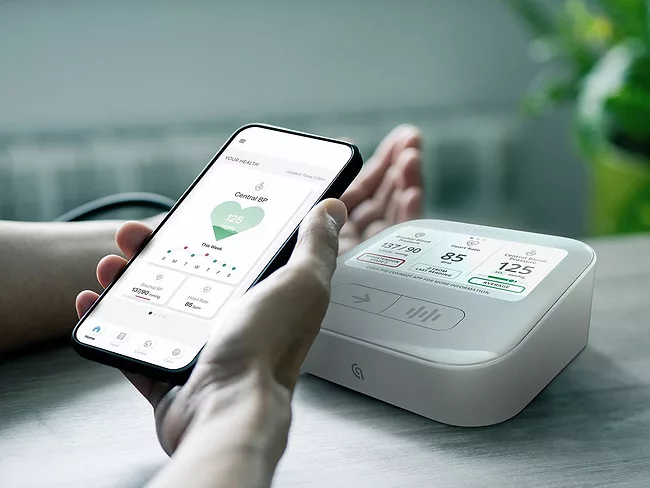
Cardiex Ltd. won U.S. FDA clearance for its Conneqt Pulse vascular biometric monitor. According to the digital health and wearables company, the device is the first in the world to provide measurements of both brachial blood pressure in the arm and central blood pressure in the heart and aorta, as well as arterial waveform analysis and other clinically relevant vascular biomarkers, outside the hospital, research institutions or clinical trial sites.
Ultromics Ltd. has been granted a U.S. FDA breakthrough device designation for its artificial intelligence (AI)-enhanced platform to aid early diagnosis of cardiac amyloidosis. Echogo Amyloidosis uses AI to analyze echocardiograms and detect the presence of cardiac amyloidosis, using a single commonly acquired ultrasound view of the heart. The platform was developed with the support of Janssen Biotech Inc., part of the Janssen Pharmaceutical Companies, a unit of Johnson & Johnson.
The 10-year update to Medtronic plc’s ENGAGE registry for its Endurant abdominal aortic aneurysm (AAA) stent graft system demonstrated high degrees of protection from aneurysm and sac regression in a real-world setting. The results were presented at the 2023 Charing Cross Symposium in London on April 26.
The U.S. FDA has finalized a guidance for class II devices for treatment of peripheral artery disease that excludes drug-coated balloons (DCBs), which are regulated as class III devices. One of the issues the med-tech industry may have with the guidance is that it fails to acknowledge that a device accessory is in some instances exempt from the requirements of the 510(k) program even though the agency has a policy specific to that consideration.