For several years, the U.S. CMS has been musing a coverage policy specifically for breakthrough medical devices, and the absence of activity on this front has once again drawn the attention of Congress. Rep. Cathy McMorris Rodgers (R-Wash.), said a representative of CMS had recently appeared before a House subcommittee for the first time in four years, and that the subcommittee is prepared to act on breakthrough devices coverage if CMS doesn’t produce a final rule this year.
Regulatory harmonization is perhaps highest on the regulatory wish list of medical device manufacturers, but the FDA’s device center has tamped down expectations of a medical device single review program. Jeff Shuren, director of the Center for Devices and Radiological Health (CDRH) said the agency will release a strategic plan later this year for regulatory harmonization, but declined to offer any details other than to state that differences in risk classification schema are not as significant a source of drag on harmonization as may commonly be believed.
Dublin-based Medtronic plc, and the U.S. FDA have wrapped up their discussion of the December 2021 warning letter for the company’s manufacture of continuous glucose monitors, clearing a hurdle that was critical in restoring the company’s footprint in the U.S. market. Left unanswered from the resolution of the warning letter is whether the FDA believes that device makers need to track the number of devices in distribution vs. those in actual use in order to properly calculate the risk of device failure based on postmarket surveillance.
The U.S. Supreme Court has declined to hear a case that tests the notion that artificial intelligence (AI) can be an inventor, a development that may be nothing more than the beginning of the AI-as-inventor story under U.S. law. The Patent and Trademark Office’s (PTO) April 25 webinar on the subject included some remarks that AI could be used to produce a tsunami of potentially duplicative patent applications, but the event demonstrated that there is almost no at-large support for AI-as-inventor, suggesting that the status quo will stand for the time being.
The U.S. Supreme Court has declined to hear a case that tests the notion that artificial intelligence (AI) can be an inventor, a development that may be nothing more than the beginning of the AI-as-inventor story under U.S. law. The Patent and Trademark Office’s (PTO) April 25 webinar on the subject included some remarks that AI could be used to produce a tsunami of potentially duplicative patent applications, but the event demonstrated that there is almost no at-large support for AI-as-inventor, suggesting that the status quo will stand for the time being.
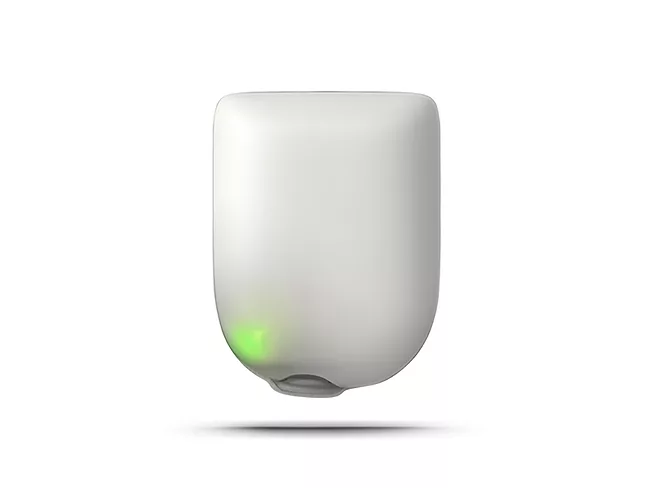
Insulet Corp. has taken the lead in the race to bring insulin delivery systems to individuals with type 2 diabetes with U.S. FDA clearance of its Omnipod Go device. The delivery system is adapted for use by adults who use once-a-day basal insulin. The company plans to roll out Go in 2024.
Avanos Medical Inc. recalled 1,000 units of two of its Ballard Access suction systems for use in clearing artificial airways in neonatal and pediatric patients because of multiple complaints of cracked device manifolds. The recall affects 1,000 units distributed in the U.S. between October 2022 and January 2023, but this is the second recall of Avanos products in less than a year.
The U.S. FDA’s draft guidance for predetermined change control plans (PCCPs) is a groundbreaking guidance that was enabled by legislation that allows the filing of PCCPs with all device types, not just software as a medical device (SaMD). However, a member of the FDA team acknowledged recently that this new approach to device change management could require that the agency revisit existing guidances such as a guidance for when to file a new regulatory submission for 510(k) devices, thus heralding a series of guidance revisions that may take several years to unwind.
Reach Neuro Inc. has been granted FDA breakthrough device designation for a rehab platform that delivers small electrical impulses to the spinal cord to help restore shoulder, arm and hand movement to individuals suffering from chronic stroke. The company said Avantis restores a patient's ability to control movement, not only giving the patient immediate relief, but making it possible to return to therapy and continue making even further improvements.
Biocartis Group NV recent entered an agreement with Apis Assay Technologies Ltd. to develop Apis’ breast cancer subtyping assay on its Idylla platform, is part of the Belgium company’s mission to bring complex molecular testing to as many patients as possible, outgoing Biocartis CEO Herman Verrelst, told BioWorld. The Idylla platform is a fully automated, real-time PCR based molecular testing system. With the technology failing to penetrate the U.S. market, and the share price tanking in recent years, the Belgium-based company recently appointed Roger Moody to the top job, effective Apr. 24, 2023.