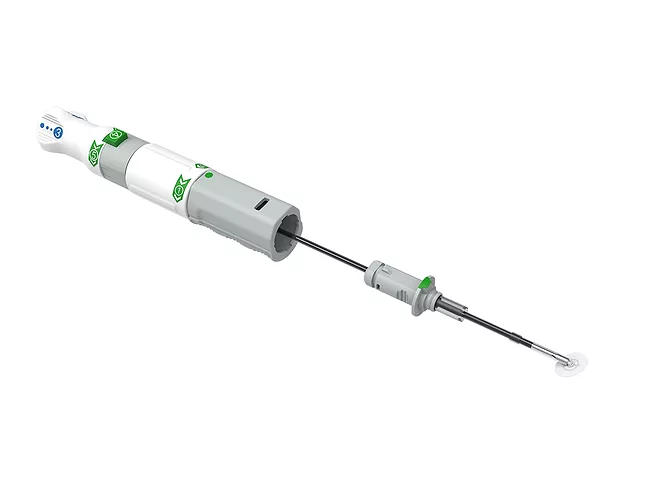
Vivasure Medical Ltd. received a €30 million (US$32 million) strategic investment from Haemonetics Corp. to help develop its Perqseal closure device system which manages bleeding complications associated with large-bore arterial vessel closure. Haemonetics has an option to buy Vivasure upon the completion of the company achieving certain milestones.
The FDA’s device center just released three performance reports related to the fourth and fifth device user fee agreements, including a financial report that shows the agency collected far more in user fees than it spent for fiscal year 2022, yielding a carryover amount of more than $142 million. One of the more interesting aspects of the report is that because the taxpayer dollars used for FDA’s device inspections did not meet a pre-specified amount for two consecutive years, third-party inspections for FDA compliance purposes have been disallowed for fiscal year 2023, making hash of a program sought by domestic manufacturers who distribute their products to other nations as well as in the U.S.
The U.S. FDA granted Sooma Oy breakthrough device designation for its patient-administered neuromodulation device to treat depression. Sooma Depression Therapy uses a mild electrical current to stimulate targeted brain areas, resulting in a significant improvement in depressive symptoms.
Methinks Software SL (dba Methinks.AI), a digital health company, is working on the U.S. FDA submission for its artificial intelligence (AI)-based stroke triage software, which will aid in the detection of acute stroke, after recently receiving CE mark certification.
Boomerang Medical Inc. knocked out its first target with a U.S. FDA breakthrough device designation for its bioelectronic device for treatment of inflammatory bowel disease (IBD). The technology stimulates the parasympathetic nervous system to reduce inflammation for individuals with both types of IBD, Crohn’s disease and ulcerative colitis.
Theranica Bio-Electronics Ltd. broadened its U.S. FDA clearances for the Nerivio prescription wearable to include migraine prevention in individuals with or without aura. The remote electrical neuromodulation (REN) device offers an alternative to the significant population of migraine patients who do not respond to or cannot tolerate prescription drugs that treat the condition.
The question of the U.S. FDA’s authority to regulate lab-developed tests (LDTs) has been percolating for more than a decade, but the recent failure of Congress to pass legislation granting the agency explicit authority to do so is seen in some quarters as a missed opportunity. The FDA’s Elizabeth Hillebrenner said that while the agency would prefer to regulate LDTs under new statutory authorities, the agency sees a public health problem with the current state of affairs, and thus, “we are moving forward with rulemaking.”
The U.S. FDA announced Feb. 27 that it is aware of data that suggest that the Trifecta surgical aortic valve replacement (SAVR) devices are potentially prone to early structural deterioration that could compromise both valve performance and valve durability.
GE Healthcare Technologies Inc. reported a recall of several systems in its nuclear medicine line of high-end imaging systems for two potential issues that could lead to the collapse of a detector weighing more than half a ton onto the patient. According to the U.S. FDA listing for the recall, no injuries or fatalities have been reported in connection with these issues, but the announcement resurrects an episode from 2013 in which a patient in New York lost his life when a nuclear imaging camera collapsed during an imaging procedure.
Rapidai Inc. Received U.S. FDA 510(k) clearance for Rapid RV/LV, the latest addition to its pulmonary embolism (PE) solution. Rapid RV/LV uses artificial intelligence to quickly calculate the right ventricle to left ventricle ratio based on an analysis of computerized tomography pulmonary angiograms. The ratio provides critical information for prioritization of PEs and integrates with Rapidai’s triage and notification and workflow products to manage patient care from suspected embolism to treatment.