The Medical Device Manufacturers Association (MDMA) has led the policy charge for smaller medical device manufacturers for decades, but each year brings its own unique set of hazards and opportunities. In an interview with BioWorld, MDMA President and CEO Mark Leahey said that while the Medicare policy for coverage of breakthrough devices has gone through some unanticipated twists and turns, that policy is not yet fixed and thus there is still some prospect that such a policy will not devolve into a stew of leftovers drawn from existing coverage mechanisms.
The U.S. FDA recently posted the regulation for software used to derive vital signs from optical camera images thanks to a successful de novo petition by Oxford, U.K.-based Oxehealth Ltd., a regulation that carries the usual requirements for software verification and validation. However, the regulation also requires some human factors engineering (HFE) studies of the software interface, a requirement that may become more demanding to fulfill per a recent draft guidance on the subject.
The U.S. Federal Trade Commission (FTC) has once again waded into the question of whether medical devices should be included in the agency’s right-to-repair discussion, most recently in an advanced notice of proposed rulemaking ostensibly titled for energy labeling. The Medical Imaging & Technology Alliance (MITA) pushed back on the proposal by pointing to the draft’s required disclosure of proprietary information about a medical device system, a provision MITA said might detract from patient safety.
New York-based Paige.AI Inc., was successful in its de novo application to the U.S. FDA for the company’s digital pathology software for identification of cancerous prostate tissue, but the agency needed nearly a year and a half after the September 2021 grant of de novo petition to post the regulation for this novel algorithm.
The U.S. FDA inked a Dec. 20, 2022, warning letter to Righteye LLC that handed the company a list of quality system issues in dire need of redress, but the agency was more concerned about off-label promotion of the Righteye vision system as a method for evaluating the patient’s ocular tremors as a sign of Parkinson’s disease.
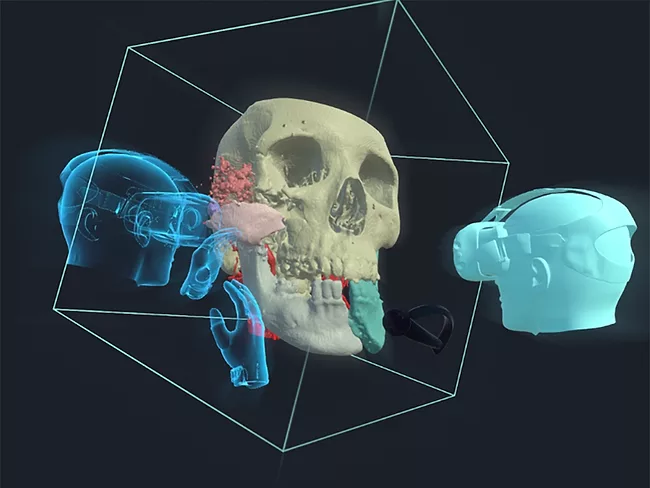
Ottawa-based start-up Realize Medical Inc. reported U.S. FDA clearance of virtual reality (VR) surgical planning software to help physicians create and share complex patient anatomy from CTs and MRIs in an immersive 3D environment. Company CEO Justin Sutherland told BioWorld clearance of the Elucis platform “is a crucial milestone” that will benefit hospitals and his company well into the future.
M.A. Medalliance SA has been awarded a de novo investigational device exemption (IDE) by the U.S. FDA for its sirolimus-eluting balloon. This approval is subject to initiation of a pivotal clinical trial in the U.S.
The Biden administration has determined that the public health emergency (PHE) for the COVID-19 pandemic will not be renewed and thus will come to an end in the second week of May. While the end of the PHE will affect some Medicare telehealth provisions that have not been memorialized in legislation, the U.S. FDA’s ability to issue emergency use authorizations (EUAs) will not be immediately affected as that authority was invoked by a separate mechanism.
The U.S. FDA has posted or updated several recalls in the second half of January 2023, such as the class I recall of Mahurkar hemodialysis catheters distributed by Medtronic plc., reported Jan. 30. This recall is associated with two injuries but no fatalities to date, but the potential for mixing of venous and arterial blood has forced Medtronic to request that its customers quarantine any unused catheter kits, which could be a substantial amount of product given the nearly 23,000 units are affected by the recall.
The advantage of the U.S. FDA’s effort to regulate artificial intelligence (AI) in medical devices is that it is specific to medical devices and other medical products, but this vertical approach to AI regulation might soon become exceptionally complicated thanks to a new AI risk management framework posted by the U.S. National Institute for Standards and Technology (NIST). The NIST guideline is agnostic to the sector of the economy and thus may carry with it the expectation that developers of software as a medical device will hew to both the NIST framework and FDA regulations, a layering of requirements that could vastly complicate the task of developing and deploying these algorithms.