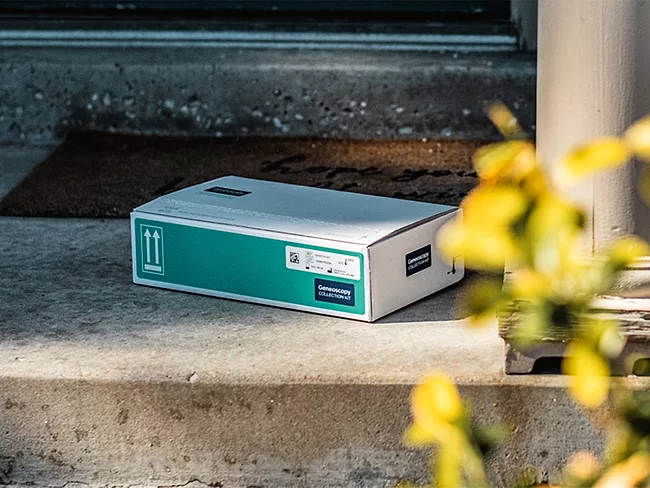
Diagnostics startup Geneoscopy Inc. said Tuesday it has completed a PMA submission for its noninvasive, stool-based, at-home screening test for the detection of colorectal cancer (CRC) and advanced adenomas (AA) in average-risk individuals. The filing is based on positive results from the company’s pivotal CRC-PREVENT trial that met all primary outcome targets, including sensitivity and specificity for CRC and AA.
The U.S. FDA has posted yet another two regulations for devices granted market access via the de novo petition program, one of which addresses dry eye by means of pulsatile light emissions. This device may serve as a predicate for many 510(k) devices if estimates of prevalence in the tens of millions in the U.S. are any indication.
Selux Diagnostics Inc. received U.S. FDA 510(k) clearance for its next generation phenotyping (NGP) system, a rapid antibiotic susceptibility test (AST) platform that determines a bacteria’s susceptibility to 14 specific antimicrobial agents in less than six hours. Prompt identification of the narrowest effective antimicrobial for an infection is critical to the battle to preserve the efficacy of critical antibiotics and slow the development of ‘superbug’ infections.
The fifth medical device user fee agreement (MDUFA V) is a generous bump in monies for the U.S. FDA, some of which will go toward advancing the use of real-world evidence (RWE) in the agency’s regulatory decisions. The FDA just opened a docket for comment on how those monies might be doled out to entities other than the Medical Device Innovation Consortium (MDIC), an expansion that might nudge the regulatory science along a little more quickly and thus enhance the use of RWE for premarket submissions.
Magstim Inc. received U.S. FDA clearance for use of its Horizon 3.0 and E-z Cool Coil to treat adult patients diagnosed with both obsessive compulsive disorder (OCD) and major depressive disorder (MDD). The company’s non-invasive transcranial magnetic stimulation (TMS) therapy offers an option for patients who do not find adequate relief from the often life-disrupting symptoms of OCD with exposure therapy or medication.
The new year always brings with it a series of New Year’s resolutions, and the U.S. FDA has apparently resolved to catch up on its backlog of de novo notifications. The earlier of the two de novo regulatory announcements is for a digital product by Minneapolis-based Nightware Inc., and its namesake kit for reduction of sleep disturbances, a regulation that arrives more than two years after the product was granted market access.
The U.S. FDA has given the green light to Abbott Laboratories Inc. for its Navitor next-generation transcatheter aortic valve implantation (TAVI) system for the treatment of patients with aortic valve stenosis who are at increased risk of open-heart surgery. Abbott won European approval of Navitor in May 2021.
Act Genomics (Hong Kong) Ltd. won U.S. FDA approval for its genomic profiling test for solid tumors, Actonco. This marks the first time an Asia-based company has received FDA clearance for a comprehensive genomic profiling test.
At a time when Chat GPT is making waves in the world of artificial intelligence (AI), new legislation is making the rounds in Washington that would allow an AI algorithm to write prescriptions for pharmaceuticals. Rep. David Schweikert (R-Ariz.) introduced H.R. 206 to the House Energy and Commerce (E&C) Committee Jan. 9, although at present the bill enjoys the backing of no other members of the House, suggesting that this legislation has a steep climb in front of it.