The U.S. FDA and Health Canada announced that they will roll out a pilot program that allows a medical device manufacturer to submit a medical device application to both agencies simultaneously for class II and class III medical devices.
The U.S. FDA’s 510(k) program is yet again under assault, this time from the authors of a Jan. 10 article in the Journal of the American Medical Association (JAMA). The authors’ primary point seems to be that any 510(k) devices that recite a predicate that is the subject of at least three recalls are themselves more likely than average to be the subject of a recall, although there was no discernible association between recall status and technological differences between the predicate and the follow-on devices.
The U.S. FDA’s surveillance of endoscopes related to reprocessing issues has yielded two more warning letters, one each for Tokyo-based Olympus Medical and its Aizu Olympus subsidiary, both of which were cited for inadequate procedures for medical device reports (MDRs).
U.S. FDA warning letters for medical devices are relatively rare these days, and the Oct. 6, 2022, warning to Empowered Diagnostics LLC of Pompano Beach, Fla., suggests that COVID tests are still front and center where FDA enforcement is concerned.
Cardiovascular Systems Inc. (CSI) reported the submission by its partner Innova Vascular Inc. of U.S. FDA premarket notification for thrombectomy devices to treat peripheral vascular disease. Already an acknowledge leader in atherectomy technologies, St. Paul, Minn.-based CSI intends to acquire and commercialize each device to expand its technology portfolio to include treatment of deep vein thrombosis (DVT) and pulmonary embolism (PE).
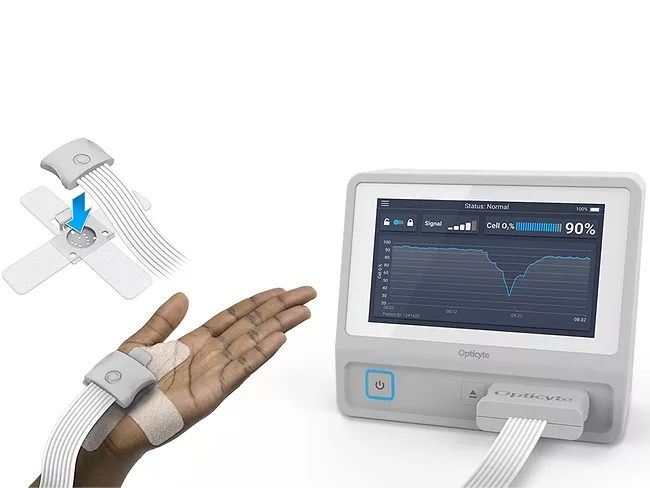
The U.S. FDA has granted Opticyte Inc. a breakthrough device designation for its Cell O2 patient monitor, a noninvasive technology for monitoring patients at risk of organ failure. The device could help to reduce serious illness and deaths by alerting clinicians to patients experiencing organ failure before irreversible damage occurs.
Some patent litigation cases don’t require a deep effort to interpret claims, but the litigation between Agilent Technologies Inc., and Dionex Softron GmbH, forced the Court of Appeals for the Federal Circuit to determine whether a written description adequately captures the use of a piston in a liquid chromatograph to avoid nullification of the claim.
The U.S. FDA has granted Datar Cancer Genetics Inc. a breakthrough device designation for Trinetra-Glio, a blood test to help in the diagnosis of brain tumors.
The U.S. Department of Justice (DOJ) reported an indictment of three men alleged to have filed more than $100 million in genetic testing false claims directly or indirectly with the Medicare program. Two of the three defendants face as many as 65 years of incarceration if convicted, a clear sign that federal government agencies in the U.S. are more intent than ever on cracking down on fraud and abuse of federal health programs.
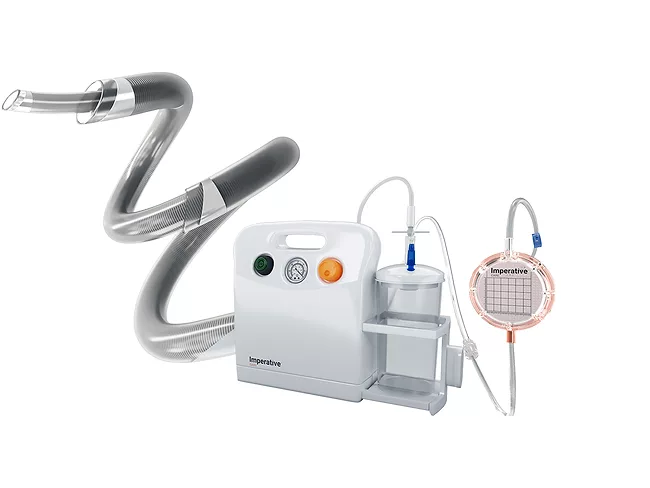
Imperative Care Inc. received U.S. FDA 510(k) clearance for its Zoom Rdl radial access system for treatment of ischemic strokes. The device is designed to enhance radial access for removal of clots in patients with tortuous anatomy and other challenges to the femoral access typically used, providing more options for both patients and physicians.