The U.S. Department of Justice (DOJ) has developed a number of policies related to corporate misconduct over the past couple of decades, some of which were stood up only to be reversed a short time later.
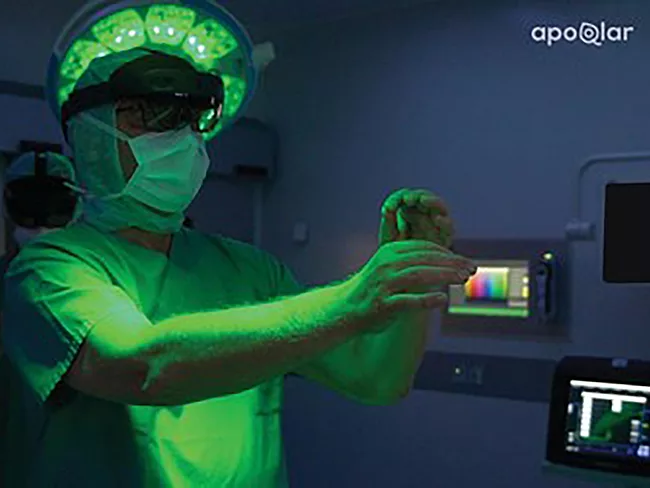
Apoqlar GmbH received a green light from the FDA for its VSI Holomedicine, a mixed reality software enabling surgeons to plan procedures in an immersive 3D experience. The company expects to release the technology for clinical use in the U.S. in the second quarter of 2023.
Getinge AB reported that intraortic balloon pumps (IABPs) manufactured by its Datascope subsidiary are in short supply following a recall of some of these devices in 2019. Getinge said manufacturing of units and parts is proceeding at the maximum pace allowed by supply chain volatility and recommended that hospitals facing shortages contact other nearby hospitals in the event of a lack of device availability.
The U.S. FDA reported that the post-approval study (PAS) for the Impella RP by Abiomed Inc. of Danvers, Mass., demonstrated that the device performed well for patients who would have been eligible for the pivotal study, providing a 69.7% survival rate at 30 days after device explant.
At the recent Clinic Trials on Alzheimer’s Disease (CTAD) conference in San Francisco, Regenlife SAS presented the design for its Light4life study examining the therapeutic efficacy of the RGn600 device. This trial on more than 100 subjects will evaluate the cognitive impacts of new photobiomodulation technology.
The U.S. Federal Trade Commission (FTC) has moved decisively in the area of mergers and acquisitions recently, but the agency also has a footprint in the enforcement space for health data disclosure. The FTC’s Ronnie Solomon said in a Dec. 1 public meeting that the agency will begin “thinking outside the box about what health information is in the 21st Century,” adding that the FTC is eyeing a more stringent enforcement regime regarding personal health data disclosures in the coming new year.
U.S. Supreme Court case law on patent subject matter eligibility has provoked several attempts by Congress to rewrite the statute, but there are lingering concerns about the latest proposal, the Patent Eligibility Restoration Act of 2022. Among these concerns is that the revised set of exceptions to subject matter eligibility might take time to work through both in terms of litigation and patent prosecution, but the bill has the support of a number of stakeholders, including two former commissioners of the U.S. Patent and Trademark Office (PTO).
Rapidai Inc. received U.S. FDA 510(k) clearance for release of intracranial hemorrhage (ICH) triage technology that reduces notification fatigue in doctors swamped by calls to treat hemorrhages that turn out to be false positives. In a test sample sent to the regulatory agency, the artificial intelligence (AI)-powered system demonstrated a sensitivity rating of 97% detecting genuine hemorrhages and 100% specificity for a false positive rate of zero.
The U.S. FDA has finalized a rewritten draft guidance for Section 522 postmarket surveillance studies, a policy that carries a new level of stringency regarding how these studies are conducted. The final guidance calls for all subjects in such a study to be enrolled within 24 months, a deadline some in industry argued might prove unduly burdensome in some instances.
The U.S. FDA has given the green light to Aeye Health Inc. for its autonomous diagnostic screening system for diabetic retinopathy. The Aeye Diagnostic Screening (Aeye-DS) uses artificial intelligence (AI) to diagnose the eye condition from retinal images captured by a fundus, or retinal, camera.