The Medicare coverage with evidence development (CED) program has served a vital function for coverage of medical technology for a number of years, but staff at CMS apparently see room for improvement.
Applied Tissue Technologies LLC (ATT) has won U.S. FDA clearance for a negative pressure wound therapy (NPWT) system that eliminates foam as a potential impediment to complete wound healing. ATT CEO Michael Broomhead said negative pressure wound therapy is ripe for a true innovation to kick its Platform Wound Dressing (PWD) and the treatment “into its next generation.”
The U.S. Congress has reauthorized several user fee programs at the FDA, and the agency has published the user fee levels for several product types, with most of those fees increasing significantly, an example of which is the increase for new drug applications (NDAs) requiring clinical data from $3.12 million to $3.24 million. Fees for medical device premarket approval (PMA) filings will jump from $375,000 to $442,000, including some hefty adjustments for persistent inflation, a problem that may plague the user fee schedules for fiscal 2024 as well.
The U.S. FDA’s device center recently advised companies that make tests for the COVID-19 pandemic that the emergency use authorization program for tests is winding down, albeit with a few exceptions.
The Biden administration has released a blueprint for an artificial intelligence bill of rights, which is accompanied by an acknowledgement that these algorithms can be crucial in guiding treatment of cancer patients.
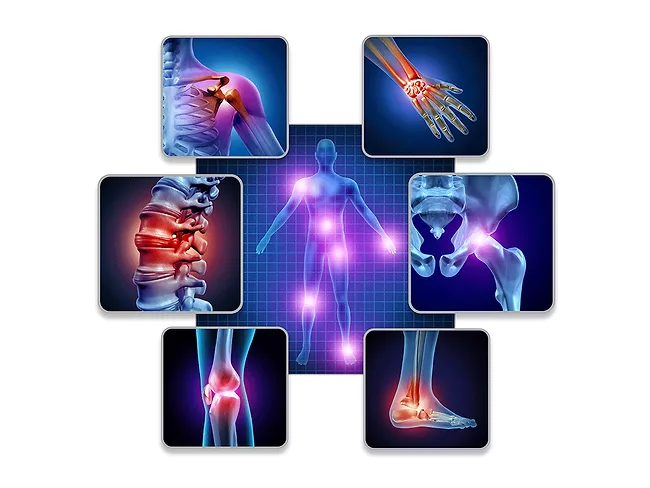
Millions of patients with fibromyalgia have battled widespread pain with few effective treatment options for decades. The U.S. FDA has offered reason for hope and better health with four recent decisions. On Oct. 4, Solon, Ohio-based Multi Radiance Medical Inc. (MRM) received clearance for its Fibrolux therapy laser for the condition, following Neurometrix Inc.’s de novo authorization for its transcutaneous electrical nerve stimulation device, Quell, in May. Remedee Labs SA received breakthrough device designation (BDD) for its endorphin stimulation system in May and Swing Therapeutics Inc. was granted BDD for its digital therapy in Aug. 2021.
The U.S. FDA’s finalized guidance for clinical decision support (CDS) software was not an entirely isolated policy change inasmuch as there were several other guidances that were edited and reissued two days after the CDS final was published. One of these is the guidance for device software functions and mobile medical apps, which now encodes a transparency requirement as seen in the CDS guidance, a change that may represent a hazard for the unwary medical software developer.
The most conspicuous part of the data problem for artificial intelligence (AI) medical software is the bias problem, but the U.S. Government Accountability Office (GAO) says there are policy solutions despite the data ownership/monetization problem.
The U.S. Congress has finally managed to pass legislation that reauthorizes several FDA user fee programs, but the final vote came on the last day of the federal fiscal year and addressed a stripped-down version of previous user fee bills. While several key considerations survived the shift to a lean bill, the FDA will have to wait for another day to be authorized to regulate lab-developed tests and to revise the accelerated approval program for pharmaceuticals, measures that may be revisited before the end of the current calendar year.
The U.S. Congress passed a five-year reauthorization of the Medical Device User Fee Amendment (MDUFA) agreement, the fifth iteration of this user-fee agreement since the system's implementation in 2002, after many months of back and forth with the med-tech industry. The extension passed as part of a temporary spending bill needed to avoid a partial government shutdown ahead of Friday’s deadline. The spending bill passage gives lawmakers a reprieve until after the midterm elections when they'll need to figure out a longer-term funding plan for the fiscal year ending Sept. 30, 2023.