The U.S. FDA posted notice recently regarding a vulnerability seen in the Minimed 600 series of insulin pumps made by Dublin-based Medtronic plc, which exposes the user to the risk of unauthorized access to the pump’s software. The vulnerability could be exploited to interfere with the system’s ability to deliver only the desired amount of insulin, although the FDA acknowledged that no adverse events or complaints have been reported.
The U.S. response to the emergence of the COVID-19 pandemic may by now be the stuff of public health policy lore, with both the FDA and the CDC contributing to the chaos in the first months of the pandemic. The Office of Inspector General has issued an analysis of the situation, and while OIG revisited some of the known miscues, the report also made the case that a national strategy for pandemic response will be needed if federal government efforts in the future are to be less a hazard to the lives of American citizens than those seen in the first half of 2020.
The U.S. NIH is not generally regarded as a wellspring of concepts and policies in the world of artificial intelligence (AI), but that perception may change soon thanks to the agency’s Bridge2AI program. The agency announced recently that it will drop $130 million into this program over four years in an effort to develop standards for data used in AI research, a key development for device makers seeking to sell products that use these complex algorithms.
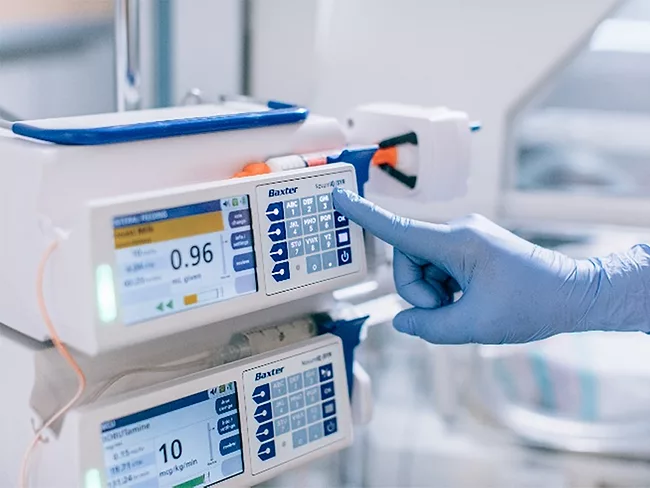
Baxter International Inc. has scored FDA clearance for an infusion pump used to deliver small amounts of fluid at low rates, often in pediatric, neonatal and anesthesia care settings. The Novum Iq syringe infusion pump also features Dose Iq Safety Software, a web-based, customizable drug library that incorporates titration technology to reduce dosage errors during patient treatment.
The U.S. NIH is not generally regarded as a wellspring of concepts and policies in the world of artificial intelligence (AI), but that perception may change soon thanks to the agency’s Bridge2AI program. The agency announced recently that it will drop $130 million into this program over four years in an effort to develop standards for data used in AI research, a key development for device makers seeking to sell products that use these complex algorithms.
Medical device manufacturers have railed against payers’ prior authorization practices for years, but the U.S. Congress seems poised to finally address the issue, at least in the context of Medicare Advantage (MA) plans. The House of Representatives has passed the Improving Seniors’ Timely Access to Care Act of 2021, a development that drew the applause of both the Medical Device Manufacturers Association (MDMA) and the American Society of Radiation Oncology (ASTRO), a clear display of the broad support enjoyed by the legislation.
The U.S. FDA released a draft guidance for computer software assurance, a document that spells out the agency’s expectations for computer systems used to log a manufacturing site’s compliance and manufacturing activities.
Magnus Medical Inc. received FDA clearance for a neuromodulation platform to treat major depressive disorder (MDD) in adults for whom antidepressant medication has been ineffective.
The U.S. FDA has granted breakthrough device designation to Potrero Medical Inc. for its AKI Predict machine learning algorithm for the advanced prediction of acute kidney injury (AKI) associated with intra-abdominal hypertension (IAH) in intensive care patients recovering from cardiac surgery.
The toxicity associated with oncology therapies is the stuff of legend with clinicians and patients, and thus the U.S. FDA and manufacturers have been working to fine tune these dosing regimens. However, the FDA's Oncology Center of Excellence (OCE) includes a programmatic effort to optimize dosing regimens, which led to an editorial by FDA officials that calls on industry to consider whether the maximum tolerated dose paradigm is really the optimal approach to oncology drug development.