Dermasensor Inc. received CE mark approval for its handheld skin cancer detection device using spectroscopy and AI to test suspicious skin lesions for cancer in real time at the point of care. The device is designed to help qualified healthcare professionals decide whether suspicious skin lesions need further investigation. With skin cancer rates rising, the Dermasensor joins several other AI-based tools entering the European market to help with the analysis of suspicious lesions.
Directed evolution has become a central pillar in gene therapy. This engineering strategy enables the generation of more efficient variants of genetic editors and delivery vectors. Molecular diversification methods are increasingly sophisticated and are now accelerated by machine learning and AI tools, as showcased at the 29th Annual Meeting of the American Society of Gene and Cell Therapy (ASGCT) held in Boston this week.
Metis Techbio Co. Ltd. is seeking a potential HK$2.11 billion (US$270 million) raise through a stock sale May 13, marking the largest biotech raise on the Hong Kong Stock Exchange this year to date. Hangzhou, China-based Metis is an AI-based nanoparticle drug formulation and delivery-focused company. Synthetic lethality-based cancer drugmaker Impact Therapeutics Inc., of Shanghai, plans to debut on the same day with a US$117 million IPO.
When a tumor migrates and colonizes another tissue or organ, it can be identified as a metastasis, but its origin is not always clear. Now, a study based on machine learning has identified DNA-methylation patterns that reveal the type of tissue a cancer comes from when the primary tumor cannot be found. This technique could help guide more specific treatments for patients with cancers of unknown primary, who today often receive broad, nontargeted chemotherapy.
The ability of Ebenbuild GmbH’s digital twin technology to predict the deposition of inhaled drugs across the lungs has been validated in a study published in Nature Communications Medicine. The platform, which combines AI-driven image analysis and physics-based computational modeling, demonstrated strong agreement with in vivo imaging data across multiple inhalation scenarios.
In a decision that maintains the regulatory status quo, the U.S. FDA denied a petition from Harrison.ai to partially exempt certain diagnostic/detection AI devices from premarket review so long as the manufacturer has 510(k) clearance for a device in a similar category and a robust postmarket plan.
AI and advanced biotechnology are reshaping South Korea’s med-tech sector, but great technology alone is not enough to build a successful medical device company, speakers said at MedTech Innovator’s Medtech Spotlight: New Impact Korea 2026.
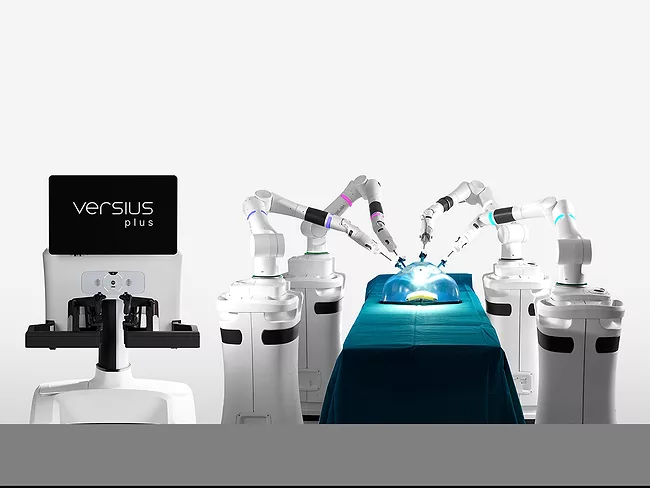
CMR Surgical Ltd.’s participation in Nvidia’s Physical AI health care robotics initiative is expected to accelerate the development of the next generation of intelligent surgical robotic systems powered by data, simulation and AI. As demand for minimally invasive procedures grows, more companies are entering the surgical robotics space.
AI and advanced biotechnology are reshaping South Korea’s med-tech sector, but great technology alone is not enough to build a successful medical device company, speakers said at MedTech Innovator’s Medtech Spotlight: New Impact Korea 2026.
As AI continues to storm into global life, biopharma companies are figuring out ways to incorporate it into their operations, all with the goal of bringing better therapies to patients faster. At Pharma USA, a Reuters Events meeting in Philadelphia March 16-17, numerous AI companies presented their offerings to attendees, driving interest and partnerships.