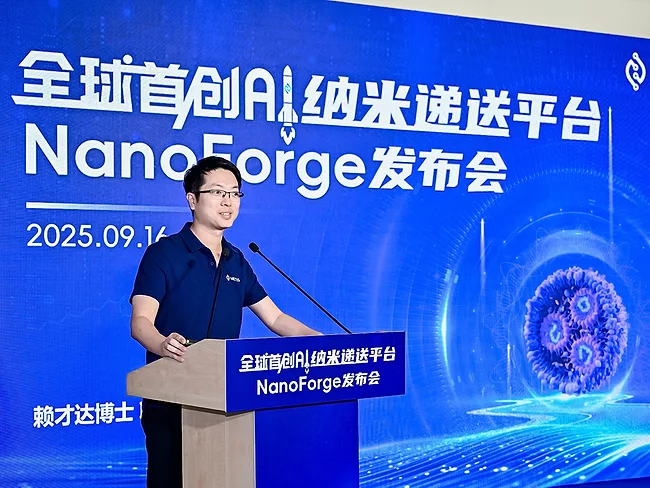
Based on positive phase III study results, Metis Techbio is planning to file an NDA for its AI-derived orally disintegrating tablet drug candidate for pseudobulbar affect, MTS-004, in China next year.
In San Francisco, the first day of Transcatheter Cardiovascular Therapeutics 2025 annual meeting offered presentations on the future of the convergence of devices, drugs and AI. The takeaway from the session seems to be that while the future is bright, it will become the present only when payers can find an economic argument to pay for the advances formed by this convergence.
Based on positive phase III study results, Metis Techbio is planning to file an NDA for its AI-derived orally disintegrating tablet drug candidate for pseudobulbar affect, MTS-004, in China next year.
The importance of scalability, combination therapies, immunotherapies and speed in developing cancer drugs are paramount in creating a revolution in treating patients who often don’t have much hope, according to a panel of developers who spoke at the BioFuture conference in New York.
Japan is reimagining how mental health care can be delivered digitally and proactively, with local governments investing in digital technology to create data-driven safety nets that aim to detect distress and deliver help, presenters said during the Bio Japan 2025 conference in Yokohama, Oct. 8 to 10.
Roche Holdings AG received CE-mark for the Kidney Klinrisk algorithm, an AI-based tool developed in collaboration with Klinrisk Inc. to stratify risk and assess the progressive decline in kidney function. The software will help clinicians to make more informed decisions when accessing adults with chronic kidney disease as well as individuals with diabetes or hypertension who are at elevated risk of kidney function decline.
With a new drug available to slow the progression of type 1 diabetes, Sanofi SA is partnering with two med-tech companies to increase screening for early-stage type 1 diabetes and identify eligible patients.
AI seems to suggest that a world of problems with health care spending may become more manageable, but Stephen Bittinger, a shareholder in the D.C. office of the law firm of Polsinelli PC told BioWorld that all the headaches surrounding validation of these algorithms suggests a need for an independent AI validation institute.
A month after raising $55 million to advance its AI-enhanced ultrasound diagnostics for cardiovascular disease, Ultromics Ltd. presented strong results for its U.S. FDA-cleared AI analysis of echocardiograms at the American Society of Echocardiography's 2025 Scientific Sessions in Nashville, Tenn. Ultromics' Echogo Amyloidosis was able to detect cardiac amyloidosis earlier and more accurately than traditional methods, missing fewer cases without increasing unnecessary testing.
China’s National Medical Products Administration is arguably more active than regulatory agencies in many nations in advancing guidance for AI in medical technology, but Chang-Hong Whitney, President/CEO of Whitney Consulting Ltd., told BioWorld that the premarket review process still carries some unpredictability.