Signos Inc. landed U.S. FDA clearance for its over-the-counter glucose monitoring system, which combines Dexcom Inc.'s non-prescription Stelo continuous glucose monitor with an AI-powered platform focused on weight management and metabolism. The sensor transmits glucose readings to a smartphone app that interprets the data, provides guidance for healthy habits and educates the user.
Generative AI drug discovery company Vantai Inc. could bring in more than $1 billion in a new collaboration with Halda Therapeutics Inc. Vantai already has collaborations with other companies, including Bristol Myers Squibb Co. (BMS), Janssen Pharmaceutica and Blueprint Medicines Corp.
Australia’s Therapeutic Goods Administration recently reported that it has concerns about the use of digital scribes, stating that any such software that analyzes or interprets clinical conversations may qualify as a regulated medical product.
AI and machine learning products have proven complicated for regulatory authorities across the globe, but entities in the business of conducting health technology assessments also have their hands full according to several sources.
Quantumpharm Inc., known as Xtalpi Inc., announced receiving $51 million up front from a potential $5.99 billion deal with Dovetree LLC on Aug. 6. The collaboration, first inked through a letter of intent between the two parties on June 23, will combine Shenzhen, China-based Xtalpi’s AI-based and robotics-driven discovery platform with Dovetree’s “biological insights.” The goal will be to select and validate potential first-in-class candidates for Dovetree across five areas of oncology, immunology and inflammatory diseases, neurological disorders and metabolic dysregulation.
Quantumpharm Inc., known as Xtalpi Inc., announced receiving $51 million up front from a potential $5.99 billion deal with Dovetree LLC on Aug. 6. The collaboration, first inked through a letter of intent between the two parties on June 23, will combine Shenzhen, China-based Xtalpi’s AI-based and robotics-driven discovery platform with Dovetree’s “biological insights.” The goal will be to select and validate potential first-in-class candidates for Dovetree across five areas of oncology, immunology and inflammatory diseases, neurological disorders and metabolic dysregulation.
Quantumpharm Inc., known as Xtalpi Inc., announced receiving $51 million up front from a potential $5.99 billion deal with Dovetree LLC on Aug. 6. The collaboration, first inked through a letter of intent between the two parties on June 23, will combine Shenzhen, China-based Xtalpi’s AI-based and robotics-driven discovery platform with Dovetree’s “biological insights.” The goal will be to select and validate potential first-in-class candidates for Dovetree across five areas of oncology, immunology and inflammatory diseases, neurological disorders and metabolic dysregulation.
Deep learning tools for protein design can also be used to create molecules that bind to them. Certain peptides, such as intrinsically disordered proteins (IDPs), are challenging to target due to their variable nature. However, scientists from the lab of Nobel laureate David Baker have developed a method to generate binders for IDPs by searching the world’s largest protein database with their AI-powered tool RFdiffusion.
Deep learning tools for protein design can also be used to create molecules that bind to them. Certain peptides, such as intrinsically disordered proteins (IDPs), are challenging to target due to their variable nature. However, scientists from the lab of Nobel laureate David Baker have developed a method to generate binders for IDPs by searching the world’s largest protein database with their AI-powered tool RFdiffusion.
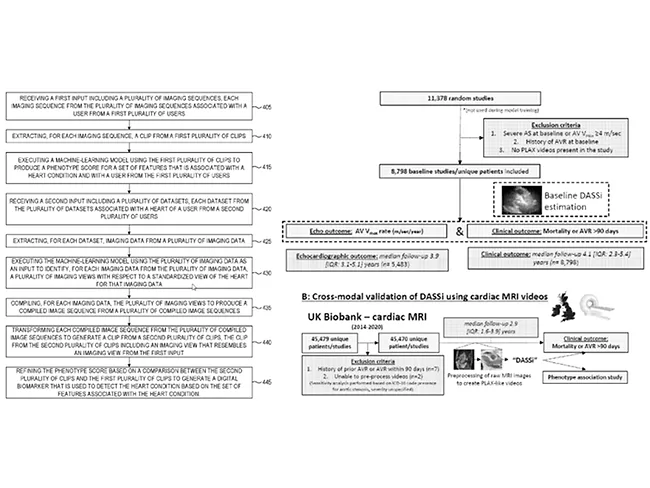
Researchers from the Yale University filed for protection of a multi-modal approach to predict the progression risk of a heart condition using artificial intelligence algorithms applied to cardiovascular videos.