Genesis Therapeutics Inc. CEO and co-founder Evan Feinberg likens the collaboration of his company’s team of chemists, biologists and software developers to that of a jazz band. Everyone has to be familiar with everyone else’s roles and responsibilities in order to do their job, or play a solo, when it’s their turn.
Shenzhen Xbiome Biotech Co. Ltd., an artificial intelligence (AI)-based microbiome drugmaker, raised more than $20 million in a series B+ round, Xbiome CEO Yan Tan told BioWorld, financing that will help the company launch its phase I trial next year. It has been a year since the drugmaker closed a $14 million series B round. During this period, Tan said Xbiome submitted an IND to the FDA in October for its fecal microbiota transplant (FMT) capsule candidate, a potential treatment for graft-vs.-host disease.
Castle Biosciences Inc.'s Decisiondx Diffdx-Melanoma test is now commercially available to help dermatopathologists better characterize melanocytic lesions. About 15% of suspicious pigmented skin lesions cannot be definitively determined to be benign or malignant using common methods. The new gene expression profile test reduces the number of indeterminate results by more than 70%.
Tencent Holdings Ltd. has launched two med-tech solutions to facilitate data sharing and management with artificial intelligence capabilities, marking an additional step into the smart health care realm for the company. The Chinese tech giant unveiled the two products at the 83rd China International Medical Device Expo Oct. 20.
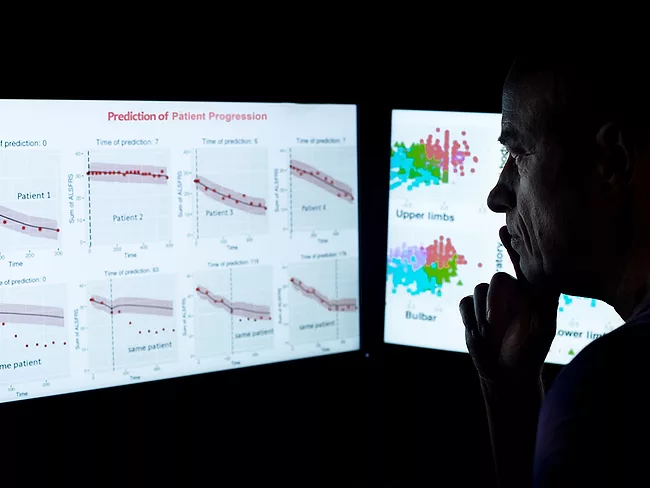
Researchers at Israel’s Ben-Gurion University have launched a machine learning platform that aims to streamline the clinical trial process using predictive analytics. The technology has been licensed to Panacea, a startup company formed by BGN Technology.
HONG KONG – The use of artificial intelligence in drug discovery was back in the spotlight on the last day of the 2020 KoNECT-MOHW-MFDS International Conference, with drug developers pointing out both challenges and possible solutions.
HONG KONG – The use of artificial intelligence in drug discovery was back in the spotlight on the last day of the 2020 KoNECT-MOHW-MFDS International Conference, with drug developers pointing out both challenges and possible solutions.
Researchers at Ben-Gurion University of the Negev (BGU) presented a new artificial intelligence technique that could protect medical imaging systems from hacking and human errors at the 2020 International Conference on Artificial Intelligence in Medicine (AIME) on Aug. 26. Their innovative solution uses a dual-layer architecture that screens for two different types of anomalous instructions to capture those that are always unusual or outside of safe ranges and those that are inappropriate in the specific context.
The importance of artificial intelligence and machine learning continues to be acknowledged by drug development companies. Recently, to help accelerate the discovery of therapies to treat COVID-19, several deals have been forged to deploy those tools.
The importance of artificial intelligence and machine learning (AI/ML) has not been lost on drug development companies. Recently, to help accelerate the discovery of therapies to treat COVID-19, several deals have been established to help deploy those tools.