Regulatory harmonization is seen as vital to the development of markets for artificial intelligence (AI) and machine learning (ML), but there is some variation in the terminology used to describe these algorithms. The International Medical Device Regulators Forum (IMDRF) has posted a document that includes some definitions for ML terms such as unsupervised machine learning, a key development if regulations across the globe are to avoid a hopeless state of balkanization.
Wysa Ltd.’s artificial intelligence-based digital therapy received FDA breakthrough device designation for adults with chronic musculoskeletal pain, depression and anxiety. The device delivers cognitive behavioral therapy (CBT) via a digital companion or conversational agent on a smartphone.
In the post COVID world, digital transformation is at the forefront of every company’s agenda, but which innovations can fuel the next era of health care? At the ongoing Biomed Israel conference in Tel Aviv, Anat Naschitz founder and CEO of 9xchange and co-founder of Orbimed Israel, lead a digital health track exploring the technologies aiming to reconstruct the future of health care.
Cybersecurity remains a pressing issue for medical technology, in part because there are new, small companies jumping into this space seemingly every day. However, there is a shortage of talent in cybersecurity, something that Dan Lyon, director of cybersecurity at Boston Scientific Corp., of Marlborough, Mass., said will not ease soon due to a lack of interest among colleges and universities in providing curriculum and degrees in this area.
With cancer treatment success rates rising, the field of precision oncology is poised to grow as clinicians aim to move treatment from a one size fits all approach to personalized treatment regimens. Israeli startups including Oncohost Ltd., Nucleai Ltd. and Gina Life Diagnostics Ltd. are part of an emerging wave of companies utilizing artificial intelligence (AI) and machine learning (ML) techniques to personalize the future of cancer diagnostics.
The U.S. FDA’s pre-certification (pre-cert) program for software as a medical device (SaMD) seemed to run out of steam before the COVID-19 pandemic arrived, but the FDA was always presumed to need help from Congress to roll out a permanent version. A session at this year’s MedCon suggests that there is still life left in the pilot version of the SaMD pre-cert program, a critical development given that the legislation for the device user fee program offers the FDA no new statutory authority for a novel software regulatory framework.
Blackrock Neurotech LLC has acquired spatial computing software startup Mindx Corp. to advance full-stack brain-computer interface (BCI) products. As part of the transaction, Mindx’s augmented reality (AR) and artificial intelligence (AI) technology will be integrated with Blackrock’s BCI hardware.
Elix Inc. has teamed up with Shionogi & Co. Ltd. to validate a retrosynthetic analysis model for drug discovery that will employ chemical reaction data from Shionogi to explore various routes to synthesizing new molecules.
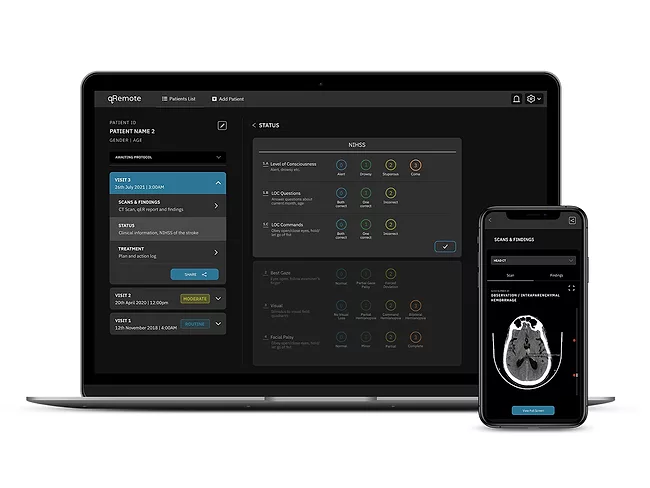
Health tech firm Qure.ai Technologies Private Ltd. has secured a $40 million investment from investors including Novo Holdings and Healthquad to expand its portfolio of automated artificial intelligence (AI)-based imaging diagnostics. The company’s suite of technologies incorporates deep learning and AI to interpret radiology images such as X-rays, CTs, and ultrasounds in less than a minute.
Elix Inc. has teamed up with Shionogi & Co. Ltd. to validate a retrosynthetic analysis model for drug discovery that will employ chemical reaction data from Shionogi to explore various routes to synthesizing new molecules.