At the Biotech Showcase 2026 – part of the broader hoopla in San Francisco surrounding the J.P. Morgan 2026 Healthcare Conference – a panel of investors and another of pharma dealmakers discussed what to expect from drug company deals in 2026. The calendar flipping marks a good time to look ahead, but the delineation doesn’t really change anything for dealmakers who have experienced a slow shift in attitudes of investors over the last few months that will likely continue into the year ahead.
Med-tech deals activity dropped significantly in 2024, falling 84% from $9.83 billion in the first nine months of 2023 to $1.6 billion in the same period this year. While down from $6.59 billion in Q1 to Q3 2022, value is higher than $979.84 million in the comparable period in 2021.
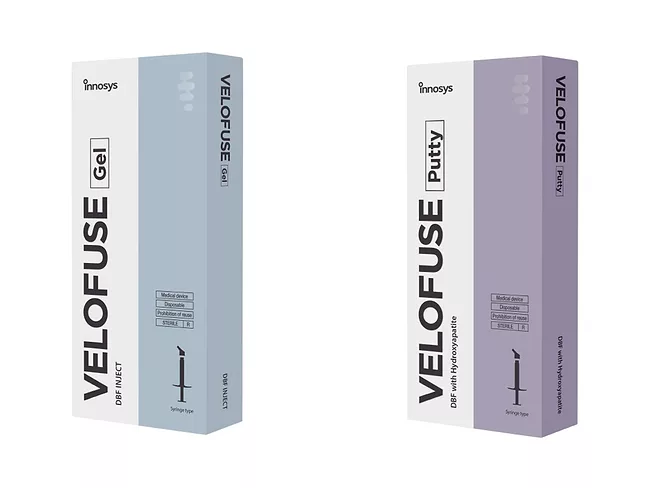
Korean med-tech firm Innosys Co. Ltd. recently launched two new injectable spine bone graft substitute products – Velofuse Gel and Velofuse Putty – and announced a name change to CG Medtech Co. Ltd., effective Nov. 4, 2024.
The med-tech sector experienced some relief in the first quarter of 2024 (1Q24) as total financings climbed to $6.38 billion, eclipsing the value of any quarter in 2023. For perspective, the final quarter of 2023 recorded $3.32 billion, and 1Q23 raised $4.69 billion, with an average of $4.42 billion in financings per quarter in 2023.
Echoing trends seen last year, the med-tech industry concluded 2023 with a continued surge in deal value juxtaposed against a more substantial decline in M&A value. Deal value for the year, including licensings, collaborations and joint ventures, reached $10.63 billion from 1,656 deals, the highest annual value in BioWorld’s records.
Most categories of med-tech financings peaked during the COVID-19 pandemic, with the highest values seen in 2020-2021. While public/other and private financings have successfully rebounded to pre-pandemic levels, the aggregate financings for 2023 hit an unprecedented low according to BioWorld’s records.
Building out its metabolic franchise, Novo Nordisk A/S is buying privately held Montreal-based Inversago Pharma Inc. for up to $1.075 billion, gaining lead asset INV-202, an oral cannabinoid 1 (CB1) inverse agonist. The candidate has demonstrated weight loss potential in a phase Ib trial and is currently in a phase II for diabetic kidney disease. Novo Nordisk’s interest in INV-202 is to explore its potential for obesity and obesity-related complications.
Sosei Heptares is fulfilling its ambition for growth in the Asia-Pacific region by buying the Japanese and South Korea businesses of Swiss biotech Idorsia Ltd. for ¥65 billion (US$463 million), potentially freeing Idorsia from its struggle to prove its stroke drug, Pivlaz (clazosentan), is effective enough to warrant approval in key Western markets.
Sosei Heptares is fulfilling its ambition for growth in the Asia-Pacific region by buying the Japanese and South Korea businesses of Swiss biotech Idorsia Ltd. for ¥65 billion (US$463 million), potentially freeing Idorsia from its struggle to prove its stroke drug, Pivlaz (clazosentan), is effective enough to warrant approval in key Western markets.
Two separate insider trading tips involving a biopharma acquisition and trial results for Pfizer Inc.’s COVID-19 antiviral, Paxlovid, allegedly netted millions of dollars in “ill-gotten” trading profits, according to U.S. SEC complaints announced June 29.