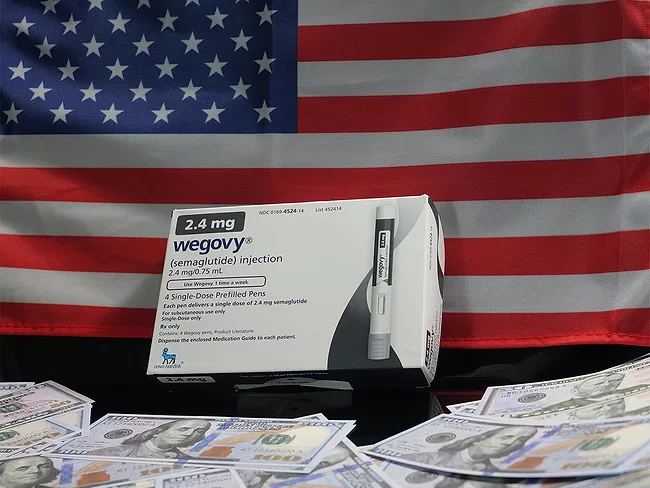
In a threshold event in the U.S., Medicare is planning to break through its obesity coverage barrier with a voluntary test of a model designed to enable Medicare Part D plans and state Medicaid programs to cover GLP-1 drugs prescribed for weight management.
Payers had their hands full in 2025 dealing with the raft of medical technologies that came through the globe’s regulatory review processes, although the nature of many of those challenges were conventional. On the other hand, payers struggled to keep pace with both the volume of conventional devices and the novelty of AI-driven devices in 2025, a problem that will carry over into the coming year.
Two U.S. Medicare administrative contractors (MACs) have removed CPT code 6468 from their group 1 CPT codes, a move that may cut rates for implant of Inspire Medical Inc.'s flagship product, the Inspire hypoglossal nerve stimulator for treatment of obstructive sleep apnea.
Much has been made of the recent skyrocketing of Medicare spending on skin substitutes, but a new enforcement action by the U.S. Department of Justice might help to explain some of those spending increases.
Edwards Lifesciences Corp., of Irvine, Calif., petitioned the Centers for Medicare & Medicaid Services to revise the Medicare coverage policy for transcatheter aortic valve replacement (TAVR) devices on two points, the combination of which would make a big difference for TAVR devices across manufacturers. Edwards requested that CMS explicitly cover TAVR for asymptomatic aortic stenosis patients, a notion well supported by recent data, and bring an end to the coverage with evidence development mandate.
Aesculap Implant Systems LLC has seen its share of bad news recently, but the company seems to have cleared the legal deck with an agreement to pay $38.5 million per a Nov. 17 announcement by the U.S. attorney’s office for the district of Eastern Pennsylvania.
Impulse Dynamics Inc. snared an affirmative Medicare coverage policy for its Optimizer cardiac contractility modulation (CCM) system, giving the company sole possession of the U.S. marketplace for this therapy at least for the time being.
A committee of the House of Representatives advanced a bill that if passed will give eligible breakthrough medical devices four years of Medicare coverage.
The Office of Inspector General recently reported that billings for remote patient monitoring eclipsed the $500 million mark in 2024, but the agency stated that more scrutiny will be necessary going forward to keep waste, fraud and abuse at bay.
The U.S. Centers for Medicare & Medicaid Services proposed to use AI to cut down on abuse of the Medicare program, but several members of Congress have concerns about the notion, given that private payers have used AI to illegitimately deny services to their beneficiaries.