When it comes to cutting health care costs in the U.S., last year’s Inflation Reduction Act, with its inflationary rebates and direct Medicare negotiations, was just Act 1. Now lawmakers, in both the House and Senate, are feverishly working on bipartisan scripts for Act 2 that go beyond biopharma’s role in drug prices to taking on pricing issues across the health care sector.
A day after grilling top executives from the three largest pharmacy benefit managers (PBMs) in the U.S. about their business practices and the impact they have on prescription drug prices, the Senate Health, Education, Labor and Pensions (HELP) Committee voted 18-3 May 11 to favorably report the bipartisan PBM Reform Act to the full Senate.
Even though COVID-19 is transitioning from pandemic to endemic across the world, it will remain first in mind as U.S. lawmakers look to reauthorize the Pandemic and All-Hazards Preparedness Act (PAHPA) this year to ensure the country is better prepared for future threats. With a Sept. 30 deadline for reauthorizing PAHPA, the Senate Health, Education, Labor and Pensions (HELP) Committee has its work cut out for it. But it won’t be starting from scratch. In opening a May 4 hearing on the reauthorization, HELP Chair Bernie Sanders (I-Vt.) said the committee would build on the efforts started last year under then-Chair Patty Murray (D-Wash.) and now-retired Ranking Member Richard Burr (R-N.C.).
With the COVID-19 public health emergency ending in the U.S. next week, Congress is looking to use the lessons learned from the pandemic to draft a new iteration of the Pandemic and All-Hazards Preparedness Act to ensure the country is better prepared for the next pandemic.
While the U.S. continues to call out other countries for weak enforcement of intellectual property rights, trade secret theft and forced technology transfers in the life sciences sector, some companies in the sector claim similar things are happening in the U.S. In its 2023 Special 301 Report, released April 26, the Office of the U.S. Trade Representative (USTR) noted “the growing need for trading partners to provide effective protection and enforcement of trade secrets.”
In its first markup of the 118th Congress May 2, the Senate Health, Education, Labor and Pensions (HELP) Committee, under the new leadership of Sen. Bernie Sanders (I-Vt.), devolved into a brief mutiny of sorts as the committee members started to take up four bipartisan bills aimed at taming prescription drug prices.
The U.S. Centers for Medicare and Medicaid Services’ years-long musing over a streamlined coverage policy specifically for breakthrough medical devices is now taking a toll on breakthrough medications that could provide a cure or arrest the progression of debilitating diseases.
The legislative pile-on continues as the U.S. Congress considers more ways to take down health care costs while defending innovation. The House Energy and Commerce Subcommittee on Health met April 26 to consider 17 draft discussion bills offered as bipartisan solutions to lower costs by increasing transparency and competition across the health care playing field.
U.S. Centers for Medicare & Medicaid Services (CMS) Administrator Chiquita Brooks-LaSure made her first appearance April 26 before the House Energy and Commerce’s Subcommittee on Health, ostensibly to discuss legislative solutions to increase transparency and competition in health care. But member after member, regardless of political party, demanded answers about why CMS continues to severely restrict access to Eisai Co. Ltd.’s Alzheimer’s drug, Leqembi (lecanemab), especially since another government agency is covering it for all veterans that meet the labeling requirements.
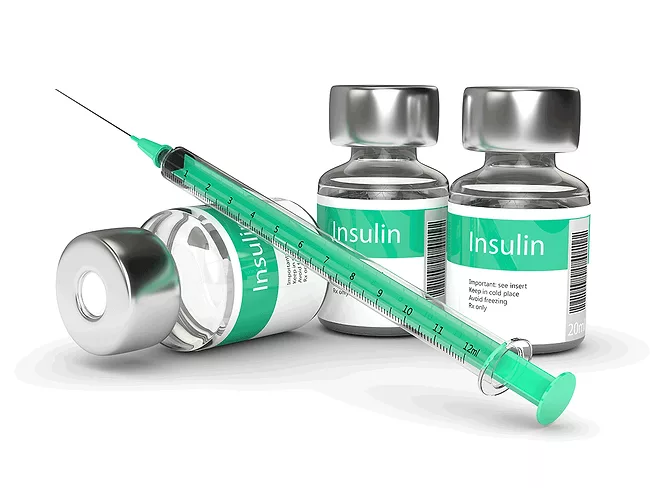
Following up on a bipartisan effort to keep down the costs of insulin, U.S. Sens. Susan Collins (R-Maine) and Jeanne Shaheen (D-N.H.) reintroduced a bill on April 20 to ensure patients with diabetes can access the life-saving medicine without the excess costs associated with drug rebates and stymied competition.