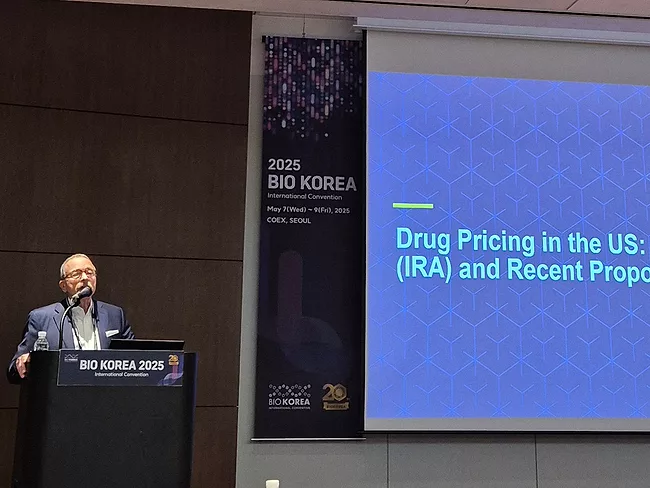
Ongoing policy issues in the U.S., including the Inflation Reduction Act and recent proposals under President Donald Trump’s administration, have wide ranging implications for the global biopharmaceutical industry, speakers at Bio Korea 2025 said May 8, including a heightened need for all biotechs to draft regulatory strategies.
Korean pharmaceutical stocks rose across the board May 13, a day after U.S. President Donald Trump signed off on the most favored nation executive order, a drug pricing policy expected to benefit biosimilar makers in the U.S., according to Celltrion Inc.
After a week of hype, the most-favored nation (MFN) drug pricing executive order (EO) U.S. President Donald Trump signed May 12 has a lot of bark but little bite, as one analyst put it. Brian Abrahams, head of global healthcare research at RBC Capital Markets LLC, said the EO is unlikely to rattle the biopharma sector, even though it lacked the certainty to completely remove the MFN overhang. “We see reason for relief and, alongside improving FDA clarity and limited tariff risk, expect biopharma to be viewed as increasingly investable,” Abrahams said.
Ongoing policy issues in the U.S., including the Inflation Reduction Act and recent proposals under President Donald Trump’s administration, have wide ranging implications for the global biopharmaceutical industry, speakers at Bio Korea 2025 said May 8, including a heightened need for all biotechs to draft regulatory strategies.
Australian biopharma stakeholders welcomed the reelection of Prime Minister Anthony Albanese, who promised to expand Medicare and to invest more in Australian research.
Australian biopharma stakeholders welcomed the reelection of Prime Minister Anthony Albanese, who promised to expand Medicare and to invest more in Australian research.
A late 2024 CMS proposal to include obesity drugs like Novo Nordisk A/S’ Wegovy (semaglutide) and Eli Lilly and Co.’s Zepbound (tirzepatide) under Medicaid and Medicare didn’t make it far under the new U.S. administration. A final rule, set to be published in the Federal Register April 15, will not include the provision that would have added obesity drugs to Part D coverage beginning in 2026.
Pharma companies in the U.K. said the rebate they are required to make on drug sales is making the country “un-investible,” prompting staff cuts and leading clinical research partnerships to be unwound. Rather than the 15.3% rebate on branded drugs companies expected to pay this year, the rate has leapt to 22.9%. That has left the Voluntary Scheme for Branded Medicine Pricing and Access “in crisis,” according to the Association of the British Pharmaceutical Industries.
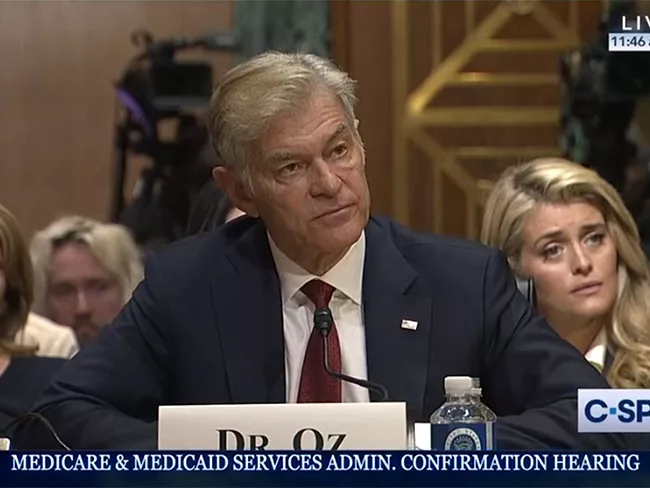
Cardiothoracic surgeon and television personality Mehmet Oz, President Donald Trump’s nominee for administrator of the Centers for Medicare & Medicaid Services (CMS), faced the U.S. Senate’s finance committee on March 14, suggesting the implementation of artificial intelligence (AI) technologies and the reduction of drug prices would be among his top priorities, if confirmed.
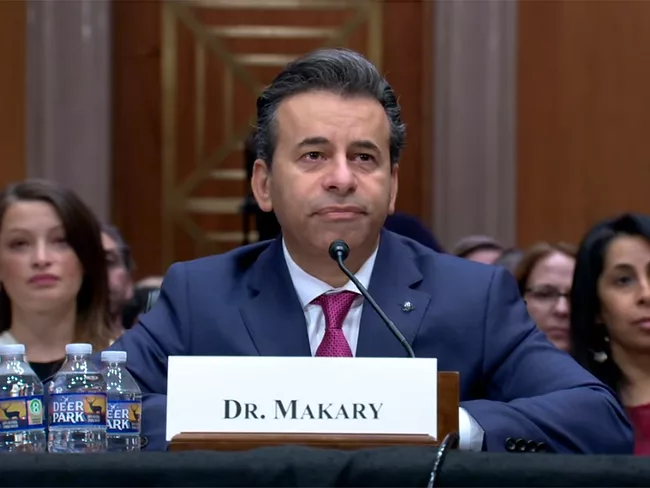
Martin Makary, President Donald Trump’s pick to head the U.S. FDA, took his turn before the Senate Health, Education, Labor and Pensions (HELP) Committee March 6, a week ahead of the committee’s confirmation votes on both him and Jay Bhattacharya as the next NIH director. The committee votes will set the stage for the full Senate to vote on confirming both nominees later this month.