Bipolar disorder (BPD) is disabling, destructive and notoriously difficult to diagnose. Research indicates that up to 40% of patients diagnosed with major depressive disorder or unipolar depression actually have BPD and treating them with antidepressants alone runs an elevated risk of worsening their condition. But the issue is not one-sided: other studies found that 30% to 60% of patients diagnosed with BPD do not meet the clinical criteria for the illness and may be taking powerful mood stabilizers needlessly while failing to receive potentially beneficial therapies.
Retispec Inc. and the Toronto Memory Program launched a community screening program for Alzheimer’s disease (AD) funded by the Davos Alzheimer’s Collaborative (DAC). The program will provide two points of entry for screening—optometry clinics and the Alzheimer Society of Toronto. The project is one of 12 early detection efforts worldwide that received a total of $4.5 million in funding this week from DAC.
Blackrock Neurotech LLC has acquired spatial computing software startup Mindx Corp. to advance full-stack brain-computer interface (BCI) products. As part of the transaction, Mindx’s augmented reality (AR) and artificial intelligence (AI) technology will be integrated with Blackrock’s BCI hardware.
A brainwave biomarker licensed by digital therapeutic startup Empower Therapeutics Inc. showed potential to identify patients with high sensitivity to pain. In a new study carried out by researchers at the University of Birmingham, U.K., the biomarker predicted which patients had a pain score of seven out of 10 or higher (severe pain) following lung surgery.
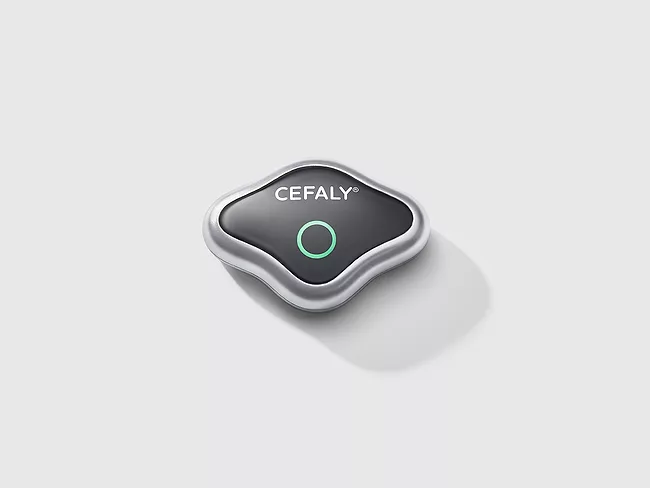
Cefaly Technology sprl reported results from a phase III clinical trial showing that two-hour treatment with its Cefaly Dual external trigeminal nerve stimulation (e-TNS) device is a safe and effective nonpharmaceutical option for acute migraine treatment in a nonhospital setting.
A research team from the Grenoble Institute for Neuroscience (GIN) recently discovered a blood biomarker capable of detecting the onset of Parkinson's disease (PD) from a very early stage. This discovery represents the findings of a multi-model, translational study published in the Journal of Clinical Investigation.
Zeta Surgical Inc. has raised $5.2 million in seed funding to improve the accuracy and safety of image-guided surgical procedures through its Zeta neurosurgical navigation platform. Zeta CEO Jose Maria Amich told BioWorld the funding will also advance a non-invasive ultrasound system for imaging the brain and help complete initial clinical studies for its FDA approvals application.
Neuroelectrics Inc. garnered $17.5 million in a series A fundraising round led by the Morningside Group of Hong Kong. The Cambridge, Mass. and Barcelona-based brain stimulation company plans to use the funds primarily to advance its pivotal trial of the Starstim system in refractory focal epilepsy and its at-home feasibility study in refractory major depressive disorder and related infrastructure, Neuroelectrics co-founder and CEO Ana Maiques told BioWorld. Supportive infrastructures for the trials include brain modeling, the platform for remote montage delivery, and clinical and regulatory resources.
The oncology field pioneered adaptive trial designs through efforts such as I-SPY 2 (Investigation of Serial Studies to Predict Your Therapeutic Response with Imaging And moLecular Analysis 2), Puma Biotechnology Inc.’s phase II study of the pan-HER tyrosine kinase inhibitor neratinib (Nerlynx) as neoadjuvant therapy in metastatic breast cancer, and the ongoing multidrug, biomarker-driven
non-small-cell lung cancer trial known as Lung-MAP.