Recent years have seen progress in treating brain disease, but one major challenge remains: getting therapeutic treatments across the blood-brain barrier. Now, Cranius LLC has raised $19.4 million to advance a device designed to bypass the blood-brain barrier and deliver medicines directly and continuously to the brain.
Magnus Medical Inc. received FDA clearance for a neuromodulation platform to treat major depressive disorder (MDD) in adults for whom antidepressant medication has been ineffective.
Cerevasc Inc. has treated its first U.S. patient using an investigational device intended for patients suffering from hydrocephalus, one of the most common neurological conditions worldwide. Boston-based Cerevasc’s Eshunt system is being taken through its paces during a clinical study in Buenos Aires, Argentina and is aimed at replacing a half-century-old neurosurgical procedure associated with frequent failure, infection risk and high costs.
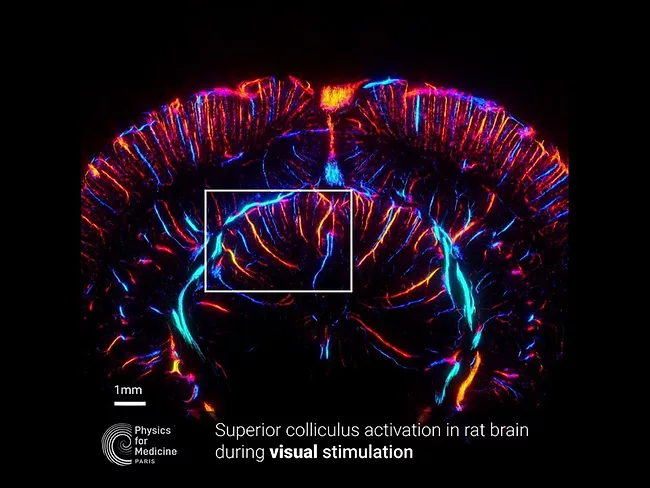
Researchers from ESPCI Paris (Paris University for Industrial Physics and Chemistry), are working on a novel functional neuroimaging technique for measuring whole-brain activity dynamically at the microscopic level.
Integra Lifesciences Holdings Corp., of Plainsboro, N.J., said in its latest 8K filing that it has decided to voluntarily remove all the company’s Cerelink systems – which are indicated for intracranial pressure monitoring – due to customer reports that these monitors were returning inaccurate pressure readings.
Cumulus Neuroscience Ltd. published a study demonstrating its home use electroencephalogram (EEG) can turn in more precise results than supervised laboratory-based assessments.
The U.S. FDA granted breakthrough device designation to startup Brainspec Inc. for its non-invasive virtual brain biopsy system. The company uses standard magnetic resonance imaging equipment to measure brain chemistry rather than to create images, providing a more detailed view of pathophysiology involved in a range of neurological disorders.
Central nervous system specialist Cerevance Inc. has announced a multiyear strategic research collaboration with Merck & Co. Inc. to identify novel targets for Alzheimer’s disease in a deal worth more than $1.1 billion, plus royalties. Boston-based Cerevance will receive $25 million up front with the $1.1 billion due when certain development and commercial milestones are achieved.