Long-term brain recordings from four patients with chronic pain have led investigators at the University of California at San Francisco to identify brain signals that could serve as biomarkers for each individual patients’ pain. The study, which was published online in Nature Neuroscience on May 22, 2023, demonstrated that “chronic pain can successfully be tracked, can successfully be predicted, in the real world while patients are ... going about their lives,” lead author Prasad Shirvalkar told reporters at a press conference announcing the findings. Shirvalkar is a neurologist at the University of California at San Francisco.
Long-term brain recordings from four patients with chronic pain have led investigators at the University of California at San Francisco to identify brain signals that could serve as biomarkers for each individual patients’ pain.
The U.K. health technology assessment body has given its approval to the use of nine digital health products for treating mental disorders, enabling them to get conditional reimbursement in the National Health Service (NHS), while real world evidence of their cost effectiveness is collected.
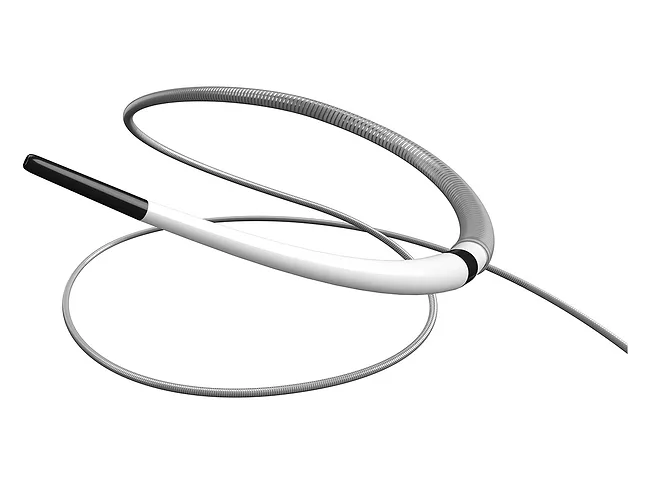
The FDA gave the greenlight to Route 92 Medical Inc. for its Freeclimb 70 reperfusion system in the treatment of ischemic stroke. The 510(k) clearance includes a Freeclimb 70 aspiration catheter, as well as a Tenzing 7 delivery catheter.
Acotec Scientific Holdings Ltd. received Chinese marketing approval for its microcatheter Vericor-14 to assist in percutaneous coronary interventions and percutaneous peripheral interventions, taking a step forward in a competitive market that is poised to grow eightfold by the end of the decade.
The Feinstein Institutes for Medical Research, the research arm of Northwell Health, landed a $3.4 million grant from the Wellcome Trust to evaluate the use of transcranial magnetic stimulation (rTMS) for schizophrenia. Feinstein will undertake a five-year, double-blind, randomized trial to see whether rTMS improves cognitive or other symptoms of schizophrenia. The technology currently has FDA approval for use in individuals with depression and obsessive-compulsive disorder.
An electronic pen that tracks upper limb and hand motions to diagnose Parkinson’s disease is to be repurposed to detect neurotoxic side effects of immunotherapy for cancer, following the award of a grant from Johnson & Johnson Innovation.
Rapidai Inc. received FDA 510(k) clearance for its Rapid NCCT Stroke technology, the latest tool in its portfolio of non-contrast-based solutions for shock and trauma care. The company claims it is the first and only medical device cleared by the agency to detect suspected intracranial hemorrhage (ICH) and large vessel occlusion (LVO) from value-based CT imaging.
A biomarker found in spinal fluid can detect Parkinson’s disease in individuals with the disease and may flag those at risk years before symptoms develop, a study published in The Lancet Neurology found. The breakthrough, which could enable diagnosis of the disease for the first time in patients who do not exhibit a movement disorder, was achieved by an international coalition of scientists led by the Michael J. Fox Foundation (MJFF) as part of its landmark clinical study, the Parkinson’s Progression Markers Initiative (PPMI).