Gene therapy has had its commercial struggles in the past year. The cost to patients is in the millions and fewer are stepping forward for treatment than companies would like. While development continues in this game-changing field, some have struggled with regulatory authorities during development while others have just stepped away altogether.
Biomarin Pharmaceutical Inc. followed up its May takeover of Inozyme Pharma Inc. with a much larger agreement to acquire Amicus Therapeutics Inc. for $14.50 per share in an all-cash transaction, tipping the equity-value scale about $4.8 billion.
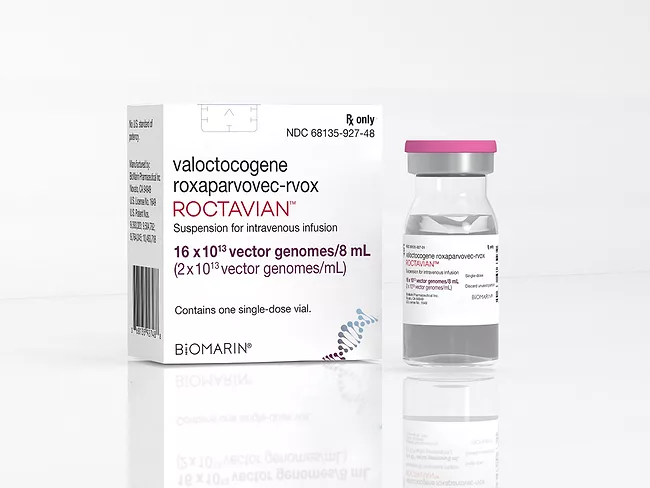
Biomarin Pharmaceutical Inc. plans to divest its pioneering gene therapy for hemophilia, Roctavian (valoctocogene roxaparvovec), and remove what had been considered a potential blockbuster from the portfolio in order to grow the company.
It’s been a big week for Inozyme Pharma Inc. On the heels of a promising interim readout for phase III-stage enzyme replacement therapy (ERT) candidate INZ-701 in ENPP1 deficiency, the firm agreed to be acquired by Biomarin Pharmaceuticals Inc. in a deal valued at about $270 million, putting the rare disease ERT in the hands of an experienced commercial team.
After dropping development in December of its lead program, Spruce Biosciences Inc. has found new life by acquiring a BLA-ready enzyme replacement therapy for the rare genetic neurodegenerative disease Sanfilippo syndrome type B. If approved, the therapy, tralesinidase alfa, could bring Spruce a priority review voucher.
With Alhemo (concizumab-mtci) from Novo Nordisk A/S, a third hemophilia drug in the past eight months has been approved by the U.S. FDA. The once-daily injectable prophylaxis is to prevent or reduce the frequency of bleeding episodes in adult and pediatric patients 12 years of age and older with hemophilia A or B with inhibitors.
Although more and more gene therapies are getting the FDA stamp of approval, concerns persist about their potential long-term risks. U.S. lawmakers have proposed several pieces of legislation over the past few years to address some of the uncertainties. Now the Congressional Research Service (CRS) is suggesting other requirements Congress may want to consider to improve the regulatory landscape for gene therapies, especially those intended to treat blood disorders.
The U.S. FDA has approved the second hemophilia drug in nearly six months from Pfizer Inc. This one, Hympavzi (marstacimab), is for preventing or reducing bleeding in those age 12 and older with hemophilia A and B. Hympavzi heralds a couple of market boundary breakers: it’s the first and only anti-tissue factor pathway inhibitor approved in the U.S. for hemophilia A or B and the first hemophilia medicine approved in the U.S. to be administered using a pre-filled, auto-injector pen.
Predictably, weekly vs. daily subcutaneous injections made a big difference in the achondroplasia space, where shares of Copenhagen, Denmark-based Ascendis Pharma A/S (NASDAQ:ASND) closed Sept. 16 at $139.57, up $20.35, or 17%, on favorable, pivotal top-line data with Transcon CNP (navepegritide), as competitor Biomarin Pharmaceutical Inc.’s stock (NASDAQ:BMRN) ended the day at $69.86, down $15.04, or 17.7%.
Bridgebio Pharma Inc.’s data from the phase II study with infigratinib in achondroplasia “swings the pendulum of debate sharply in favor” of the firm, competing with Biomarin Pharmaceutical Inc. in the space, Leerink analyst Mani Foroohar said in a report.