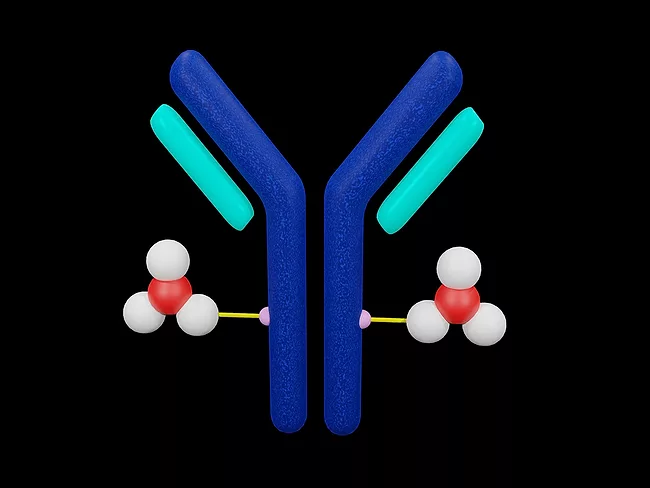
The collaboration will combine Rondo’s proprietary CD28 co-stimulatory platform with Lilly’s drug development and commercialization expertise to develop co-stimulatory bispecific antibodies to treat solid tumors.
Although head-to-head results on tolerability were missing from the company’s data release, Eli Lilly and Co. said its U.S. FDA-approved weight-loss drug Zepbound (tirzepatide) beat the also-cleared Novo Nordic A/S compound Wegovy (semaglutide) in a phase IIIb study comparing the two.
When U.S. CMS Administrator Chiquita Brooks-LaSure announced Nov. 26 that the agency is “reinterpreting” the law in proposing a rule allowing Medicare and Medicaid to cover obesity drugs beginning in 2026, she called it a “historic step.” The rule, if finalized, could make obesity drugs like Novo Nordisk A/S’ Wegovy (semaglutide) and Eli Lilly and Co.’s Zepbound (tirzepatide) available to millions more Americans and further invigorate development of other obesity drugs. But given the lateness of the day in the Biden administration, the proposal may be more symbolic than historic.
Eli Lilly & Co. has elected to pursue the development of therapeutics against two validated drug targets for amyotrophic lateral sclerosis (ALS) from its collaboration with Verge Analytics Inc. (dba Verge Genomics).
Eli Lilly and Co.’s chief scientific officer, Daniel Skovronsky, called peresolimab, the PD-1 agonist previously in the works by the firm for rheumatoid arthritis (RA), a “really interesting mechanism” – but not interesting enough.
Nearly $3.8 billion was earned by Novo Nordisk A/S and Eli Lilly and Co. in the third quarter for their glucagon-like peptide-1 (GLP-1) drugs to treat obesity. Novo’s GLP-1 drug, Wegovy (semaglutide), approved by the U.S. FDA in June 2021, had sales of DKK17.3 billion (US$2.5 billion), while Lilly’s Zepbound (tirzepatide), which is a GLP-1 and glucose-dependent insulinotropic polypeptide dual agonist FDA-approved in November 2023, posted sales of $1.26 billion for the quarter.
Researchers from Eli Lilly & Co. presented the discovery and preclinical characterization of a novel protein tyrosine kinase 7 (PTK7)-targeting antibody-drug conjugate (ADC), LY-4175408, being developed for the treatment of cancer.
A year out from Leqembi’s approval for Alzheimer’s disease (AD), ongoing research coupled with artificial intelligence is advancing both radiopharmaceuticals and small-molecule drugs for AD diagnostics and treatment, speakers at the 2024 KoNECT-MOHW-MFDS conference said.
Nectin-4 is a cell-adhesion molecule overexpressed in several tumor types, including breast, ovarian, lung, colorectal, pancreatic and urothelial cancer. Enfortumab vedotin (EV), an anti-Nectin-4 antibody-drug conjugate (ADC) has shown a good objective response rate in pretreated patients with advanced urothelial carcinoma. However, this effect has been linked to on-target skin toxicity.
A year out from Leqembi’s approval for Alzheimer’s disease (AD), ongoing research coupled with artificial intelligence is advancing both radiopharmaceuticals and small-molecule drugs for AD diagnostics and treatment, speakers at the 2024 KoNECT-MOHW-MFDS conference said.