Sosei Heptares and Eli Lilly and Co. have signed a potential $731 million deal to discover, develop and commercialize small molecules that modulate G protein-coupled receptor (GPCR) targets associated with diabetes and metabolic diseases.
Eli Lilly & Co. has synthesized glucagon-like peptide 1 receptor (GLP-1R) agonists reported to be useful for the treatment of type 2 diabetes and hyperglycemia.
Two phase III failures with Roche Holding AG subsidiary Genentech Inc.’s gantenerumab in staving off mild cognitive impairment tied to Alzheimer’s disease (AD) revealed the level of amyloid-beta removal was lower than the company expected. The protein amyloid beta accumulates in the brains of AD patients and its removal is suspected to be an eventual boon to AD patients. But there are still plenty of doubts. Top-line results from Genentech’s phase III Graduate I and II studies show gantenerumab, a fully human monoclonal IgG1 antibody, missed the primary endpoints of slowing clinical decline in those with mild cognitive impairment due to AD and mild AD dementia.
Eli Lilly and Co. has synthesized new glucocorticoid receptor (GR) agonists reported to be useful for the treatment of atopic dermatitis and rheumatoid arthritis.
The volatile gene therapy space is getting a boost with Eli Lilly and Co.’s acquisition of Akouos Inc., which only a month before had received the first IND from the U.S. FDA for an adeno-associated virus (AAV)-based hearing loss treatment. Lilly plans to pay about $610 million for the company to get at AK-OTOF, Akouos’ lead candidate for treating hearing loss due to mutations in the otoferlin gene.
Eli Lilly & Co. has synthesized macrocyclic peptides acting as amylin receptor agonists, glucose- and/or triglyceride-lowering agents reported to be useful for the treatment of type 2 diabetes, obesity, dyslipidemia and nonalcoholic steatohepatitis.
Eli Lilly & Co. has identified new fibroblast growth factor receptor 3 (FGFR3) inhibitors reported to be useful for the treatment of achondroplasia, cancer, pulmonary fibrosis, systemic scleroderma and thanatophoric dysplasia, among other disorders.
Photys Therapeutics Inc. raised a $75 million series A financing to develop phosphorylation-inducing chimeric small-molecule medicines to fix dysfunctional proteins. Photys, of Cambridge, Mass., was founded by the Longwood Fund and Amit Choudhary of Brigham and Women’s Hospital and the Broad Institute of MIT and Harvard University.
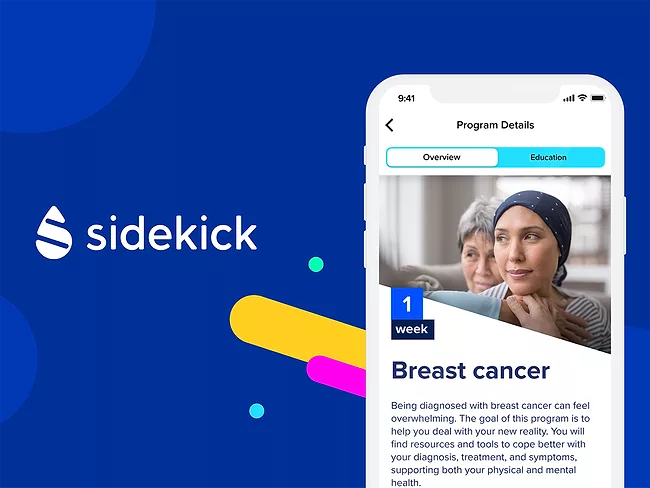
In May, Sidekick Health AB revealed an expanded partnership with New York-based Pfizer Inc. for autoimmune-related conditions. Now, it has joined forces with Eli Lilly and Co. to help patients battling breast cancer with its gamified platform. The companies plan to introduce the integrated digital therapeutic starting in July with the roll out beginning in Germany.